Canada, the Spellbinder
Lilian Whiting
THE CLASSIC COLLECTION · 1906
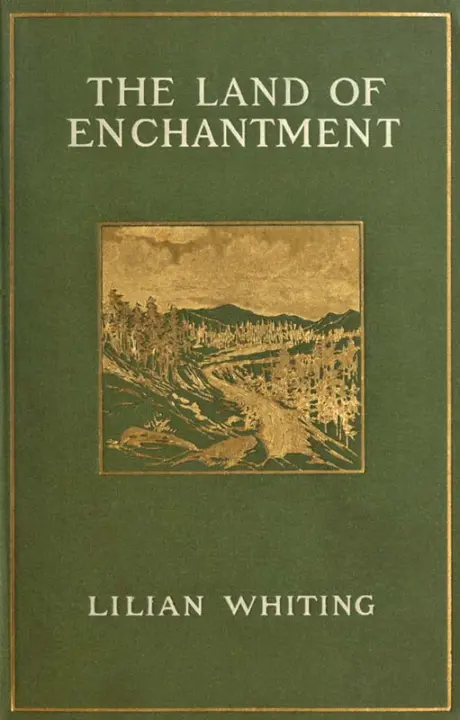
"The Land of Enchantment: From Pike's Peak to the Pacific" by Lilian Whiting is a descriptive travelogue written in the early 20th century. This work explores the breathtaking landscapes and cultural richness of the southwestern United States, particularly focusing on regions such as Colorado, New Mexico, Arizona, and Southern California. The author vividly portrays the beauty and grandeur of these areas, inviting readers to appreciate and consider them as significant travel destinations. The opening of the book sets the stage for a journey through these enchanting regions. Whiting asserts that many Americans overlook the scenic wonders within their own country, instead favoring European travels. She highlights the unique geological and natural phenomena of the Southwest, such as Pike's Peak, the Grand Canyon, and the Petrified Forest, emphasizing their scientific and aesthetic significance. The narrative encourages an adventurous spirit, inviting readers to experience the vivid sunsets, the rich flora and fauna, and the cultural allure of the diverse inhabitants that characterize this remarkable landscape.
Introduction adapted from the source catalogue; source summaries may be automatically generated.
Free to read · English · 84,291 words · No account needed
MAKE TIME FOR A GOOD BOOK
On by default. Untick to stop anonymous reading totals. Each page counts after 10 seconds in view. How this works.
Anonymous counting is on unless you have switched it off.
The usual feature of the situation as trains circle around the rim of these cañons is that their beauty is seen from above. A short stroll and one finds himself between walls towering a thousand feet above his head. The beauty is all around and above. The tops of the mountains seem very far away, and lost in clouds. But in the train the situation is reversed; for, seated in a luxurious observation car of the "Short Line," the tourist is carried above the peaks and cañon walls, which from below seem inaccessible in their height, and from this startling elevation one looks down on an underworld of strange and mysterious forms. St. Peter's Dome, as it is called, looks down from its towering height with the national colors flying from its summit,--a huge mass of granite that seems to stand alone and to guard the secrets of the depths below.
The ascent of St. Peter's Dome is a triumph of engineering skill. As the train glides along, and glory succeeds to glory, vista to vista, and cañon to cañon, in ever changing but constant charm, the dizzy height is climbed apparently with so much ease that the traveller, absorbed in the entrancing surroundings, reaches the top before he is aware of it. It seems impossible that the track seen on the opposite side of the cañon hundreds of feet above should be the path the train is to follow; but a few turns, almost imperceptible, so smooth is the roadbed, and one looks down on the place just passed with equal wonder, and asks if that can be the track by which he has come. As the train climbs the side or rounds the point of each mountain peak, the matchless view of the plains is unfolded before the enraptured gaze. All description is baffled; any attempt to reproduce in words the glory of that scene is impossible. Every tourist in the Pike's Peak region regards the "Short Line" trip as the very crown of the summer's excursions, or, in the local phrase, one whose sublimity of beauty "bankrupts the English language." These forty-five miles not only condense within their limits the grandeur one might reasonably anticipate during a transcontinental journey of three thousand miles, but as an achievement of mountain engineering, railway experts in both Europe and America have pronounced it the most substantially built and the finest equipped mountain railroad in the world. It was opened in 1901, and, quite irrespective of any interest felt in visiting the gold camps of Cripple Creek, the "Short Line" has become the great excursion which all visitors to Colorado desire to make for the sublime effects of the scenery. A prominent civil engineer in Colorado said, in answer to some question regarding the problem of taking trains over mountain ranges and peaks that, given the point to start from and the point to reach, and sufficient capital, there was no difficulty in carrying a railroad anywhere. The rest is, he said, only a question of time and skill. The construction of the "Short Line" reveals the achievement of carrying a railroad around the rims of cañons and over the tops of mountains rather than that of following a trail through the bottom of the cañons. As a scenic success this feat is unparalleled. The bewildering magnificence, the incomparable sublimity, as the train winds up St. Peter's Dome, are beyond the power of painter or poet to picture. Leaving Colorado Springs, the tourist sees the strange towering pinnacles of the Garden of the Gods, in their deep red contrasting with the green background of trees; Manitou gleams from its deep cañon; the towers and spires of Colorado Springs appear in miniature from the far height, and the great expanse of the plateau looks like the sea. It is difficult to realize that one is still gazing upon land. The ascent is more like the experience in an aero-car than in a railroad train, so swift is the upward journey. The first little station on this route is Point Sublime, where the clouds and the mountain peaks meet and mingle. North Cheyenne Cañon is seen far below, and in the distance is fair Broadmoor with its Crescent Lake gleaming like silver. The Silver Cascade Falls sparkle in the air hundreds of feet up the crags. At Fair View the North and South Cheyenne Cañons meet,--those two scenic gorges whose fame is world-wide,--and from one point the traveller gazes down into each, the bottom depths so remote as to be invisible. These precipices are wooded, so that the aspect is that of sheer walls of green. St. Peter's Dome almost pierces the sky, and as the train finally gains the summit a vista of incomparable magnificence opens,--of cañons and peaks and towering rocks,--and through one cañon is seen Pueblo, over fifty miles distant, but swept up in nearer vision with a mirage-like effect in the air. It is a view that might well enchain one. The Spanish Peaks cut the sky far away on the horizon, and the beautiful range of the Sangre de Cristo Mountains offers a view of wonderful beauty. The road passes Duffields, Summit, Rosemont, and Cathedral Park, at each of which stations a house or two, or a few tents, may be seen,--the homes of workmen or of summer dwellers who find the most romantic and picturesque corners of the universe none too good in which to set up their household gods for the midsummer days. Nothing is more feasible than to live high up in the mountains along the "Short Line." The two trains a day bring the mails; all marketing and merchandise are easily procured; and the air, the views, the marvellous spectacle of sunrise and sunset, the perpetually changing panorama, simply make life a high festival. The little station of Rosemont is a natural park, surrounded by three towering peaks,--Mount Rosa, Big Chief, and San Luis. Clyde is a point much frequented by picnickers. The "Cathedral Park" is an impressive example of what the forces of nature can accomplish. Colossal rocks, chiselled by erosion, twisted by tempests, worn by the storms of innumerable ages, loom up in all conceivable shapes. They are of the same order as some of the wonderful groups of rocks seen in the Grand Cañon. Towers and arches and temples and shafts have been created by Nature's irresistable forces, and to the strange fantastic form is added color,--the same rich and varied hues that render the Grand Cañon so wonderful in its color effects. This "Cathedral Park" is a great pleasure resort for celebrations and picnics, both from Colorado Springs, Colorado City, Broadmoor, and other places from below, and also from Cripple Creek, Victor, and other towns in Cripple Creek District.
Your reading position is saved on this browser. Take it to another device with a library code. Reading pages adapt to text, rather than matching a printed edition.
BEHIND THE BOOK
This eBook is for the use of anyone anywhere in the United States and most other parts of the world at no cost and with almost no restrictions whatsoever. You may copy it, give it away or re-use it under the terms of the Project Gutenberg License included with this eBook or online at www.gutenberg.org. If you are not located in the United States, you will have to check the laws of the country where you are located before using this eBook. Read the source licence.
The original source file, including credits and licence, is retained by this library. Request an original-format copy at no charge. Please include the book title and Project Gutenberg identifier #55718.
KEEP YOUR CURIOSITY GOING
Wilfrid Scawen Blunt
Wilfrid Scawen Blunt

E. W. (Edgar Watson) Howe
Francis Greenleaf Allinson & Anne C. E. (Anne Crosby Emery) Allinson
Cyrenus Cole

John Martineau