THE CLASSIC COLLECTION✦A Christmas Carol The original manuscriptCLASSIC FREE BOOKS
A Christmas Carol The original manuscript
Charles Dickens
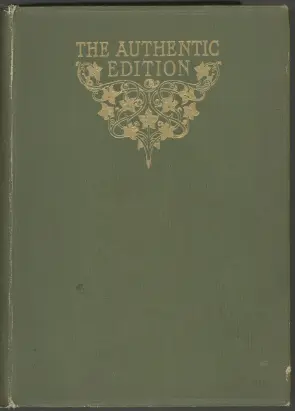
THE CLASSIC COLLECTION · 1879
"The Lamplighter" by Charles Dickens is a humorous novella written during the Victorian era. The story centers on the character Tom Grig, a jovial lamplighter whose life takes an unexpected turn involving celestial predictions and improbable romantic entanglements. With Dickens' characteristic wit and social commentary, the book explores themes of class, fate, ambition, and the balance of good-natured folly with the harsh realities of life. The narrative unfolds as Tom Grig is mistaken for a man of noble lineage by an eccentric old gentleman, who insists that Tom is fated to marry his niece due to a celestial prediction. As the story progresses, humorous misunderstandings and chaos ensue, particularly involving the old gentleman's other niece and a dismal boy named Galileo. The plot thickens with the introduction of a philosopher's stone that promises wealth but ultimately leads to a comically disastrous explosion and an unexpected twist in the tale of love and marriage. In a final twist of fate, Tom discovers that he is not just a lamplighter but a central figure in a web of entangled relationships, making it a delightful exploration of destiny intermingled with humor and absurdity.
Introduction adapted from the source catalogue; source summaries may be automatically generated.
Free to read · English · 7,169 words · No account needed
MAKE TIME FOR A GOOD BOOK
On by default. Untick to stop anonymous reading totals. Each page counts after 10 seconds in view. How this works.
Anonymous counting is on unless you have switched it off.
‘And perhaps, Sir,’ said the vice, holding up his glass, and rising a little way off his seat and sitting down again, in token that he recognised and returned the compliment, ‘perhaps you will add to that condescension by telling us who Tom Grig was, and how he came to be connected in your mind with Francis Moore, Physician.’
‘Hear, hear, hear!’ cried the lamplighters generally.
‘Tom Grig, gentlemen,’ said the chairman, ‘was one of us; and it happened to him, as it don’t often happen to a public character in our line, that he had his what-you-may-call-it cast.’
‘His head?’ said the vice.
‘No,’ replied the chairman, ‘not his head.’
‘His face, perhaps?’ said the vice. ‘No, not his face.’ ‘His legs?’ ‘No, not his legs.’ Nor yet his arms, nor his hands, nor his feet, nor his chest, all of which were severally suggested.
‘His nativity, perhaps?’
‘That’s it,’ said the chairman, awakening from his thoughtful attitude at the suggestion. ‘His nativity. That’s what Tom had cast, gentlemen.’
‘In plaster?’ asked the vice.
‘I don’t rightly know how it’s done,’ returned the chairman. ‘But I suppose it was.’
And there he stopped as if that were all he had to say; whereupon there arose a murmur among the company, which at length resolved itself into a request, conveyed through the vice, that he would go on. This being exactly what the chairman wanted, he mused for a little time, performed that agreeable ceremony which is popularly termed wetting one’s whistle, and went on thus:
‘Tom Grig, gentlemen, was, as I have said, one of us; and I may go further, and say he was an ornament to us, and such a one as only the good old times of oil and cotton could have produced. Tom’s family, gentlemen, were all lamplighters.’
‘Not the ladies, I hope?’ asked the vice.
‘They had talent enough for it, Sir,’ rejoined the chairman, ‘and would have been, but for the prejudices of society. Let women have their rights, Sir, and the females of Tom’s family would have been every one of ’em in office. But that emancipation hasn’t come yet, and hadn’t then, and consequently they confined themselves to the bosoms of their families, cooked the dinners, mended the clothes, minded the children, comforted their husbands, and attended to the house-keeping generally. It’s a hard thing upon the women, gentlemen, that they are limited to such a sphere of action as this; very hard.
Your reading position is saved on this browser. Take it to another device with a library code. Reading pages adapt to text, rather than matching a printed edition.
Charles Dickens
Samuel McChord Crothers & Charles Dickens

Rebecca Harding Davis & Thomas De Quincey & Charles Dickens & Nathaniel Hawthorne & Edward Bulwer Lytton, Baron Lytton & Edgar Allan Poe & Harriet Elizabeth Prescott Spofford

Charles Dickens
BEHIND THE BOOK
This eBook is for the use of anyone anywhere in the United States and most other parts of the world at no cost and with almost no restrictions whatsoever. You may copy it, give it away or re-use it under the terms of the Project Gutenberg License included with this eBook or online at www.gutenberg.org. If you are not located in the United States, you will have to check the laws of the country where you are located before using this eBook. Read the source licence.
The original source file, including credits and licence, is retained by this library. Request an original-format copy at no charge. Please include the book title and Project Gutenberg identifier #927.
KEEP YOUR CURIOSITY GOING
Coulson Kernahan

Maurice Baring
Frances Wright
Cécile Tormay

Frederic Jesup Stimson

W. H. P. (William Henry Pope) Jarvis