THE CLASSIC COLLECTION✦The art of fictionCLASSIC FREE BOOKS
The art of fiction
Walter Besant
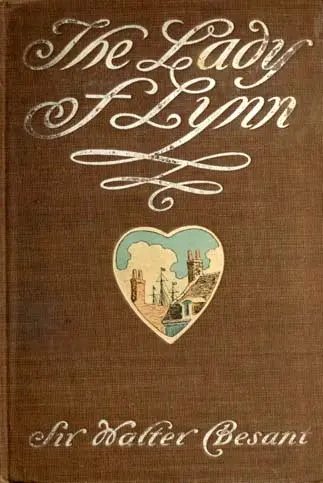
THE CLASSIC COLLECTION · 1900
"The Lady of Lynn" by Sir Walter Besant is a historical novel written in the late 19th century. The narrative is set in 18th-century England and revolves around the life of the protagonist, Jack Pentecrosse, who is appointed as the chief officer on the ship named after the titular character, The Lady of Lynn. The story explores themes of ambition, love, and societal expectations, particularly through the interactions between Jack and Molly Miller, the ship’s young heiress. The opening of "The Lady of Lynn" introduces us to Jack Pentecrosse on his nineteenth birthday, marking a significant moment as he is promoted to chief officer aboard his ship. As we are drawn into his responsibilities at sea, we learn about the ship's owner, Molly Miller, and her wealth, which raises questions about her future and the romantic potential between her and Jack. The narrative also hints at larger societal dynamics, including issues of class disparity and ambition through the lens of Jack’s humble origins as he navigates a world rife with expectations and traditions. The detailed descriptions of life at sea and the personal connections established create a rich backdrop for the unfolding drama, setting the stage for the characters' development and future challenges.
Introduction adapted from the source catalogue; source summaries may be automatically generated.
Free to read · English · 133,173 words · No account needed
MAKE TIME FOR A GOOD BOOK
On by default. Untick to stop anonymous reading totals. Each page counts after 10 seconds in view. How this works.
Anonymous counting is on unless you have switched it off.
"Are we stupid?" cried the vicar. "Have we been struck with judicial stupidity? Let us instantly, without any delay, proceed to this test. Molly, my dear, get paper, pen and ink.... So--now sit at the table. Write your name as you usually write it when you sign a letter."
"But I never write any letters," said Molly.
"She writes the names on the pots of pickles and the preserved fruit," said the captain. "Come, Molly, you can sign your name."
The girl blushed and seized the pen. It was not with the pen of a ready writer that she wrote, in a clumsy hand--a hand unaccustomed to such writing--her name "Molly Miller."
"Is this your best writing, Molly?"
"Indeed, sir, I am ashamed that it is no better. At school I learned better, but I have so little occasion to write."
"So long as it is the signature you would use in the church, it will serve," said the vicar. "Come, let us to St. Nicholas at once, and send for the clerk. We will examine these registers, and we will read the rest of the letter afterwards."
The chest was unlocked; the registers were taken out; the books were opened at the right page. The vicar laid Molly's writing beside that of the register.
"You see," said the vicar, "the very signature proclaims the cheat. We have been, of a verity, seized with judicial blindness for our sins."
The differences were not such as could be explained away, for the signature in the book was round and full and flowing--a bold signature for a woman--every letter well formed and of equal size, and in a straight line; the work of one who wrote many letters, and prided herself, apparently, on the clearness and beauty of her hand. Molly's, on the other hand, showed letters awkwardly formed, not in line, of unequal height, and the evident work of one unaccustomed to writing.
"What doubt have we now?" asked the vicar. "My friends, I see daylight. But let us return to complete my reverend brother's letter."
The letter thus continued:
"You have now, I take it, satisfied yourself that your ward could not possibly have penned that signature. You have no doubt, if you had any before, that your ward's denial was the truth.
"At the same time you do not appear to have considered the matter worth fighting. It was not, for assuredly a court of justice, even with the handwriting as evidence, would have decided against you. So far, you were well advised.
"You, therefore, withdrew opposition, and suffered the husband to take over, what he claimed, control of the estate.
Your reading position is saved on this browser. Take it to another device with a library code. Reading pages adapt to text, rather than matching a printed edition.
Walter Besant
Walter Besant

Walter Besant

Walter Besant
BEHIND THE BOOK
This eBook is for the use of anyone anywhere in the United States and most other parts of the world at no cost and with almost no restrictions whatsoever. You may copy it, give it away or re-use it under the terms of the Project Gutenberg License included with this eBook or online at www.gutenberg.org. If you are not located in the United States, you will have to check the laws of the country where you are located before using this eBook. Read the source licence.
The original source file, including credits and licence, is retained by this library. Request an original-format copy at no charge. Please include the book title and Project Gutenberg identifier #42618.
KEEP YOUR CURIOSITY GOING
Cécile Tormay

Moritz Busch
Coulson Kernahan
John L. Ransom

Maurice Baring
Frances Wright