THE CLASSIC COLLECTION✦The art of fictionCLASSIC FREE BOOKS
The art of fiction
Walter Besant
THE CLASSIC COLLECTION · 1900
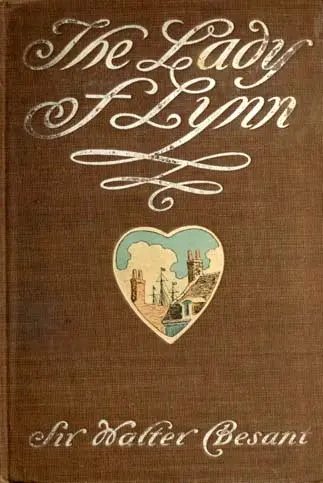
"The Lady of Lynn" by Sir Walter Besant is a historical novel written in the late 19th century. The narrative is set in 18th-century England and revolves around the life of the protagonist, Jack Pentecrosse, who is appointed as the chief officer on the ship named after the titular character, The Lady of Lynn. The story explores themes of ambition, love, and societal expectations, particularly through the interactions between Jack and Molly Miller, the ship’s young heiress. The opening of "The Lady of Lynn" introduces us to Jack Pentecrosse on his nineteenth birthday, marking a significant moment as he is promoted to chief officer aboard his ship. As we are drawn into his responsibilities at sea, we learn about the ship's owner, Molly Miller, and her wealth, which raises questions about her future and the romantic potential between her and Jack. The narrative also hints at larger societal dynamics, including issues of class disparity and ambition through the lens of Jack’s humble origins as he navigates a world rife with expectations and traditions. The detailed descriptions of life at sea and the personal connections established create a rich backdrop for the unfolding drama, setting the stage for the characters' development and future challenges.
Introduction adapted from the source catalogue; source summaries may be automatically generated.
Free to read · English · 133,173 words · No account needed
MAKE TIME FOR A GOOD BOOK
On by default. Untick to stop anonymous reading totals. Each page counts after 10 seconds in view. How this works.
Anonymous counting is on unless you have switched it off.
"Then, Sir Harry, this is the case. It is probable that for certain private reasons, I may have to pay a visit to a country town--a town of tarpaulins and traders, not a town of fashion"--Sir Harry shuddered--"patience, my friend. I know not how long I shall endure the barbaric company. But I must go--there are reasons--let me whisper--reasons of state--important secrets which call me there"--Sir Harry smiled and looked incredulous--"I want, on the spot, a friend"--Sir Harry smiled again, as one who began to understand--"a friend who would appear to be a stranger. Would you, therefore, play the part of such a friend?"
"I will do whatever your lordship commands. Yet to leave town at this season"--it was then the month of April--"the assembly, the park, the card table--the society of the ladies----"
"The loss will be theirs, Sir Harry. To lose their old favourite--oh! there will be lamentations, at the rout---- Perhaps, however, we may find consolations."
"Impossible. There are none out of town, except at Bath or
Tunbridge----"
"The ladies of Norfolk are famous for their beauty."
"Hoydens--I know them,
"'I who erst beneath a tree
Sung, Bumpkinet, and Bowzybee,
And Blouzelind and Marian bright
In aprons blue or aprons white,'
"as Gay hath it. Hoydens, my lord, I know them. They play whist and
dance jigs."
"The Norfolk gentlemen drink hard and the wine is good."
"Nay, my lord, this is cruel. For I can drink no longer."
"I shall find other diversions for you. It is possible--I say--possible--that the Lady Anastasia may go there as well. She will, as usual, keep the bank if she does go."
The old beau's face cleared, whether in anticipation of Lady Anastasia's society or her card table I know not.
"My character, Sir Harry, will be in your hands. I leave it there
confidently. For reasons--reasons of state--it should be a character
of...."
"I understand. Your lordship is a model of all the virtues----"
"So--we understand. My secretary will converse with thee further on
the point of expenditure."
Sir Harry retired, bowing and twisting his body something like an ape.
Then a gentleman in scarlet presented himself.
"Your lordship's most obedient," he said, with scant courtesy. "I come in obedience to your letter--for command."
"Colonel, you will hold yourself in readiness to go into the country. There will be play--you may lose as much as you please--to Sir Harry Malyus or to any one else whom my secretary will point out to you. Perhaps you may have to receive a remonstrance from me. We are strangers, remember, and I am no gambler, though I sometimes take a card."
Your reading position is saved on this browser. Take it to another device with a library code. Reading pages adapt to text, rather than matching a printed edition.
Walter Besant
Walter Besant

Walter Besant

Walter Besant
BEHIND THE BOOK
This eBook is for the use of anyone anywhere in the United States and most other parts of the world at no cost and with almost no restrictions whatsoever. You may copy it, give it away or re-use it under the terms of the Project Gutenberg License included with this eBook or online at www.gutenberg.org. If you are not located in the United States, you will have to check the laws of the country where you are located before using this eBook. Read the source licence.
The original source file, including credits and licence, is retained by this library. Request an original-format copy at no charge. Please include the book title and Project Gutenberg identifier #42618.
KEEP YOUR CURIOSITY GOING
Cécile Tormay

Moritz Busch
Coulson Kernahan
John L. Ransom

Maurice Baring
Frances Wright