
The Residuary Legatee; Or, The Posthumous Jest of the Late John Austin
Frederic Jesup Stimson
THE CLASSIC COLLECTION · 1884
"The King's Men: A Tale of To-morrow" by Robert Grant and others is a novel written in the late 19th century. The story unfolds in an alternate historical setting where England is reeling from the consequences of political upheaval, particularly after the abdication of King George V and the establishment of a republic. The primary character, Geoffrey Ripon, finds himself in a precarious position as the last heir of a once-great lineage, living in diminished circumstances and reflecting on the social changes around him. The beginning of the book introduces Geoffrey Ripon, who is living in a lodge once associated with his noble family, troubled by financial ruin and pondering the shifting social landscape of post-monarchical England. Through his interactions and observations, readers glimpse a society grappling with the consequences of radical change. The narrative sets up significant themes of class, nostalgia for the past, and the social dynamics of a world where titles and power are in disarray, hinting at more personal and political conflicts to come as various characters enter his life, including Margaret Windsor, the daughter of a wealthy American businessman who has taken residence in Ripon House. The opening chapters establish the tone and atmosphere, immersing the reader in a rich tapestry of historical context and character intrigue.
Introduction adapted from the source catalogue; source summaries may be automatically generated.
Free to read · English · 75,041 words · No account needed
MAKE TIME FOR A GOOD BOOK
On by default. Untick to stop anonymous reading totals. Each page counts after 10 seconds in view. How this works.
Anonymous counting is on unless you have switched it off.
The King looked delighted. "Yes, it is my birthday," he answered. "I was afraid you would come too late for the champagne."
Mrs. Carey was about to retire to her seat when the King exclaimed, "Lady Muriel, if it's all the same, I'll get you to change seats with Mrs. Carey. Am I not your sovereign?" he inquired, noticing the glum looks of the outraged maid of honor.
All through the rest of the meal Mrs. Carey and the King whispered together. "I have taken a great liberty," said she at last.
"And what is that? The only liberty that I should object to your taking would be taking yourself away."
"I have invited a party of friends to your drawing-room to-night. I had promised a sweet girl, who seems to have taken an interest in me, to chaperone a theatre party, and she is going to bring her guests here instead. Does this inconvenience your Majesty?"
"Nothing that you could do would inconvenience me," and he gurgled as he
drank his champagne.
"She plays her cards well, n'est-ce pas," said Lady Muriel to her new neighbor, Lord Gladstone Churchill.
King George caught her saturnine expression. He turned to the master of the household at his elbow. "Did I not order that Lady Muriel Howard should have only one glass of wine?"
"She insisted on more, your Majesty," groaned the major-domo.
"Am I not King?" said the monarch, and he pounded on the table so that
the glasses rang.
This incident attracted every one's attention. Conversation flagged, and presently the Princess gave the signal for rising from the table. The ladies went out in advance, each turning as she left her seat and making a low courtesy to the King. Mrs. Carey was the last in the procession. As she passed through the door, her glance fell full on a man standing a little to one side, and gazing at her intently. She faltered, but only for an instant.
"Why, Mr. Jawkins, when did you arrive? Welcome to court," she cried in a cordial, conciliatory tone, holding out her hand.
Jawkins bowed stiffly, not seeming to see Mrs. Carey's hand. "Yes, I am come," he answered, "but small thanks to you, madam."
Dissimulation was not one of Jawkins's accomplishments.
"This is no place for a scene," she said, in a low tone. "If you wish an interview with me there will be an opportunity later. The drawing-room begins at ten. You will see me there." She smiled and showed her teeth ravishingly, despite the serious purport of her words.
"It is the King I wish to see, Mrs. Carey, not you," Jawkins replied
significantly.
Your reading position is saved on this browser. Take it to another device with a library code. Reading pages adapt to text, rather than matching a printed edition.
Frederic Jesup Stimson
Robert Grant
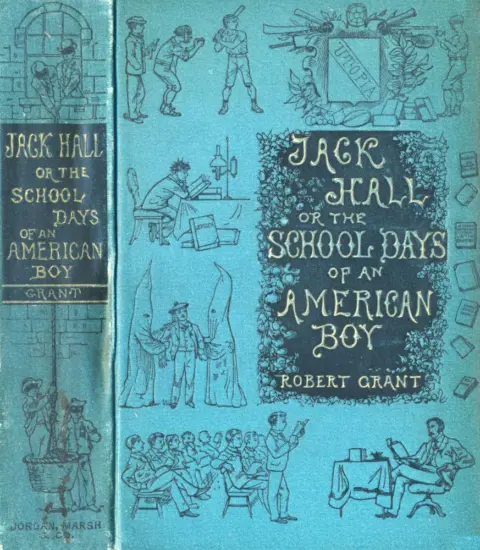
Robert Grant
John T. (John Tyler) Wheelwright
BEHIND THE BOOK
This eBook is for the use of anyone anywhere in the United States and most other parts of the world at no cost and with almost no restrictions whatsoever. You may copy it, give it away or re-use it under the terms of the Project Gutenberg License included with this eBook or online at www.gutenberg.org. If you are not located in the United States, you will have to check the laws of the country where you are located before using this eBook. Read the source licence.
The original source file, including credits and licence, is retained by this library. Request an original-format copy at no charge. Please include the book title and Project Gutenberg identifier #18960.
KEEP YOUR CURIOSITY GOING
Cécile Tormay

Moritz Busch
Coulson Kernahan
John L. Ransom

Maurice Baring
Frances Wright