THE CLASSIC COLLECTION✦My diaries, being a personal narrative of events 1888-1914, Part 2 (1900-1914)CLASSIC FREE BOOKS
My diaries, being a personal narrative of events 1888-1914, Part 2 (1900-1914)
Wilfrid Scawen Blunt
THE CLASSIC COLLECTION · 1898
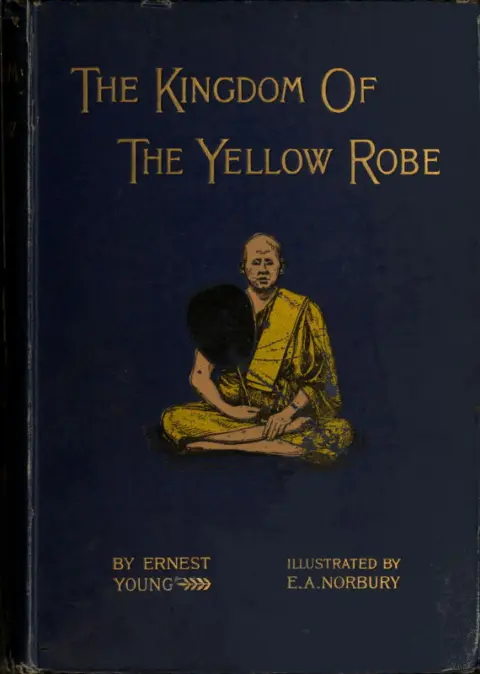
"The Kingdom of the Yellow Robe" by Ernest Young is a collection of sketches focused on the domestic and religious rites and ceremonies of the Siamese, written in the late 19th century. This work emerges from the author's extensive firsthand observations during his years of residence in Bangkok, offering readers insights into the cultural fabric of Siam. The book vividly explores various aspects of Siamese life, including the social dynamics, customs, and religious practices of the people. At the start of the book, the author introduces Bangkok, portrayed as the "Venice of the East," and provides a historical backdrop regarding the transition of the capital from Ayuthia. Young describes the bustling street life, populated predominantly by the working Chinese, amidst the vibrant chaos of vendors, priests, and local characters. This section paints a lively picture of the sights, sounds, and smells of the city while hinting at the cultural nuances that will be explored further in the book, including domestic life, marriage customs, and religious ceremonies, all interwoven with the author's keen observations and engaging narrative style.
Introduction adapted from the source catalogue; source summaries may be automatically generated.
Free to read · English · 97,493 words · No account needed
MAKE TIME FOR A GOOD BOOK
On by default. Untick to stop anonymous reading totals. Each page counts after 10 seconds in view. How this works.
Anonymous counting is on unless you have switched it off.
When the year has arrived in which it is deemed expedient to cut off the carefully tended lock, the astrologers are consulted as to the appointment of a propitious day. Now this is an extremely difficult task, for the day chosen must be one free from any of the numerous evil influences that affect the lives of men. These evil influences have been duly studied and catalogued, and include the powers of innumerable demons and of death. The day must not be one on which sickness is liable to appear; in the heavens above, no constellation bearing a female name must be visible; it must not be a day marked in the calendar as being likely to be visited by thunderbolts, conflagrations, wrecks or loss of life by drowning. Then also it must be free from dangers from enemies or wild beasts; or yet again, it must not be a day on which a man may expect severe punishment from his earthly rulers, or death by falling off a tree.
Even when the auspicious day has been decided after long and laborious calculations, and earnest consultations of old calendars, there yet remains the necessity of choosing a particularly lucky moment on the particularly lucky day.
When all these preliminary details have been satisfactorily settled, the date is announced and preparations are made for the celebration of the event with an elaborate and mystic ritual. The house of the parents of the child is cleaned and adorned, a process it never undergoes except on those occasions when it is the scene of the performance of religious ceremonies. A table is placed to receive the numerous offerings which will be freely made on the auspicious day, and a gilded image of Buddha is placed reverentially on an altar and surrounded with candelabra bearing waxen tapers, with incense sticks in china vases, with wax flowers and the sacred vessels used during the celebration. Around this decorated altar a hallowed circle is formed with certain utensils deemed especially important and holy. It includes within its circumference, a bench or table on which are placed several vessels of gold and silver, and the bowls of water which will be afterwards consecrated by means of a number of formulæ recited by the priests from the sacred Buddhist or Brahminical texts. The mystic conch-shell, and the shears and razors complete the holy ring. There are three pairs of scissors, the handles of one pair being of gold, of another of silver, and of the third of an alloy of copper and gold. On another stand about as high as the level of the eye of a man of average height, are placed several offerings of dainty food in small saucers made of plaited leaves. These are for the refreshment and propitiation of the tutelary deities of the place, to whom, and to the shades of the dead, the Brahminical astrologers make oblations and prayers at the rate of about two shillings and four pence per day. A curiously-shaped throne is next erected. It is a raised square dais with four slender posts, one at each corner, which lean towards each other at the top, and support a frail canopy. The whole structure is first covered with white cloth, and then draped with curtains of white gauze and cloth of gold. It is on this throne that the candidate sits to be bathed with consecrated water when the top-knot has been removed. During the initial stages of the proceedings it bears a nine-storied pagoda. The pagoda tapers towards the summit and is of very frail material. The corner stays are made of the mid-ribs of the plantain leaves, and each story is formed of strong fibrous leaves. On each stage there are nine square dishes also constructed of leaves. They hold a number of sweetmeats and foods that are supposed to be particularly palatable to the god Ketu. This deity is of a kindly and beneficent disposition, and, if properly worshipped, rewards his devotees by endowing them with long life and prosperity. Hence all these preliminary preparations in order to entreat his presence on this important occasion. Along the corner stays are stuck incense sticks, tapers, and flags of a peculiar pattern. The preparations are completed by surrounding the whole house with a protective cord or thread made of unspun cotton. The thread is attached at one end to the dais erected for the monks, passes over the altar, is twined round the bowls containing the water to be consecrated, is carried round the exterior of the house, and is then brought back to the hall, where it ends in a small ball, ready to be tied to the top-knot of the child. It is supposed to be efficacious in keeping out all evil spirits or other influences that would in the absence of any such consecrated barrier, force an entrance to the hall of ceremonies and render nugatory the performance of the various rites. A similar cord may be seen at times round the palace or city walls, serving a similar purpose.
Your reading position is saved on this browser. Take it to another device with a library code. Reading pages adapt to text, rather than matching a printed edition.
BEHIND THE BOOK
This eBook is for the use of anyone anywhere in the United States and most other parts of the world at no cost and with almost no restrictions whatsoever. You may copy it, give it away or re-use it under the terms of the Project Gutenberg License included with this eBook or online at www.gutenberg.org. If you are not located in the United States, you will have to check the laws of the country where you are located before using this eBook. Read the source licence.
The original source file, including credits and licence, is retained by this library. Request an original-format copy at no charge. Please include the book title and Project Gutenberg identifier #48111.
KEEP YOUR CURIOSITY GOING
Wilfrid Scawen Blunt
Wilfrid Scawen Blunt

E. W. (Edgar Watson) Howe

David Patterson (Spirit) Hatch

David Patterson (Spirit) Hatch

David Patterson (Spirit) Hatch