The Devil
Leo, graf Tolstoy
THE CLASSIC COLLECTION · 1899
"The Kingdom of God is Within You; What is Art?" by graf Leo Tolstoy is a philosophical work written in the late 19th century. The book explores two main themes: the profound implications of Christian teachings on non-resistance to evil and a critical analysis of the nature and purpose of art. Tolstoy emphasizes that true Christianity is about embodying love and non-violence, challenging prevailing interpretations of Christ’s teachings, while also contesting the commodification of art in society. At the start of the work, Tolstoy outlines his journey of rediscovering the essence of Christianity, focusing on the commandment of non-resistance to evil. He critiques the discrepancy between the Church's doctrines and Christ's teachings, asserting that society's reliance on violence contradicts the core of Christianity. Additionally, he introduces his arguments regarding art, suggesting that art must serve moral and societal purposes rather than mere aesthetic enjoyment. The opening portion sets an introspective tone, providing a foundation for the deeper discussions that follow about humanitarianism, moral integrity, and the role of art in fostering human connection.
Introduction adapted from the source catalogue; source summaries may be automatically generated.
Free to read · English · 192,969 words · No account needed
MAKE TIME FOR A GOOD BOOK
On by default. Untick to stop anonymous reading totals. Each page counts after 10 seconds in view. How this works.
Anonymous counting is on unless you have switched it off.
But Wagner is not only a musician, he is also a poet, or both together; and therefore, to judge of Wagner, one must know his poetry also--that same poetry which the music has to subserve. The chief poetical production of Wagner is "The Nibelung's Ring." This work has attained such enormous importance in our time, and has such influence on all that now professes to be art, that it is necessary for every one to-day to have some idea of it. I have carefully read through the four booklets which contain this work, and have drawn up a brief summary of it, which I give in Appendix III. I would strongly advise the reader (if he has not perused the poem itself, which would be the best thing to do) at least to read my account of it, so as to have an idea of this extraordinary work. It is a model work of counterfeit art, so gross as to be even ridiculous.
But we are told that it is impossible to judge of Wagner's works without seeing them on the stage. The Second Day of this drama, which, as I was told, is the best part of the whole work, was given in Moscow last winter, and I went to see the performance.
When I arrived the enormous theater was already filled from top to bottom. There were grand dukes, and the flower of the aristocracy, of the merchant class, of the learned, and of the middle-class official public. Most of them held the libretto, fathoming its meaning. Musicians--some of them elderly, gray-haired men--followed the music, score in hand. Evidently the performance of this work was an event of importance.
I was rather late, but I was told that the short prelude, with which the act begins, was of little importance, and that it did not matter having missed it. When I arrived, an actor sat on the stage amid decorations intended to represent a cave, and before something which was meant to represent a smith's forge. He was dressed in trico-tights, with a cloak of skins, wore a wig and an artificial beard, and with white, weak genteel hands (his easy movements, and especially the shape of his stomach and his lack of muscle revealed the actor) beat an impossible sword with an unnatural hammer in a way in which no one ever uses a hammer; and at the same time, opening his mouth in a strange way, he sang something incomprehensible. The music of various instruments accompanied the strange sounds which he emitted. From the libretto one was able to gather that the actor had to represent a powerful gnome, who lived in the cave, and who was forging a sword for Siegfried, whom he had reared. One could tell he was a gnome by the fact that the actor walked all the time bending the knees of his trico-covered legs. This gnome, still opening his mouth in the same strange way, long continued to sing or shout. The music meanwhile runs over something strange, like beginnings which are not continued and do not get finished. From the libretto one could learn that the gnome is telling himself about a ring which a giant had obtained, and which the gnome wishes to procure through Siegfried's aid, while Siegfried wants a good sword, on the forging of which the gnome is occupied. After this conversation or singing to himself has gone on rather a long time, other sounds are heard in the orchestra, also like something beginning and not finishing, and another actor appears, with a horn slung over his shoulder, and accompanied by a man running on all fours dressed up as a bear, whom he sets at the smith-gnome. The latter runs away without unbending the knees of his trico-covered legs. This actor with the horn represented the hero, Siegfried. The sounds which were emitted in the orchestra on the entrance of this actor were intended to represent Siegfried's character, and are called Siegfried's leit-motiv. And these sounds are repeated each time Siegfried appears. There is one fixed combination of sounds, or leit-motiv, for each character, and this leit-motiv is repeated every time the person whom it represents appears; and when any one is mentioned the motiv is heard which relates to that person. Moreover, each article also has its own leit-motiv or chord. There is a motiv of the ring, a motiv of the helmet, a motiv of the apple, a motiv of fire, spear, sword, water, etc.; and as soon as the ring, helmet, or apple is mentioned, the motiv or chord of the ring, helmet, or apple is heard. The actor with the horn opens his mouth as unnaturally as the gnome, and long continues in a chanting voice to shout some words, and in a similar chant Mime (that is the gnome's name) answers something or other to him. The meaning of this conversation can only be discovered from the libretto; and it is that Siegfried was brought up by the gnome, and therefore, for some reason, hates him and always wishes to kill him. The gnome has forged a sword for Siegfried, but Siegfried is dissatisfied with it. From a ten-page conversation (by the libretto), lasting half an hour and conducted with the same strange openings of the mouth, and chantings, it appears that Siegfried's mother gave birth to him in the wood, and that concerning his father all that is known is that he had a sword which was broken, the pieces of which are in Mime's possession, and that Siegfried does not know fear and wishes to go out of the wood. Mime, however, does not want to let him go. During the conversation the music never omits, at the mention of father, sword, etc., to sound the motiv of these people and things. After these conversations fresh sounds are heard--those of the god Wotan--and a wanderer appears. This wanderer is the god Wotan. Also dressed up in a wig, and also in tights, this god Wotan, standing in a stupid pose with a spear, thinks proper to recount what Mime must have known before, but what it is necessary to tell the audience. He does not tell it simply, but in the form of riddles which he orders himself to guess, staking his head (one does not know why) that he will guess right. Moreover, whenever the wanderer strikes his spear on the ground, fire comes out of the ground, and in the orchestra the sounds of spear and of fire are heard. The orchestra accompanies the conversation, and the motiv of the people and things spoken of are always artfully intermingled. Besides this the music expresses feelings in the most naïve manner: the terrible by sounds in the bass, the frivolous by rapid touches in the treble, etc.
Your reading position is saved on this browser. Take it to another device with a library code. Reading pages adapt to text, rather than matching a printed edition.
Leo, graf Tolstoy
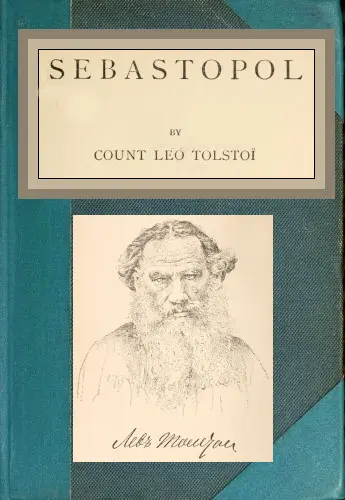
Leo, graf Tolstoy
Leo, graf Tolstoy
Leo, graf Tolstoy
BEHIND THE BOOK
This eBook is for the use of anyone anywhere in the United States and most other parts of the world at no cost and with almost no restrictions whatsoever. You may copy it, give it away or re-use it under the terms of the Project Gutenberg License included with this eBook or online at www.gutenberg.org. If you are not located in the United States, you will have to check the laws of the country where you are located before using this eBook. Read the source licence.
The original source file, including credits and licence, is retained by this library. Request an original-format copy at no charge. Please include the book title and Project Gutenberg identifier #43409.
KEEP YOUR CURIOSITY GOING

David Patterson (Spirit) Hatch

David Patterson (Spirit) Hatch

David Patterson (Spirit) Hatch
Coulson Kernahan

Ralph Waldo Emerson
Frances Wright