The Devil
Leo, graf Tolstoy
THE CLASSIC COLLECTION · 1899
"The Kingdom of God is Within You; What is Art?" by graf Leo Tolstoy is a philosophical work written in the late 19th century. The book explores two main themes: the profound implications of Christian teachings on non-resistance to evil and a critical analysis of the nature and purpose of art. Tolstoy emphasizes that true Christianity is about embodying love and non-violence, challenging prevailing interpretations of Christ’s teachings, while also contesting the commodification of art in society. At the start of the work, Tolstoy outlines his journey of rediscovering the essence of Christianity, focusing on the commandment of non-resistance to evil. He critiques the discrepancy between the Church's doctrines and Christ's teachings, asserting that society's reliance on violence contradicts the core of Christianity. Additionally, he introduces his arguments regarding art, suggesting that art must serve moral and societal purposes rather than mere aesthetic enjoyment. The opening portion sets an introspective tone, providing a foundation for the deeper discussions that follow about humanitarianism, moral integrity, and the role of art in fostering human connection.
Introduction adapted from the source catalogue; source summaries may be automatically generated.
Free to read · English · 192,969 words · No account needed
MAKE TIME FOR A GOOD BOOK
On by default. Untick to stop anonymous reading totals. Each page counts after 10 seconds in view. How this works.
Anonymous counting is on unless you have switched it off.
The one thing these schools can teach is how to transmit feelings experienced by other artists in the way those other artists transmitted them. And this is just what the professional schools do teach; and such instruction not only does not assist the spread of true art, but, on the contrary, by diffusing counterfeits of art, does more than anything else to deprive people of the capacity to understand true art.
In literary art people are taught how, without having anything they wish to say, to write a many-paged composition on a theme about which they have never thought, and, moreover, to write it so that it should resemble the work of an author admitted to be celebrated. This is taught in schools.
In painting, the chief training consists in learning to draw and paint from copies and models, the naked body chiefly (the very thing that is never seen, and which a man occupied with real art hardly ever has to depict), and to draw and paint as former masters drew and painted. The composition of pictures is taught by giving out themes similar to those which have been treated by former acknowledged celebrities.
So also in dramatic schools, the pupils are taught to recite monologues just as tragedians, considered celebrated, declaimed them.
It is the same in music. The whole theory of music is nothing but a disconnected repetition of those methods which the acknowledged masters of composition made use of.
I have elsewhere quoted the profound remark of the Russian artist Bruloff on art, but I cannot here refrain from repeating it, because nothing better illustrates what can and what cannot be taught in the schools. Once when correcting a pupil's study, Bruloff just touched it in a few places, and the poor dead study immediately became animated. "Why, you only touched it a wee bit, and it is quite another thing!" said one of the pupils. "Art begins where the wee bit begins," replied Bruloff, indicating by these words just what is most characteristic of art. The remark is true of all the arts, but its justice is particularly noticeable in the performance of music. That musical execution should be artistic, should be art, i.e. should infect, three chief conditions must be observed,--there are many others needed for musical perfection; the transition from one sound to another must be interrupted or continuous; the sound must increase or diminish steadily; it must be blended with one and not with another sound; the sound must have this or that timbre, and much besides,--but take the three chief conditions; the pitch, the time, and the strength of the sound. Musical execution is only then art, only then infects, when the sound is neither higher nor lower than it should be, that is, when exactly the infinitely small center of the required note is taken; when that note is continued exactly as long as is needed; and when the strength of the sound is neither more nor less than is required. The slightest deviation of pitch in either direction, the slightest increase or decrease in time, or the slightest strengthening or weakening of the sound beyond what is needed, destroys the perfection and, consequently, the infectiousness of the work. So that the feeling of infection by the art of music, which seems so simple and so easily obtained, is a thing we receive only when the performer finds those infinitely minute degrees which are necessary to perfection in music. It is the same in all arts: a wee bit lighter, a wee bit darker, a wee bit higher, lower, to the right or the left--in painting; a wee bit weaker or stronger in intonation, or a wee bit sooner or later--in dramatic art; a wee bit omitted, over-emphasized, or exaggerated--in poetry, and there is no contagion. Infection is only obtained when an artist finds those infinitely minute degrees of which a work of art consists, and only to the extent to which he finds them. And it is quite impossible to teach people by external means to find these minute degrees; they can only be found when a man yields to his feeling. No instruction can make a dancer catch just the tact of the music, or a singer or a fiddler take exactly the infinitely minute center of his note, or a sketcher draw of all possible lines the only right one, or a poet find the only meet arrangement of the only suitable words. All this is found only by feeling. And therefore schools may teach what is necessary in order to produce something resembling art, but not art itself.
Your reading position is saved on this browser. Take it to another device with a library code. Reading pages adapt to text, rather than matching a printed edition.
Leo, graf Tolstoy
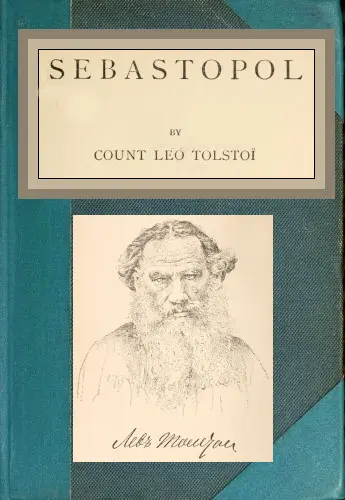
Leo, graf Tolstoy
Leo, graf Tolstoy
Leo, graf Tolstoy
BEHIND THE BOOK
This eBook is for the use of anyone anywhere in the United States and most other parts of the world at no cost and with almost no restrictions whatsoever. You may copy it, give it away or re-use it under the terms of the Project Gutenberg License included with this eBook or online at www.gutenberg.org. If you are not located in the United States, you will have to check the laws of the country where you are located before using this eBook. Read the source licence.
The original source file, including credits and licence, is retained by this library. Request an original-format copy at no charge. Please include the book title and Project Gutenberg identifier #43409.
KEEP YOUR CURIOSITY GOING

David Patterson (Spirit) Hatch

David Patterson (Spirit) Hatch

David Patterson (Spirit) Hatch
Coulson Kernahan

Ralph Waldo Emerson
Frances Wright