
The Devil
Leo, graf Tolstoy
THE CLASSIC COLLECTION · 1899
"The Kingdom of God is Within You; What is Art?" by graf Leo Tolstoy is a philosophical work written in the late 19th century. The book explores two main themes: the profound implications of Christian teachings on non-resistance to evil and a critical analysis of the nature and purpose of art. Tolstoy emphasizes that true Christianity is about embodying love and non-violence, challenging prevailing interpretations of Christ’s teachings, while also contesting the commodification of art in society. At the start of the work, Tolstoy outlines his journey of rediscovering the essence of Christianity, focusing on the commandment of non-resistance to evil. He critiques the discrepancy between the Church's doctrines and Christ's teachings, asserting that society's reliance on violence contradicts the core of Christianity. Additionally, he introduces his arguments regarding art, suggesting that art must serve moral and societal purposes rather than mere aesthetic enjoyment. The opening portion sets an introspective tone, providing a foundation for the deeper discussions that follow about humanitarianism, moral integrity, and the role of art in fostering human connection.
Introduction adapted from the source catalogue; source summaries may be automatically generated.
Free to read · English · 192,969 words · No account needed
MAKE TIME FOR A GOOD BOOK
On by default. Untick to stop anonymous reading totals. Each page counts after 10 seconds in view. How this works.
Anonymous counting is on unless you have switched it off.
The performance had already commenced, and on the stage a procession of Indians who had brought home a bride was being presented. Besides men and women in costume, two other men in ordinary clothes bustled and ran about on the stage; one was the director of the dramatic part, and the other, who stepped about in soft shoes and ran from place to place with unusual agility, was the dancing-master, whose salary per month exceeded what ten laborers earn in a year.
These three directors arranged the singing, the orchestra, and the procession. The procession, as usual, was enacted by couples, with tinfoil halberds on their shoulders. They all came from one place, and walked round and round again, and then stopped. The procession took a long time to arrange: first the Indians with halberds came on too late; then too soon; then at the right time, but crowded together at the exit; then they did not crowd, but arranged themselves badly at the sides of the stage; and each time the whole performance was stopped and recommenced from the beginning. The procession was introduced by a recitative, delivered by a man dressed up like some variety of Turk, who, opening his mouth in a curious way, sang, "Home I bring the bri-i-ide." He sings and waves his arm (which is of course bare) from under his mantle. The procession commences, but here the French horn, in the accompaniment of the recitative, does something wrong; and the director, with a shudder as if some catastrophe had occurred, raps with his stick on the stand. All is stopped, and the director, turning to the orchestra, attacks the French horn, scolding him in the rudest terms, as cabmen abuse each other, for taking the wrong note. And again the whole thing recommences. The Indians with their halberds again come on, treading softly in their extraordinary boots; again the singer sings, "Home I bring the bri-i-ide." But here the pairs get too close together. More raps with the stick, more scolding, and a recommencement. Again, "Home I bring the bri-i-ide," again the same gesticulation with the bare arm from under the mantle, and again the couples, treading softly with halberds on their shoulders, some with sad and serious faces, some talking and smiling, arrange themselves in a circle and begin to sing. All seems to be going well, but again the stick raps, and the director, in a distressed and angry voice, begins to scold the men and women of the chorus. It appears that when singing they had omitted to raise their hands from time to time in sign of animation. "Are you all dead, or what? Cows that you are! Are you corpses, that you can't move?" Again they recommence, "Home I bring the bri-i-ide," and again, with sorrowful faces, the chorus-women sing, first one and then another of them raising their hands. But two chorus-girls speak to each other,--again a more vehement rapping with the stick. "Have you come here to talk? Can't you gossip at home? You there in red breeches, come nearer. Look toward me! Recommence!" Again, "Home I bring the bri-i-ide." And so it goes on for one, two, three hours. The whole of such a rehearsal lasts six hours on end. Raps with the stick, repetitions, placings, corrections of the singers, of the orchestra, of the procession, of the dancers,--all seasoned with angry scolding. I heard the words, "asses," "fools," "idiots," "swine," addressed to the musicians and singers at least forty times in the course of one hour. And the unhappy individual to whom the abuse is addressed,--flautist, horn-blower, or singer,--physically and mentally demoralized, does not reply, and does what is demanded of him. Twenty times is repeated the one phrase, "Home I bring the bri-i-ide," and twenty times the striding about in yellow shoes with a halberd over the shoulder. The conductor knows that these people are so demoralized that they are no longer fit for anything but to blow trumpets and walk about with halberds and in yellow shoes, and that they are also accustomed to dainty, easy living, so that they will put up with anything rather than lose their luxurious life. He therefore gives free vent to his churlishness, especially as he has seen the same thing done in Paris and Vienna, and knows that this is the way the best conductors behave, and that it is a musical tradition of great artists to be so carried away by the great business of their art that they cannot pause to consider the feelings of other artists.
Your reading position is saved on this browser. Take it to another device with a library code. Reading pages adapt to text, rather than matching a printed edition.
Leo, graf Tolstoy
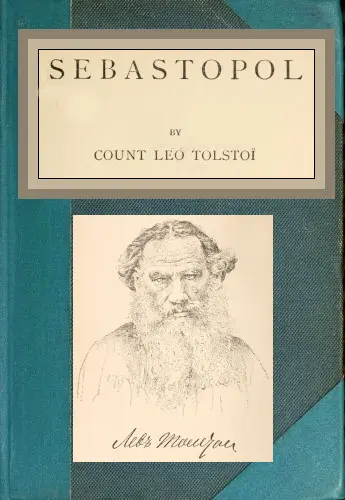
Leo, graf Tolstoy

Leo, graf Tolstoy
Leo, graf Tolstoy
BEHIND THE BOOK
This eBook is for the use of anyone anywhere in the United States and most other parts of the world at no cost and with almost no restrictions whatsoever. You may copy it, give it away or re-use it under the terms of the Project Gutenberg License included with this eBook or online at www.gutenberg.org. If you are not located in the United States, you will have to check the laws of the country where you are located before using this eBook. Read the source licence.
The original source file, including credits and licence, is retained by this library. Request an original-format copy at no charge. Please include the book title and Project Gutenberg identifier #43409.
KEEP YOUR CURIOSITY GOING

David Patterson (Spirit) Hatch

David Patterson (Spirit) Hatch

David Patterson (Spirit) Hatch
Coulson Kernahan

Ralph Waldo Emerson
Frances Wright