The Devil
Leo, graf Tolstoy
THE CLASSIC COLLECTION · 1899
"The Kingdom of God is Within You; What is Art?" by graf Leo Tolstoy is a philosophical work written in the late 19th century. The book explores two main themes: the profound implications of Christian teachings on non-resistance to evil and a critical analysis of the nature and purpose of art. Tolstoy emphasizes that true Christianity is about embodying love and non-violence, challenging prevailing interpretations of Christ’s teachings, while also contesting the commodification of art in society. At the start of the work, Tolstoy outlines his journey of rediscovering the essence of Christianity, focusing on the commandment of non-resistance to evil. He critiques the discrepancy between the Church's doctrines and Christ's teachings, asserting that society's reliance on violence contradicts the core of Christianity. Additionally, he introduces his arguments regarding art, suggesting that art must serve moral and societal purposes rather than mere aesthetic enjoyment. The opening portion sets an introspective tone, providing a foundation for the deeper discussions that follow about humanitarianism, moral integrity, and the role of art in fostering human connection.
Introduction adapted from the source catalogue; source summaries may be automatically generated.
Free to read · English · 192,969 words · No account needed
MAKE TIME FOR A GOOD BOOK
On by default. Untick to stop anonymous reading totals. Each page counts after 10 seconds in view. How this works.
Anonymous counting is on unless you have switched it off.
This is the basis of the appalling conviction that prevails among the lower classes, that the existing system, so ruinous to them, is necessary and justifiable, and that it must be maintained by outrage and murder.
This is inevitable. In order to force the lower, the more numerous classes to act as their own oppressors and tormentors, to commit deeds contrary to their consciences, it is necessary to deceive them.
And this is done.
Not long since I saw again put into practice this shameful deception, and again wondered to see it effected without opposition and so audaciously.
In the beginning of November, on my way through Tula, I saw at the gates of the Zemskaya Uprava the familiar dense crowd of men and women, from which issued the sounds of drunken voices, blended with the heartrending sobs of the wives and mothers.
The military conscription was in progress.
As usual, I could not pass by without pausing; the sight attracts me
as by fascination.
Again I mingled with the crowd, and stood looking on, questioning, and marveling at the facility with which this most terrible of all offenses is committed in broad daylight, and in the midst of a large city.
On the first day of November, in every village in Russia, with its population of one hundred millions, the starostas,[27] according to custom, take the men whose names are entered on the rolls, frequently their own sons, and carry them to town.
[27] Elders.
On the way the men drink freely, unchecked by the elder men; they realize that entering upon this insane business of leaving their wives and mothers, giving up everything that is sacred to them, only to become the senseless tools of murder, is too painful if one's senses are not stupefied with wine.
And thus they journey on, carousing, brawling, singing, and fighting. The night is spent in a tavern, and on this morning, having drunk still more, they assemble before the house of the Uprava.
Some in new sheepskin coats, with knit mufflers wound round their necks, some with their eyes swollen with drinking, some noisy and boisterous, by way of stimulating their courage, others silent and woebegone, they were gathered near the gates, surrounded by their wives and mothers with tear-stained faces, awaiting their turn (I happened to be there on the day when the recruits were received, that is to say, the day on which they were examined), while others were crowding the entry of the office.
Your reading position is saved on this browser. Take it to another device with a library code. Reading pages adapt to text, rather than matching a printed edition.
Leo, graf Tolstoy
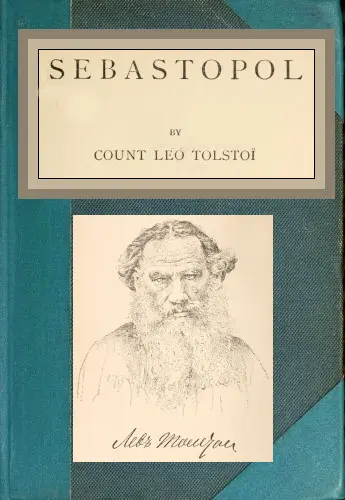
Leo, graf Tolstoy
Leo, graf Tolstoy
Leo, graf Tolstoy
BEHIND THE BOOK
This eBook is for the use of anyone anywhere in the United States and most other parts of the world at no cost and with almost no restrictions whatsoever. You may copy it, give it away or re-use it under the terms of the Project Gutenberg License included with this eBook or online at www.gutenberg.org. If you are not located in the United States, you will have to check the laws of the country where you are located before using this eBook. Read the source licence.
The original source file, including credits and licence, is retained by this library. Request an original-format copy at no charge. Please include the book title and Project Gutenberg identifier #43409.
KEEP YOUR CURIOSITY GOING

David Patterson (Spirit) Hatch

David Patterson (Spirit) Hatch

David Patterson (Spirit) Hatch
Coulson Kernahan

Ralph Waldo Emerson
Frances Wright