THE CLASSIC COLLECTION✦Karl GrierCLASSIC FREE BOOKS
Karl Grier
Louis Tracy
THE CLASSIC COLLECTION · 1904
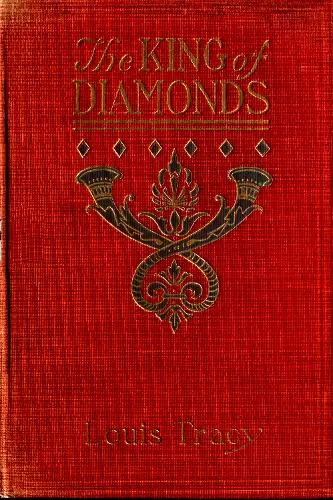
"The King of Diamonds: A Tale of Mystery and Adventure" by Louis Tracy is a fictional novel written in the early 20th century. This story intertwines themes of mystery and adventure, focusing on a young boy named Philip Anson, who finds himself in dire circumstances. As he navigates the challenges of poverty and the loss of his mother, he stumbles upon extraordinary circumstances surrounding a fallen meteor which contains diamonds of astronomical value, setting off a chain of events that will test his character and resilience. At the start of the novel, Philip Anson is a vulnerable yet determined fifteen-year-old boy dealing with the imminent death of his paralyzed mother. He confronts the harsh realities of life in London's East End, struggling for their survival after being cast into poverty. The narrative immediately plunges into an emotional depth as Philip's resolve to support his mother is challenged. After a violent thunderstorm, Philip discovers a meteor that has crashed in his backyard, containing diamonds. This discovery shifts his prospects dramatically, leading to a compelling narrative filled with unexpected twists involving the pursuit of wealth, the nature of trust, and the painful mysteries of his family's past.
Introduction adapted from the source catalogue; source summaries may be automatically generated.
Free to read · English · 80,980 words · No account needed
MAKE TIME FOR A GOOD BOOK
On by default. Untick to stop anonymous reading totals. Each page counts after 10 seconds in view. How this works.
Anonymous counting is on unless you have switched it off.
Her first song was Goring Thomas' "A Summer Night." Instantly it was perceptible that her voice was true, the outpouring of a soul. In volume it was in no way remarkable, but its melodious cadence was fresh, innocent, virginal. The notes were those of a joyous bird.
Anson, biassed by other sentiments, thought he had never heard her equal, but his friend, after joining in his vigorous applause, gave him a douche of accurate judgment.
"The old story," he growled; "a fine artist retarded, perhaps spoiled, by the need to make too early an appearance. She wants a year in Milan, another year with Randegger or Leoni, and she might, if all went well, be a star."
His hearer chafed inwardly, but only hazarded the opinion that she was already a singer of rare intensity, while, as for appearance----
"Ah, there you are right," was the ready rejoinder. "The Gaiety is her right place. She would be admirable in light opera."
The conversation languished. The suggestion that Miss Atherley was best fitted for the stage was displeasing to Philip, he scarce knew why.
The girl was given a hearty encore, and her next song was a simple, humorous little ballad about a miller and a maid. It was charmingly sung and acted. The critic leaned back in his chair, and smiled at Philip with the indulgent air of the man who says:
"I told you so."
Soon Philip rose to go.
"Good heavens, man, you do not intend to leave before Jowkacsy plays the suite in F minor?" queried his amazed acquaintance.
"Sorry. I have an engagement."
He quitted the hall, his tall figure riveting a good many eyes as he made his way toward an exit. One man, watching from the gallery, smiled cynically, and rose at the same time.
Philip found the foyer to be practically deserted. He asked a policeman on duty to call Mr. Anson's carriage from the ranks, and a footman came, quickly running lest he had incurred a reprimand for not being on the lookout for his master at the entrance.
In a very little time Miss Atherley appeared, and with her a handsome, elderly lady, who was quite obviously her mother. The girl was radiant. She never expected a cordial reception from a high-class audience, such as gathered to worship the violinist.
"Mother dear," she cried, "this is Mr. Anson, who very kindly came to my assistance when a cabman gave me some trouble last night."
Mrs. Atherley gave him a pleasant greeting, but turned to her daughter.
"Why didn't you tell me of any dispute when you returned home? You know how nervous I am when you are out at night."
Your reading position is saved on this browser. Take it to another device with a library code. Reading pages adapt to text, rather than matching a printed edition.
Louis Tracy
Louis Tracy
Louis Tracy
Louis Tracy
BEHIND THE BOOK
This eBook is for the use of anyone anywhere in the United States and most other parts of the world at no cost and with almost no restrictions whatsoever. You may copy it, give it away or re-use it under the terms of the Project Gutenberg License included with this eBook or online at www.gutenberg.org. If you are not located in the United States, you will have to check the laws of the country where you are located before using this eBook. Read the source licence.
The original source file, including credits and licence, is retained by this library. Request an original-format copy at no charge. Please include the book title and Project Gutenberg identifier #40493.
KEEP YOUR CURIOSITY GOING
Coulson Kernahan

Maurice Baring
Frances Wright
Cécile Tormay

Frederic Jesup Stimson

W. H. P. (William Henry Pope) Jarvis