
“Swat the Fly!”: A One-Act Fantasy
Eleanor Gates

THE CLASSIC COLLECTION · 1910
"The Justice of Gideon" by Eleanor Gates is a novel written in the early 20th century. The book centers around Gideon Carr, a Justice of the Peace in the small town of Manzanita, California, as he navigates both legal matters and personal relationships. Key themes include justice, ambition, and the complexities of human interactions, particularly focusing on the characters Gideon, Alicia, and Homer. The opening of the narrative sets a vivid scene in Gideon's courtroom, emphasizing both the physical space and the weight of his responsibilities. He is preparing for a day of trials when Alicia, a girl he seems to have affection for, enters with concerns about Homer, a young man whom Gideon has helped raise. As Alicia reveals gossip about Homer gambling and potentially getting into trouble, the Judge's protective instincts come into play. This opening not only establishes the main characters and their relationships but also hints at impending conflicts that will test Gideon's sense of justice and personal connections as the story unfolds.
Introduction adapted from the source catalogue; source summaries may be automatically generated.
Free to read · English · 85,968 words · No account needed
MAKE TIME FOR A GOOD BOOK
On by default. Untick to stop anonymous reading totals. Each page counts after 10 seconds in view. How this works.
Anonymous counting is on unless you have switched it off.
Sounds were still coming from the kitchen--Gabrielda’s cracked voice, Loretta’s cries, the sullen yowling of a cat. Nodding sadly, Padre Alonzo waddled to the perch, vacant and formed like a cross. This he lifted and bore to a place along the wall opposite the great crucifix, where climbed no flowers. Then, smiling gently, as if with some tender thought, he waddled back to the trellis, took the cage from its nail, and, returning to the perch, hung Tony close beside.
Late that night, on coming out of the chapel, Padre Alonzo discovered a little black something blocking his way along the moonlit path. As he paused, leaning forward to peer, the black something sidled nearer him, and saluted.
“Buenos noches!” it said, its voice monotonous and human with grief and weariness; “buenas noches! buenas noches!”
The padre bent lower and lifted the parrot to the level of his face. “Aye, good-night truly, as thou sayest,” he repeated proudly. “Thou hast some wicked words of a garrison town, but thou knowest the difference between sun and moon.”
“Aw, Lora,” murmured the parrot; “aw, Lo-ra! Lo-ra!”
“Yes, Tomasso has used thee badly.” Padre Alonzo patted her head. “I shall put thee on thy perch,” he went on; “though I trust good Anzar will not know it. But the moon is up, and my heart is tender. Alas! one does many things when the moon is up. And the next day--one does penance.”
He thrust the parrot into a fold of his cassock, made along to where was the perch, and placed her upon it. Then he stood back, folding his arms.
“To-morrow is Christmas Day, Loretta,” he said. “And what wilt thou give to Tony? What can the cactus give the golden poppy? Thou hast only love, eh? Well, that is much, though it grows from naught, as a China lily blooms from a bowl of rocks.”
He turned, and found himself before the Tree. Fir and pine massed their branches behind it, making a background of plushy green. Against that background, showing full, hung the torn and unclad shape. The moon glinted upon it, haloing the head of the Crucified.
The padre sank, bowing, and touched himself in the sign.
“Aw, To-o-ny! To-o-ny!” came a sleepy croak at his back. The parrot was settling herself for the night.
Padre Alonzo rose and turned, reaching up to stroke her. “Good-night, Loretta,” he said fondly. “There were none too lowly for His gift of love. It was spared to thee, a yawping fowl, a talker after the manner of the lazy Mexicans that bred thee.”
Your reading position is saved on this browser. Take it to another device with a library code. Reading pages adapt to text, rather than matching a printed edition.
Eleanor Gates

Eleanor Gates

Eleanor Gates
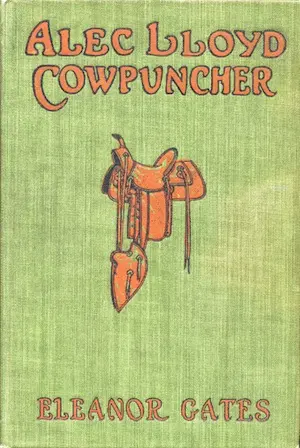
Eleanor Gates
BEHIND THE BOOK
This eBook is for the use of anyone anywhere in the United States and most other parts of the world at no cost and with almost no restrictions whatsoever. You may copy it, give it away or re-use it under the terms of the Project Gutenberg License included with this eBook or online at www.gutenberg.org. If you are not located in the United States, you will have to check the laws of the country where you are located before using this eBook. Read the source licence.
The original source file, including credits and licence, is retained by this library. Request an original-format copy at no charge. Please include the book title and Project Gutenberg identifier #73316.
KEEP YOUR CURIOSITY GOING
Coulson Kernahan

Maurice Baring
Frances Wright
Cécile Tormay

Frederic Jesup Stimson

W. H. P. (William Henry Pope) Jarvis