“Swat the Fly!”: A One-Act Fantasy
Eleanor Gates
THE CLASSIC COLLECTION · 1910
"The Justice of Gideon" by Eleanor Gates is a novel written in the early 20th century. The book centers around Gideon Carr, a Justice of the Peace in the small town of Manzanita, California, as he navigates both legal matters and personal relationships. Key themes include justice, ambition, and the complexities of human interactions, particularly focusing on the characters Gideon, Alicia, and Homer. The opening of the narrative sets a vivid scene in Gideon's courtroom, emphasizing both the physical space and the weight of his responsibilities. He is preparing for a day of trials when Alicia, a girl he seems to have affection for, enters with concerns about Homer, a young man whom Gideon has helped raise. As Alicia reveals gossip about Homer gambling and potentially getting into trouble, the Judge's protective instincts come into play. This opening not only establishes the main characters and their relationships but also hints at impending conflicts that will test Gideon's sense of justice and personal connections as the story unfolds.
Introduction adapted from the source catalogue; source summaries may be automatically generated.
Free to read · English · 85,968 words · No account needed
MAKE TIME FOR A GOOD BOOK
On by default. Untick to stop anonymous reading totals. Each page counts after 10 seconds in view. How this works.
Anonymous counting is on unless you have switched it off.
The next moment the pursuing officer had them in his grasp. “Thank you, Sheehan,” said he. “Face about, you!” This to Mr. McVicar. They began the return march, everyone panting. Counting the onlookers, they made quite a procession.
The other officer met them half-way, a gipsy in either hand. “Say, Flynn,” said he, “they’s something crooked about that young couple.”
“Crooked!” burst forth Agatha, with sudden rage. “I ran because I don’t want to be dragged into a police station. Please let go of my sleeve.” She could hear the onlookers whispering among themselves. Oh, it was too mortifying!
She clung to the representative of the law, and began to sob. Her tears had instant effect upon the little crowd. “Oh, let the young lady go, officer,” said one voice. “Yes,” chorused others. “But pinch the tall gentleman,” added the man-gipsy.
The inexorable officers moved forward. Presently they all trooped into a police station, and the principals came short in an uneven line before a battered desk.
A blowzy Celtic visage was lifted to regard them. Beneath that visage was a wide, open book. It seemed the very Book of Judgment to poor Agatha. She glanced at Mr. McVicar. He was watching her sorrowfully, his face startlingly pale, his whole attitude woeful.
“Hello!” said he of the wide book. For Mr. McVicar, his look was casual; for Agatha, it was more prolonged, yet not unkind--though the buff-and-crocus confection was tipped rakishly to one side; for the gipsy twain, however, it was condemnatory.
The gipsies smiled up at him. “Hello, Lieutenant!” returned they
audaciously.
At this there was some small commotion and a general giggling in the rear of the room. Agatha peered swiftly round, and beheld five young men who were ranged against the rear wall. They were well dressed. They were grinning. They all wore coloured glasses.
Officer Flynn was talking. “I was comin’ along my beat,” said he, whereat there began an astonishingly truthful account of the late mêlée. It was interrupted by wild yowlings from a room evidently near at hand.
“Ah!” said the man-gipsy; “the monkey!”
“Th’ dhrunks in Noomber 3,” explained the lieutenant.
Officer Flynn continued, “And we was ready to run the gipsies in when the young gent up and skedaddled.”
“So did I,” protested Agatha, but the lieutenant scowled only at Mr. McVicar. “I made him,” added Agatha stoutly, after which she resolved into tears again.
“Now, now,” comforted the lieutenant. “Till me, how come y’ t’ be down in this ind of th’ town, anyhow?”
“I am concerned,” sobbed Agatha, “with the phenomena of social
evolution.”
“Ah!” said the lieutenant; “sittlements.”
Your reading position is saved on this browser. Take it to another device with a library code. Reading pages adapt to text, rather than matching a printed edition.
Eleanor Gates
Eleanor Gates
Eleanor Gates
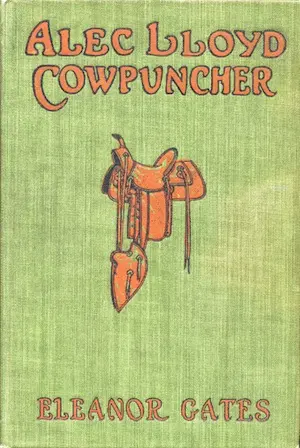
Eleanor Gates
BEHIND THE BOOK
This eBook is for the use of anyone anywhere in the United States and most other parts of the world at no cost and with almost no restrictions whatsoever. You may copy it, give it away or re-use it under the terms of the Project Gutenberg License included with this eBook or online at www.gutenberg.org. If you are not located in the United States, you will have to check the laws of the country where you are located before using this eBook. Read the source licence.
The original source file, including credits and licence, is retained by this library. Request an original-format copy at no charge. Please include the book title and Project Gutenberg identifier #73316.
KEEP YOUR CURIOSITY GOING
Coulson Kernahan

Maurice Baring
Frances Wright
Cécile Tormay

Frederic Jesup Stimson

W. H. P. (William Henry Pope) Jarvis