“Swat the Fly!”: A One-Act Fantasy
Eleanor Gates
THE CLASSIC COLLECTION · 1910
"The Justice of Gideon" by Eleanor Gates is a novel written in the early 20th century. The book centers around Gideon Carr, a Justice of the Peace in the small town of Manzanita, California, as he navigates both legal matters and personal relationships. Key themes include justice, ambition, and the complexities of human interactions, particularly focusing on the characters Gideon, Alicia, and Homer. The opening of the narrative sets a vivid scene in Gideon's courtroom, emphasizing both the physical space and the weight of his responsibilities. He is preparing for a day of trials when Alicia, a girl he seems to have affection for, enters with concerns about Homer, a young man whom Gideon has helped raise. As Alicia reveals gossip about Homer gambling and potentially getting into trouble, the Judge's protective instincts come into play. This opening not only establishes the main characters and their relationships but also hints at impending conflicts that will test Gideon's sense of justice and personal connections as the story unfolds.
Introduction adapted from the source catalogue; source summaries may be automatically generated.
Free to read · English · 85,968 words · No account needed
MAKE TIME FOR A GOOD BOOK
On by default. Untick to stop anonymous reading totals. Each page counts after 10 seconds in view. How this works.
Anonymous counting is on unless you have switched it off.
“It even affected my heart.”
“Will--these--both--improve?”
“It depends on just one person.”
She gave him a smile full of cheer. “Doctors--do--wonderful--things-- these--days. Is--this--one--homeopathic?”
“No, magnetic--awfully.” His grey eyes searched hers again. “Would you advise me to hope?”
“Oh--yes! Just--hope--has--wrought marvels.” Her face shone with
earnestness.
“Bless you. But you don’t know that this is all the result of my own
wickedness.”
“You--have--been--more--than--punished--then.”
He clenched his two hands. “Yes, I have been punished,” he wrote. “If you ever have to pass judgment upon me, remember that.”
“Was--it--so--dreadful--what--you--did?”
He thought a moment. “Not when you consider the temptation.”
“What--was--the--temptation?”
He hesitated so long that she believed he had not understood her. So she wrote the question, “What was the temptation?”
“A girl.”
Agatha shrank back in sudden, inexplicable indignation. Then she rose abruptly. She had meant to tell him that if he were to regain both speech and hearing it would make no difference in their arrangements. But now----
He rose, also, and dropped the pad into a pocket. Then he handed her the parasol. His attitude was one of resignation.
Walking homeward, Agatha looked straight ahead, and two bright, red spots burned in a circle about her dimples. At the bottom of the Connaughton flight, she gave him a dignified good-morning. He held out a card to her. Then he raised his hat.
All that afternoon Agatha wandered about the library. She felt a surprising indifference toward her thesis. Every little while she drew forth Mr. McVicar’s card. It contained, in addition to his name, a line written in pencil, “Telephone, River 0630.” Why had he written that? She had no further need of him!
But as tea-time neared she remembered a place that she felt absolutely called upon to visit in connection with her work: a narrow down-town street, with its hosts of children all a-dance on the gas-lighted pavement. Could she visit the crowded block alone? And was Mr. McVicar’s time up for that day before, say, ten or eleven o’clock? Certainly not. And if she paid for his time was she not entitled to his company She asked central for River o-six-three-o.
A maid’s voice answered the telephone. “Tell Mr. McVicar,” said Agatha, “that Miss Kerr will want him this evening at eight.”
“Very well, miss.”
Agatha, smiling and rosy faced, made her way tunefully up the staircase.
“What! Going out at night?” demanded Miss Connaughton, from the
drawing-room.
“Of course,” said Agatha; “what have I an escort for? Oh, tra-la-la, tra-la-la,” and, singing, she disappeared.
Your reading position is saved on this browser. Take it to another device with a library code. Reading pages adapt to text, rather than matching a printed edition.
Eleanor Gates
Eleanor Gates
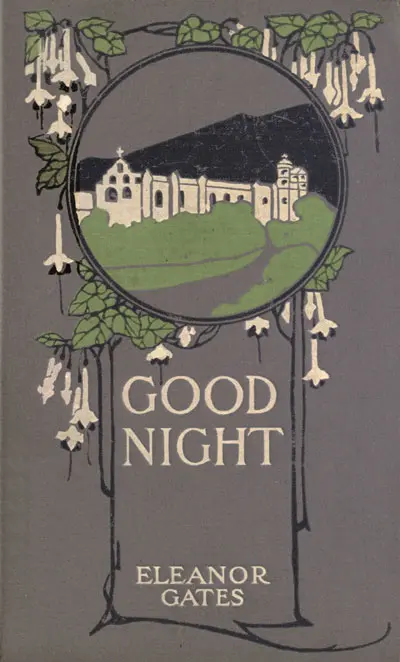
Eleanor Gates
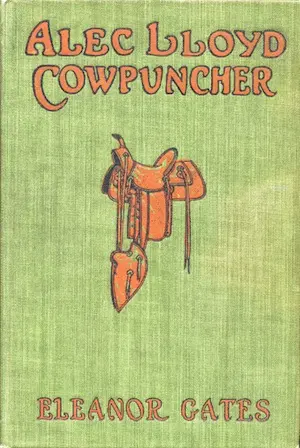
Eleanor Gates
BEHIND THE BOOK
This eBook is for the use of anyone anywhere in the United States and most other parts of the world at no cost and with almost no restrictions whatsoever. You may copy it, give it away or re-use it under the terms of the Project Gutenberg License included with this eBook or online at www.gutenberg.org. If you are not located in the United States, you will have to check the laws of the country where you are located before using this eBook. Read the source licence.
The original source file, including credits and licence, is retained by this library. Request an original-format copy at no charge. Please include the book title and Project Gutenberg identifier #73316.
KEEP YOUR CURIOSITY GOING
Coulson Kernahan

Maurice Baring
Frances Wright
Cécile Tormay

Frederic Jesup Stimson

W. H. P. (William Henry Pope) Jarvis