
“Swat the Fly!”: A One-Act Fantasy
Eleanor Gates

THE CLASSIC COLLECTION · 1910
"The Justice of Gideon" by Eleanor Gates is a novel written in the early 20th century. The book centers around Gideon Carr, a Justice of the Peace in the small town of Manzanita, California, as he navigates both legal matters and personal relationships. Key themes include justice, ambition, and the complexities of human interactions, particularly focusing on the characters Gideon, Alicia, and Homer. The opening of the narrative sets a vivid scene in Gideon's courtroom, emphasizing both the physical space and the weight of his responsibilities. He is preparing for a day of trials when Alicia, a girl he seems to have affection for, enters with concerns about Homer, a young man whom Gideon has helped raise. As Alicia reveals gossip about Homer gambling and potentially getting into trouble, the Judge's protective instincts come into play. This opening not only establishes the main characters and their relationships but also hints at impending conflicts that will test Gideon's sense of justice and personal connections as the story unfolds.
Introduction adapted from the source catalogue; source summaries may be automatically generated.
Free to read · English · 85,968 words · No account needed
MAKE TIME FOR A GOOD BOOK
On by default. Untick to stop anonymous reading totals. Each page counts after 10 seconds in view. How this works.
Anonymous counting is on unless you have switched it off.
The morning was given over to tenement-house inspection, and Agatha was a fairy-figure amid the sordid gloom of it all. Mr. McVicar kept beside her (the inspector led), helping her up long, dark stairways, and down into pit-like cellars, and through dank halls full of poor, little gaping children. When noon came they sought a near-by café.
It was while they were here that an extraordinary thing happened. They had gotten comfortably placed, both on the same side of a table--so that he could understand what she was saying (his glasses were off now)--when there entered, in single file, one, two, three, four, five, six, seven well-dressed young men. They seated themselves opposite Agatha and the escort. And, presently, after each had given the menu a casual glance, all began to talk at once--on their fingers!
Agatha opened her eyes. “Everyone of them d-- and d--!” she said to herself. “Is this a d-- and d-- café?” Her eyes roved from waiter to waiter.
But the seven young men were evidently from Mr. McVicar’s institution, for they caught sight of him a moment later, bowed to him in great surprise, and began to make him finger-signs.
He bowed in return, but he regarded them darkly and made no return
signs.
Agatha reflected that there were more d-- and d-- people in the world than she had ever imagined. Presently she noticed that Mr. McVicar was not eating. “Don’t you like the goulash?” she wrote.
“I have a headache,” he answered.
“You must go home, then.”
“But the Amalgamated Shirt-Makers?”
At this juncture the seven young men opposite got up and filed slowly out, each working a right hand in what seemed to be a friendly adieu.
When Mr. McVicar rose his lips were pressed together as if he were striving to master himself. He refrained from looking at Agatha and fiddled with his hat.
She saw how ill he was. Her expression grew troubled and wistful. “A hansom,” she said to the head waiter. But she did not send Mr. McVicar home. She let him drive to her aunt’s with her.
On the way, for some reason or other, Mr. McVicar grew much brighter. “Where do we go to-morrow?” he asked.
Agatha stole a glance toward him. “To-morrow,” she said, “I--shall-- devote--to--automorphic--deductions--and--to--the--correlation--of-- all--the--new--concrete--examples--I--have--noted.”
“Then you’ll need me,” he declared.
“Will--you--be--well--enough?” asked Agatha.
“Why, I’m well now.”
“Come--then--in--case--I’ve--forgotten--any--of--the--examples.”
The following morning they did not go down the avenue, but turned into Central Park at the Sherman statue instead, and out of it again at the West Seventy-second Street entrance. Then they headed toward the Hudson.
Your reading position is saved on this browser. Take it to another device with a library code. Reading pages adapt to text, rather than matching a printed edition.
Eleanor Gates

Eleanor Gates

Eleanor Gates
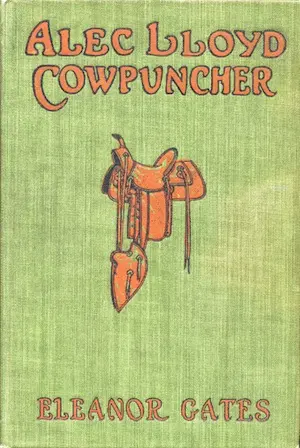
Eleanor Gates
BEHIND THE BOOK
This eBook is for the use of anyone anywhere in the United States and most other parts of the world at no cost and with almost no restrictions whatsoever. You may copy it, give it away or re-use it under the terms of the Project Gutenberg License included with this eBook or online at www.gutenberg.org. If you are not located in the United States, you will have to check the laws of the country where you are located before using this eBook. Read the source licence.
The original source file, including credits and licence, is retained by this library. Request an original-format copy at no charge. Please include the book title and Project Gutenberg identifier #73316.
KEEP YOUR CURIOSITY GOING
Coulson Kernahan

Maurice Baring
Frances Wright
Cécile Tormay

Frederic Jesup Stimson

W. H. P. (William Henry Pope) Jarvis