“Swat the Fly!”: A One-Act Fantasy
Eleanor Gates
THE CLASSIC COLLECTION · 1910
"The Justice of Gideon" by Eleanor Gates is a novel written in the early 20th century. The book centers around Gideon Carr, a Justice of the Peace in the small town of Manzanita, California, as he navigates both legal matters and personal relationships. Key themes include justice, ambition, and the complexities of human interactions, particularly focusing on the characters Gideon, Alicia, and Homer. The opening of the narrative sets a vivid scene in Gideon's courtroom, emphasizing both the physical space and the weight of his responsibilities. He is preparing for a day of trials when Alicia, a girl he seems to have affection for, enters with concerns about Homer, a young man whom Gideon has helped raise. As Alicia reveals gossip about Homer gambling and potentially getting into trouble, the Judge's protective instincts come into play. This opening not only establishes the main characters and their relationships but also hints at impending conflicts that will test Gideon's sense of justice and personal connections as the story unfolds.
Introduction adapted from the source catalogue; source summaries may be automatically generated.
Free to read · English · 85,968 words · No account needed
MAKE TIME FOR A GOOD BOOK
On by default. Untick to stop anonymous reading totals. Each page counts after 10 seconds in view. How this works.
Anonymous counting is on unless you have switched it off.
A succession of spasms crossed the face of the escort; his lips moved spasmodically. Then he began to write. When he had finished, he offered Miss Connaughton the pad. Upon it was: “Madam, I guessed rather than read your concern. Let me assure you that when cars approach me I feel the jar.”
Auntie sank back, somewhat eased in her mind, but Agatha read the words with staring eyes. Then up came the handkerchief again.
“Why,” she exclaimed, “he’s a regular professor of lip-reading!”
“Perhaps it’s just as well that he can read the lips,” said Miss Connaughton. “An exigency might arise, dear.” She leaned forward and touched the young man’s arm. “What--is--your--name?” she asked, articulating with exaggerated precision.
“If he understands, he’s as bad as a man that can hear,” put in Agatha, from behind her handkerchief. “And I won’t have him.”
But the escort was looking from aunt to niece in a puzzled fashion.
Finally he shook his head.
“Your--name,” repeated Miss Connaughton.
Now sudden comprehension illumined his whole face. With an eager nod he seized the pencil and wrote, “In Yonkers.”
“You see?” said Miss Connaughton. “He doesn’t always understand.” She graciously wrote the question.
Again his face lit up, and he looked a smiling apology. Then he hastily scribbled, “John McVicar.”
“Agatha,” said Miss Connaughton, “he’s a little too--er--actory-looking, according to my idea. But, being deaf and dumb, he will never presume----”
“Put up your handkerchief,” warned Agatha, colouring.
Just then the young man produced his own handkerchief, and began to
cough violently into it. (It was a smart affair with a blue-dotted
border.)
“Don’t cut me off in the middle that way,” said Miss Connaughton petulantly. “There is danger, Agatha, in bringing a strange young man into such close association with you. Have I ever seen any young man spend two hours in your company without----”
“Boo!” said Agatha, her dimples playing again.
“But,” said Miss Connaughton, “I shall engage him.” So thoroughly satisfied was she with the whole outcome of the matter that she even omitted to call up Mr. Avery to thank him.
A few minutes afterward Agatha and the escort were proceeding down Fifth Avenue. It was a walk Agatha always took when opportunity afforded. She liked the shops; she liked the moving lines of vehicles; she liked the swarming humans.
Just before the two reached Twenty-third Street, the escort drew to one side for a moment, and wrote something on the pad. It was: “As I do not hear, I must put you to the annoyance of taking my arm when we cross the streets.”
Your reading position is saved on this browser. Take it to another device with a library code. Reading pages adapt to text, rather than matching a printed edition.
Eleanor Gates
Eleanor Gates
Eleanor Gates
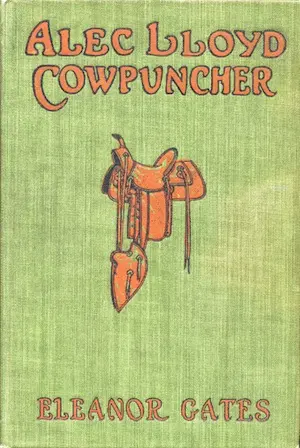
Eleanor Gates
BEHIND THE BOOK
This eBook is for the use of anyone anywhere in the United States and most other parts of the world at no cost and with almost no restrictions whatsoever. You may copy it, give it away or re-use it under the terms of the Project Gutenberg License included with this eBook or online at www.gutenberg.org. If you are not located in the United States, you will have to check the laws of the country where you are located before using this eBook. Read the source licence.
The original source file, including credits and licence, is retained by this library. Request an original-format copy at no charge. Please include the book title and Project Gutenberg identifier #73316.
KEEP YOUR CURIOSITY GOING
Coulson Kernahan

Maurice Baring
Frances Wright
Cécile Tormay

Frederic Jesup Stimson

W. H. P. (William Henry Pope) Jarvis