“Swat the Fly!”: A One-Act Fantasy
Eleanor Gates
THE CLASSIC COLLECTION · 1910
"The Justice of Gideon" by Eleanor Gates is a novel written in the early 20th century. The book centers around Gideon Carr, a Justice of the Peace in the small town of Manzanita, California, as he navigates both legal matters and personal relationships. Key themes include justice, ambition, and the complexities of human interactions, particularly focusing on the characters Gideon, Alicia, and Homer. The opening of the narrative sets a vivid scene in Gideon's courtroom, emphasizing both the physical space and the weight of his responsibilities. He is preparing for a day of trials when Alicia, a girl he seems to have affection for, enters with concerns about Homer, a young man whom Gideon has helped raise. As Alicia reveals gossip about Homer gambling and potentially getting into trouble, the Judge's protective instincts come into play. This opening not only establishes the main characters and their relationships but also hints at impending conflicts that will test Gideon's sense of justice and personal connections as the story unfolds.
Introduction adapted from the source catalogue; source summaries may be automatically generated.
Free to read · English · 85,968 words · No account needed
MAKE TIME FOR A GOOD BOOK
On by default. Untick to stop anonymous reading totals. Each page counts after 10 seconds in view. How this works.
Anonymous counting is on unless you have switched it off.
It was the plaid that caught Agatha’s eye: it was so absolutely out of the ordinary, and, in fact, noisy--broad blue and green stripes at right angles across a drab ground. It betokened importation. “And from France,” concluded Agatha shrewdly; for on the drab ground, between the stripes, were cunningly worked French knots.
There was another member of the firm of Avery & Avery--Mr. Avery, Jr. Perhaps this was he--eavesdropping. But, no; he was a gentleman with a grown son. The plaid-hosiery person was a young clerk with loud taste, and he was really not worth a second thought. “Come, Auntie, please,” said Agatha, with all the dignity she could command. Then she swept out.
It was quite wonderful how promptly Mr. Avery, Sr., disposed of the matter of the escort. The very next day Agatha was informed that the attorney wished to speak with her over the telephone, and no sooner had she popped the receiver to her pink ear than a man’s voice hailed her with a brisk “Good-morning” that bespoke success. And how nice and deep his voice was over the wire! Why, not at all like his usual, every-day voice!
“Good-morning,” returned Agatha. “I hope you’ve found someone. I wanted to attend a meeting of the Cigarette Makers to-day. But” (a little sulkily) “the moment I mentioned it Auntie developed a case of ocular neuralgia.”
There came back a hearty laugh, then, “Oh, say, Miss Agatha, I can
settle that neuralgia.”
“You mean you’ve found him?” asked Agatha; “so soon?”
“He’s a fellow that I know very intimately--better than anybody else. Known him for twenty-five years.”
“Oh, how old is he?”
“Just twenty-five. I’ve known him since he was a baby.”
“Is he deaf and dumb?”
“He won’t listen, and he won’t gossip,” declared Mr. Avery.
“Graduate of an institution?”
“Yes.”
“But,” objected Agatha, “uniforms are so conspicuous.”
“He doesn’t wear one,” answered Mr. Avery.
“Does he talk on his fingers?” asked Agatha.
“Yes; but if he bothers you (because he’s an absent-minded fellow anyhow), why, you just tell him to muffle his hands in his pockets.”
Agatha sent one of her gay ripples over the wire. “But I can’t read finger-talk,” she protested.
“I’ve presented him with a pad and pencil. If he wants to scribble too much just give him the pocket-sign. Oh, don’t say you won’t take him,” pleaded Mr. Avery.
Agatha covered the transmitter with one hand for a moment. How--er--feelingly he said everything this morning! He didn’t at all sound like himself.
Your reading position is saved on this browser. Take it to another device with a library code. Reading pages adapt to text, rather than matching a printed edition.
Eleanor Gates
Eleanor Gates
Eleanor Gates
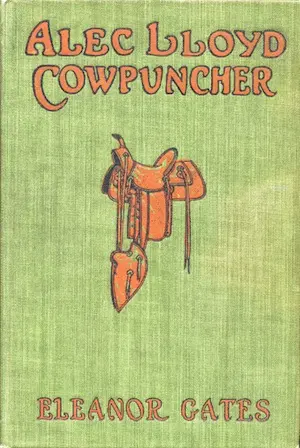
Eleanor Gates
BEHIND THE BOOK
This eBook is for the use of anyone anywhere in the United States and most other parts of the world at no cost and with almost no restrictions whatsoever. You may copy it, give it away or re-use it under the terms of the Project Gutenberg License included with this eBook or online at www.gutenberg.org. If you are not located in the United States, you will have to check the laws of the country where you are located before using this eBook. Read the source licence.
The original source file, including credits and licence, is retained by this library. Request an original-format copy at no charge. Please include the book title and Project Gutenberg identifier #73316.
KEEP YOUR CURIOSITY GOING
Coulson Kernahan

Maurice Baring
Frances Wright
Cécile Tormay

Frederic Jesup Stimson

W. H. P. (William Henry Pope) Jarvis