“Swat the Fly!”: A One-Act Fantasy
Eleanor Gates
THE CLASSIC COLLECTION · 1910
"The Justice of Gideon" by Eleanor Gates is a novel written in the early 20th century. The book centers around Gideon Carr, a Justice of the Peace in the small town of Manzanita, California, as he navigates both legal matters and personal relationships. Key themes include justice, ambition, and the complexities of human interactions, particularly focusing on the characters Gideon, Alicia, and Homer. The opening of the narrative sets a vivid scene in Gideon's courtroom, emphasizing both the physical space and the weight of his responsibilities. He is preparing for a day of trials when Alicia, a girl he seems to have affection for, enters with concerns about Homer, a young man whom Gideon has helped raise. As Alicia reveals gossip about Homer gambling and potentially getting into trouble, the Judge's protective instincts come into play. This opening not only establishes the main characters and their relationships but also hints at impending conflicts that will test Gideon's sense of justice and personal connections as the story unfolds.
Introduction adapted from the source catalogue; source summaries may be automatically generated.
Free to read · English · 85,968 words · No account needed
MAKE TIME FOR A GOOD BOOK
On by default. Untick to stop anonymous reading totals. Each page counts after 10 seconds in view. How this works.
Anonymous counting is on unless you have switched it off.
“And conduct her chosen life’s work,” resumed Agatha, striking a higher key, “without being constantly harassed!”
“You are to be protected,” contradicted her aunt, crisply serene. “Mr. Avery, this child is studying--er, what do you call it, Agatha?”
“Sociology,” again attacking her boots.
Mr. Avery looked incredulous. A young woman whose thoughts turned to philosophy should be a homely and angular female with large feet, a thinned coiffure, no waist-line, and a general appearance of having dressed overhastily. But here----
“It is a study that takes her into places,” continued the elder woman, “where a young lady should not be seen alone.”
“Methods of study have changed,” said Mr. Avery. “I discover that in discussions with my nephew.”
“Geoffrey?” questioned Auntie. “Isn’t he up at Columbia?”
“No, he has graduated and is here with me, reading law.”
“Auntie,” began Agatha pityingly, “doesn’t realise that a young woman meets with far more courteous treatment on the East side than she does elsewhere in town.”
“I regret to admit,” said Auntie with polite heat, “that to me her sociology, so far, has seemed nothing but--but----”
“Say it! Say it!” cried Agatha.
“Well, then, madcap gadding.”
Agatha rippled out a laugh. “Auntie doesn’t understand. I am working on a thesis for my master’s degree--‘The Influence of Alien Immigration upon the Metropolitan Body Politic.’”
Mr. Avery nodded. “My dear Miss Connaughton” (Auntie was Miss Connaughton), “what have I to do with Miss Agatha’s thesis?”
“A suitable person,” answered Miss Connaughton, “a gentleman, of course--for no woman, however quick on her feet, could ever keep up with Agatha--must be found who will act as her escort.”
“Ah!” said Mr. Avery, smiling. “A gentleman in waiting for the
princess!”
Agatha’s lip curled. “Oh, no,” returned she ironically; “an attendant for the lunatic.”
This Miss Connaughton ignored. “I came to you, Mr. Avery,” she said, “hoping you could recommend someone.”
Mr. Avery pursed his lips thoughtfully.
“I want an educated mind for this particular duty,” added Miss
Connaughton, with meaning.
Agatha rippled another laugh. “Auntie wants a nice, little tattletale to listen and report--a sort of afternoon-tea Pinkerton.”
“I still insist,” declared Miss Connaughton.
Agatha’s wrath blazed up anew. “Very well,” she said decisively. “If I must have someone tagging at my heels night and day, night and day” (jab, jab), “the only escort I shall accept will be deaf and dumb.”
Miss Connaughton threw up her hands. So did Mr. Avery: he clapped one
over his mouth.
“Deaf and dumb!” gasped Miss Connaughton weakly.
“Yes,” said Agatha triumphantly. “On that condition, I’ll agree.”
Your reading position is saved on this browser. Take it to another device with a library code. Reading pages adapt to text, rather than matching a printed edition.
Eleanor Gates
Eleanor Gates
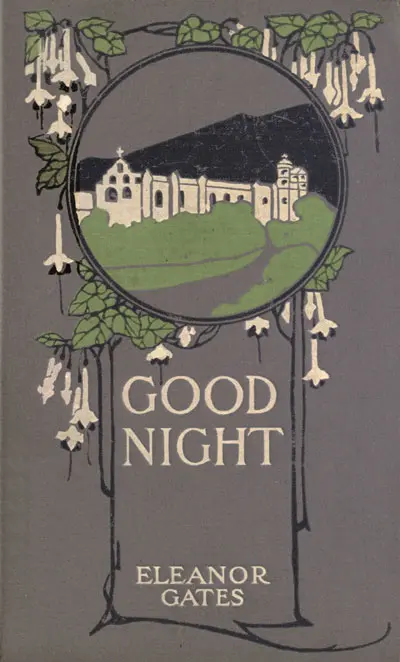
Eleanor Gates
Eleanor Gates
BEHIND THE BOOK
This eBook is for the use of anyone anywhere in the United States and most other parts of the world at no cost and with almost no restrictions whatsoever. You may copy it, give it away or re-use it under the terms of the Project Gutenberg License included with this eBook or online at www.gutenberg.org. If you are not located in the United States, you will have to check the laws of the country where you are located before using this eBook. Read the source licence.
The original source file, including credits and licence, is retained by this library. Request an original-format copy at no charge. Please include the book title and Project Gutenberg identifier #73316.
KEEP YOUR CURIOSITY GOING
Coulson Kernahan

Maurice Baring
Frances Wright
Cécile Tormay

Frederic Jesup Stimson

W. H. P. (William Henry Pope) Jarvis