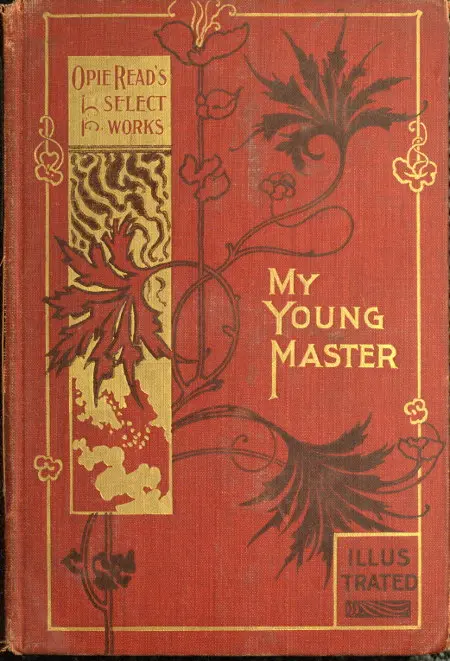
My Young Master: A Novel
Opie Percival Read
THE CLASSIC COLLECTION · 1896
"The Jucklins: A Novel" by Opie Percival Read is a work of fiction written in the late 19th century. The novel unfolds in a rural Southern setting, focusing on the life of Bill Hawes, an awkward young man struggling to find his place in a world that frequently ridicules him for his perceived laziness and clumsiness. As the story begins, it dives into themes of self-identity, societal expectations, and the yearning for acceptance, particularly within the context of family dynamics and community relationships. The opening of the novel introduces Bill Hawes, who reflects on his childhood experiences and the laughter he faced from his family and peers, especially in comparison to his more adept brothers. Bill's childhood is marked by an incident where he attempts to outdo his brother Ed by cheating some gypsies in a horse trade, only for the plan to backfire spectacularly, resulting in a comedy of errors that isolates him further. As he matures, Bill wrestles with his reputation as "Lazy Bill," while secretly yearning for respect and the possibility of personal achievement, including aspiring to become a lawyer. The narration sets the stage for his future encounters and aspirations, notably foreshadowing the complexities of his relationships with neighbors, particularly a girl named Guinea, who captivates his attention, adding layers to his somewhat tumultuous journey of self-discovery and ambition.
Introduction adapted from the source catalogue; source summaries may be automatically generated.
Free to read · English · 76,171 words · No account needed
MAKE TIME FOR A GOOD BOOK
On by default. Untick to stop anonymous reading totals. Each page counts after 10 seconds in view. How this works.
Anonymous counting is on unless you have switched it off.
I halted to wait for him. He stopped a moment to shake hands with Chyd, and then he hastened to me. "Old man, I've got something to tell you," he said. "Let's walk down this way--no, not over in the road, but up the hollow." He gripped my arm tightly, walked fast, then slowly and then stopped. "Let's sit down here, Bill." We seated ourselves on a rock. "You have been over to the General's, along with Chyd and Guinea, haven't you? Of course, you have--what's the use of asking that? Do you know what I did to-day? Not long after dinner I went over there determined to find out how I stood. I was brave until I got nearly to the house and then my courage failed. I stood by the fence in the blackberry briars and gazed at the house. After a while I saw her come out and start down the Ebeneezer road. And then I whipped round and met her. And as I stood beside the road, waiting for her to come up I noticed for the first time that the sun was nearly down. For hours I had been standing in the briars. I pretended not to see her; let on like I was hunting for a squirrel up in a tree, until she came up. Then I spoke to her and she started as if she was scared. She said that she was going over to Lum Smith's to tell the young people to come over at night, and I asked her if I might walk along with her. She said with a laugh that I might go part of the way, and then I knew that she was ashamed for any one to see her with me. This cut me to the red, but I walked along with her. I felt that I had nothing to say that would interest her, but I kept on talking, and once in a while she would look up at me and laugh. At last, and it was just as we came within sight of Smith's place, I asked her what she really thought of Dan Stuart. I knew that this was a fool's break, and if it hadn't been I don't suppose I would have made it. She looked up at me, but she didn't laugh this time. I begged her pardon for my rudeness, and she reminded me that I was only to come a part of the way with her. I then told her that I would wait for her to come back. She said that she might not come back that way. I replied that no matter which way she came back I would see her. She went on, laughing now, and I waited, but I didn't have to wait long before I saw her coming. As she came up I asked her if she was ready to grant my pardon and she wanted to know what about. We walked along together and she began to tell me about her brother, how smart he was and all that, and I said that I didn't think that he was as smart as you, Bill; I wanted to take credit for a friendship I had formed, you see? But a moment later I was sorry, for I was afraid that she might say something against you, but she didn't. She said that you were a smart man--a distinguished-looking man, and that she liked you ever so much. At first I was pleased, but a second afterward I was jealous of you, Bill. Did you ever see as blamed a fool as I am? But I didn't hate you, Bill. No, my heart was warm toward you even while she was praising you--even while I was jealous. I again asked her what she thought of Dan Stuart, and she looked up at me and wanted to know if I knew what he thought of her. I told her that everybody loved her, and that I didn't suppose he was mean enough not to love her. She said that she knew people who didn't love her, and I told her that if she would show them to me I would butt their heads together for being such idiots. We were now almost within sight of the General's home and I was not getting along very fast. I was determined to make a break. We were on a hill, where the trees were tall, almost over-lapping the road. To the right ran a path through the briars, a nearer way home. I asked her to wait and she stopped. The sun was down and it was now almost dark. And it was then that I told her that I loved her. I don't know how I acted or what I said, but I know that I was down in the dust at her feet. She stood there, pale and trembling, looking around as if she would call for help. I asked her to marry me, and she laughed, Bill--laughed at me and darted down the path. Then I went into the woods and roamed about I don't know where; and that is the reason I wasn't at the gathering to-night. I'm bruised and crippled, Bill--my heart is sore, but I want to tell you that when she's standing on the floor with that fellow Stuart, with the preacher in front of her, I'll be there, putting in my plea. I won't give up as long as there is a fighting chance left. Don't say a word about it. Forgive me for dragging you off down here. God knows you've got a deep trouble of your own. And I wish my word could settle it--I'd speak it, though it might hurt my chances at the General's. Well, let's go to the house."
Your reading position is saved on this browser. Take it to another device with a library code. Reading pages adapt to text, rather than matching a printed edition.
Opie Percival Read
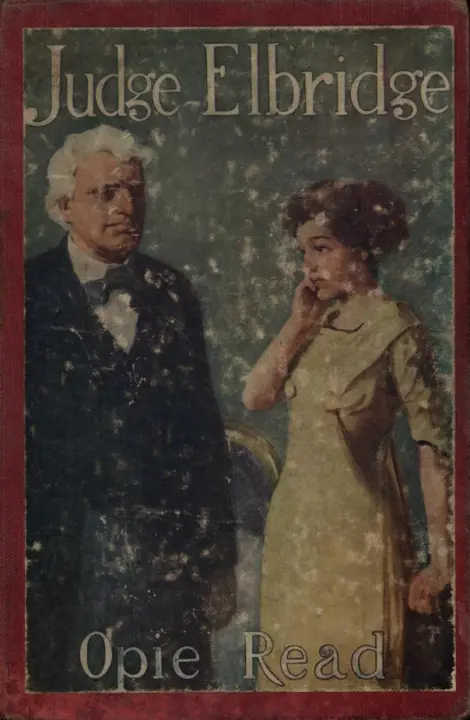
Opie Percival Read
Opie Percival Read
Opie Percival Read
BEHIND THE BOOK
This eBook is for the use of anyone anywhere in the United States and most other parts of the world at no cost and with almost no restrictions whatsoever. You may copy it, give it away or re-use it under the terms of the Project Gutenberg License included with this eBook or online at www.gutenberg.org. If you are not located in the United States, you will have to check the laws of the country where you are located before using this eBook. Read the source licence.
The original source file, including credits and licence, is retained by this library. Request an original-format copy at no charge. Please include the book title and Project Gutenberg identifier #26499.
KEEP YOUR CURIOSITY GOING
Coulson Kernahan

Maurice Baring
Frances Wright
Cécile Tormay

Frederic Jesup Stimson

W. H. P. (William Henry Pope) Jarvis