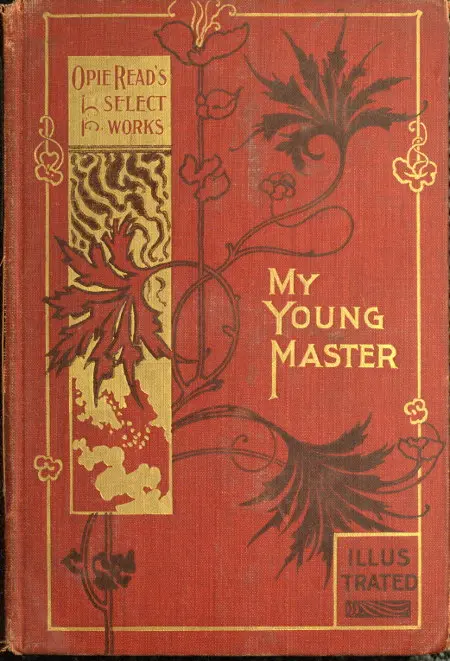
My Young Master: A Novel
Opie Percival Read
THE CLASSIC COLLECTION · 1896
"The Jucklins: A Novel" by Opie Percival Read is a work of fiction written in the late 19th century. The novel unfolds in a rural Southern setting, focusing on the life of Bill Hawes, an awkward young man struggling to find his place in a world that frequently ridicules him for his perceived laziness and clumsiness. As the story begins, it dives into themes of self-identity, societal expectations, and the yearning for acceptance, particularly within the context of family dynamics and community relationships. The opening of the novel introduces Bill Hawes, who reflects on his childhood experiences and the laughter he faced from his family and peers, especially in comparison to his more adept brothers. Bill's childhood is marked by an incident where he attempts to outdo his brother Ed by cheating some gypsies in a horse trade, only for the plan to backfire spectacularly, resulting in a comedy of errors that isolates him further. As he matures, Bill wrestles with his reputation as "Lazy Bill," while secretly yearning for respect and the possibility of personal achievement, including aspiring to become a lawyer. The narration sets the stage for his future encounters and aspirations, notably foreshadowing the complexities of his relationships with neighbors, particularly a girl named Guinea, who captivates his attention, adding layers to his somewhat tumultuous journey of self-discovery and ambition.
Introduction adapted from the source catalogue; source summaries may be automatically generated.
Free to read · English · 76,171 words · No account needed
MAKE TIME FOR A GOOD BOOK
On by default. Untick to stop anonymous reading totals. Each page counts after 10 seconds in view. How this works.
Anonymous counting is on unless you have switched it off.
"For a smart man," said he, "I reckon the General's got about as little sense as any human now alive. By jings, he's a crank; that's what's the matter with him; and the first thing he knows people will be keepin' out of his way."
A light flashed from the passage and we saw Guinea and her mother standing on the log step, gazing toward us.
"It's all right!" the old man cried. "Go on to bed, and don't be standing around this time of night."
Alf and I, leaving the old man at the bars, went to the house. "Oh, I'm so glad you've all got back," said Mrs. Jucklin, striving to be calm, but whimpering. "Are you sure that you are all safe and sound?"
Guinea began to laugh. "Of course, they are, mother, don't you see?"
"But what's your father still standin' out yonder for? I jest know he's crippled. Limuel, are you hurt?" she cried.
"Yes, I am hurt, and by a man that prefers to be a crank. Said that he wouldn't care anything about 'em even if it was daylight."
"Oh, but you are not shot, are you?" his wife exclaimed, starting toward
him.
"Go in now, Susan, and don't come foolin' with me. Who said I was shot? Go on to bed, everybody, and I'll come when I git ready."
"But you must be hungry, Limuel?"
"Hungry, the devil--excuse me, ma'm. I'll eat a snack mebby between now
and mornin'."
"It's no use to talk to him," she said, with a sigh, and, turning to me, she added: "You and Alf must be nearly starved. We've kept the coffee warm. Guinea, go and pour it out for 'em."
"Will you tell me all about the fight?" the girl asked when we entered the dining-room. "I like to hear about such things."
I strove to make light of it, but, seeing that this would not satisfy her, I told of the burning of the house and of the capture of the Aimes brothers, colored our danger in the house, to see her lips whiten and her eyes stare; pictured myself as I must have looked when I seized the dog, to choke him, and to throw him far into the woods--told her all, except that I had caught the hammers of Alf's gun.
"I don't see how you kept from killing them when you got the chance," she said, leaning with her elbows on the table and her chin in her hands, musing: "I don't understand how you could keep from it."
Your reading position is saved on this browser. Take it to another device with a library code. Reading pages adapt to text, rather than matching a printed edition.
Opie Percival Read
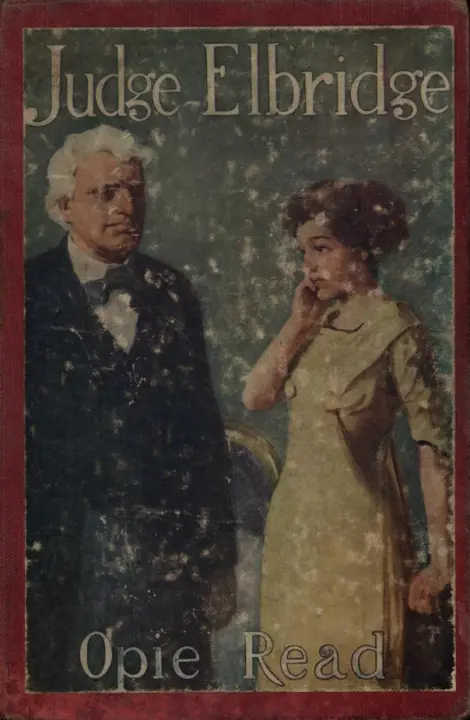
Opie Percival Read
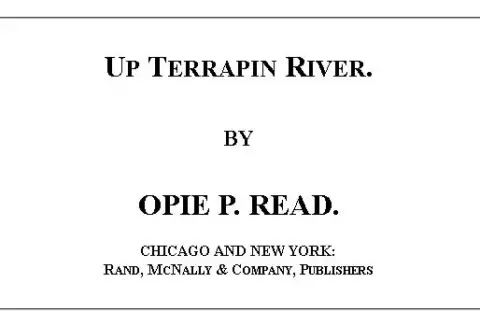
Opie Percival Read
Opie Percival Read
BEHIND THE BOOK
This eBook is for the use of anyone anywhere in the United States and most other parts of the world at no cost and with almost no restrictions whatsoever. You may copy it, give it away or re-use it under the terms of the Project Gutenberg License included with this eBook or online at www.gutenberg.org. If you are not located in the United States, you will have to check the laws of the country where you are located before using this eBook. Read the source licence.
The original source file, including credits and licence, is retained by this library. Request an original-format copy at no charge. Please include the book title and Project Gutenberg identifier #26499.
KEEP YOUR CURIOSITY GOING
Coulson Kernahan

Maurice Baring
Frances Wright
Cécile Tormay

Frederic Jesup Stimson

W. H. P. (William Henry Pope) Jarvis