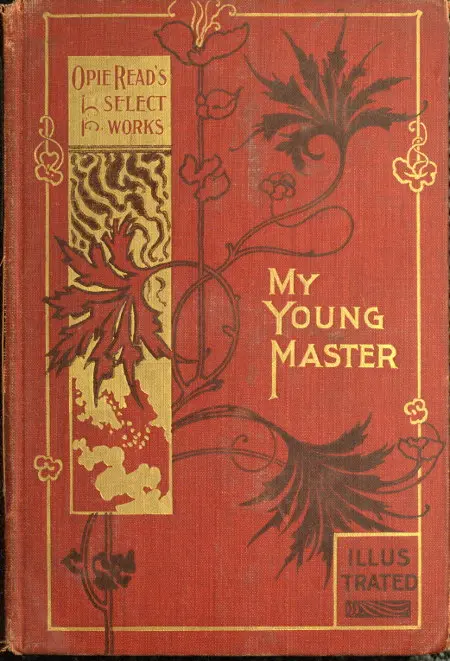
My Young Master: A Novel
Opie Percival Read
THE CLASSIC COLLECTION · 1896
"The Jucklins: A Novel" by Opie Percival Read is a work of fiction written in the late 19th century. The novel unfolds in a rural Southern setting, focusing on the life of Bill Hawes, an awkward young man struggling to find his place in a world that frequently ridicules him for his perceived laziness and clumsiness. As the story begins, it dives into themes of self-identity, societal expectations, and the yearning for acceptance, particularly within the context of family dynamics and community relationships. The opening of the novel introduces Bill Hawes, who reflects on his childhood experiences and the laughter he faced from his family and peers, especially in comparison to his more adept brothers. Bill's childhood is marked by an incident where he attempts to outdo his brother Ed by cheating some gypsies in a horse trade, only for the plan to backfire spectacularly, resulting in a comedy of errors that isolates him further. As he matures, Bill wrestles with his reputation as "Lazy Bill," while secretly yearning for respect and the possibility of personal achievement, including aspiring to become a lawyer. The narration sets the stage for his future encounters and aspirations, notably foreshadowing the complexities of his relationships with neighbors, particularly a girl named Guinea, who captivates his attention, adding layers to his somewhat tumultuous journey of self-discovery and ambition.
Introduction adapted from the source catalogue; source summaries may be automatically generated.
Free to read · English · 76,171 words · No account needed
MAKE TIME FOR A GOOD BOOK
On by default. Untick to stop anonymous reading totals. Each page counts after 10 seconds in view. How this works.
Anonymous counting is on unless you have switched it off.
We took a lantern, but the night was so dark that we went round by the road, rather than over the meadows. Millie said that she scarcely remembered how she had come, but she thought that she had run the most of the way. And over and over as we walked along she repeated: "I'm awfully sorry."
As we came out of the woods, where the road bent in toward the big gate, we saw a light burning in the library. Millie stopped suddenly and clutched my arm. "Suppose he won't let me come back?" she said. "I don't know in what sort of a humor I may find him. Mr. Hawes, you go on and see him first, please?"
"And I will wait out here," Guinea spoke up, and her voice trembled. "Of course, I can't go into the house after what has happened. Nobody must know that I am here."
I left them standing in the dark, and when I stepped upon the porch I heard some one walking heavily and slowly up and down the library. On the door was a brass knocker, and when I raised it and let it fall, the foot-steps came hastily to the door. A hanging lamp was burning in the hall, and I saw that the old General himself had opened the door.
"Oh, it's you Mr. Hawes. I couldn't tell at first. My old eyes are getting flat, sir. Step into the library."
"No, I thank you. I have but a moment to stay."
"Step in, sir," he insisted, almost commanded, and I obeyed. Chyd was under a lamp, reading a sheep-skin covered book. He looked up as I entered, nodded, and then resumed his reading.
"Sit down," said the General.
"No, I thank you, for, as I say, I have but a moment to remain. Your daughter is exceedingly sorry that she acted----"
"Where is she, sir?"
"She has come with me, but fearing that your resentment----"
"What, is she out there waiting in the dark? What, my child out there waiting to know whether she can come into her father's house? I will go to her, sir. Come, Chyd, let us both go."
I stepped to the door and stood confronting the old man and his son.
"You can go, General, if you will, but your son must remain where he
is."
"What, I don't understand you, sir. How dare you--what do you mean,
sir?"
"Your son must not come with us. That is what I mean."
"Not go to welcome his sister home. Get out of my way, sir!"
Your reading position is saved on this browser. Take it to another device with a library code. Reading pages adapt to text, rather than matching a printed edition.
Opie Percival Read
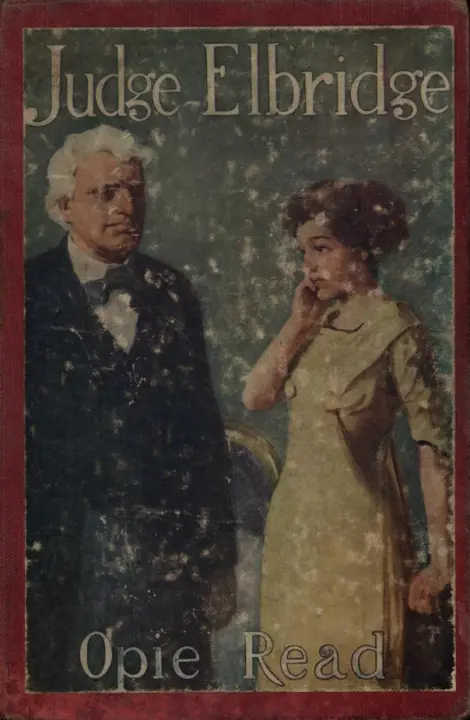
Opie Percival Read
Opie Percival Read
Opie Percival Read
BEHIND THE BOOK
This eBook is for the use of anyone anywhere in the United States and most other parts of the world at no cost and with almost no restrictions whatsoever. You may copy it, give it away or re-use it under the terms of the Project Gutenberg License included with this eBook or online at www.gutenberg.org. If you are not located in the United States, you will have to check the laws of the country where you are located before using this eBook. Read the source licence.
The original source file, including credits and licence, is retained by this library. Request an original-format copy at no charge. Please include the book title and Project Gutenberg identifier #26499.
KEEP YOUR CURIOSITY GOING
Coulson Kernahan

Maurice Baring
Frances Wright
Cécile Tormay

Frederic Jesup Stimson

W. H. P. (William Henry Pope) Jarvis