THE CLASSIC COLLECTION✦Froth: A NovelCLASSIC FREE BOOKS
Froth: A Novel
Armando Palacio Valdés
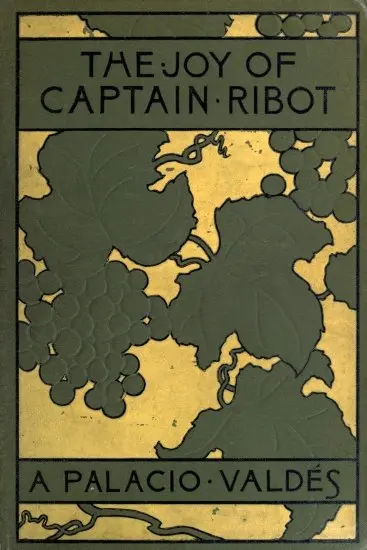
THE CLASSIC COLLECTION · 1900
"The Joy of Captain Ribot" by Armando Palacio Valdés is a novel written in the late 19th century. The story unfolds in the picturesque coastal city of Valencia, Spain, and revolves around Captain Ribot, a ship captain who navigates between Barcelona and Hamburg. This narrative promises a rich exploration of human relationships, ideals, and the vibrant Mediterranean culture, with a particular emphasis on the innocent joys and complexities of life as experienced by Ribot and the people he encounters, including the lovely Cristina and her mother. The opening of the novel introduces Captain Ribot as he arrives in Gijón, excited for a meal crafted by his beloved cook, Señora Ramona. However, an unexpected rescue mission interrupts his culinary anticipation when he leaps into action to save a woman from drowning. Following their escape from danger, a connection forms between Ribot and the young woman’s daughter, Doña Cristina. Throughout the initial chapters, the mix of light-heartedness and romantic tension emerges as the captain grapples with emotions and circumstances surrounding his interactions with Cristina, setting the stage for deeper explorations of love, obligation, and the beauty of life intertwined with the themes of familial bonds and societal expectations.
Introduction adapted from the source catalogue; source summaries may be automatically generated.
Free to read · English · 63,112 words · No account needed
MAKE TIME FOR A GOOD BOOK
On by default. Untick to stop anonymous reading totals. Each page counts after 10 seconds in view. How this works.
Anonymous counting is on unless you have switched it off.
"Senora," I murmured, although in confusion, "no doubt she was very
beautiful at that time, but I think that the present is better worth
while."
Cristina blushed more yet, and bent over her work serious and silent. Her mother did not choose to drop the subject. I did not venture to contradict her openly; I only uttered monosyllables or phrases of doubtful interpretation. At last we gave up this conversation, so dangerous to me. We were told that the hairdresser had come, and Cristina went to her room.
I continued turning over the album, and Dona Amparo went on moving back and forth the ivory needle of her lace-work. We preserved silence; but three or four times, on lifting my eyes, I observed that she was looking at me with irritating persistence. Finally I could see that she laid down her work, doubtless to look at me more to her liking.
"Ribot," she uttered in a low voice.
I thought it well to seem deaf.
"Tss! Ribot."
"What did you say, senora?" I asked, pretending to come out of my great
abstraction.
"Look me in the face."
"How? I do not understand."
"Will you look me in the face?"
As I had not been doing anything else, this petition would have been tremendously absurd if it had not been even more disquieting.
"Now, move your chair a little nearer."
This new demand appeared to me much more disquieting. I drew up, none the less, according to orders, dragging the chair with an ill-omened squeak. Adopting a tranquil and unembarrassed air, distinctly contrary to what would have suited me at that instant, I waited for what it was she had to say to me. Dona Amparo gazed at me smiling, and then, with a deep look, she said:
"Ribot, you are in love with my daughter Cristina!"
I grew pale, then crimson; afterwards other shades of yellow, green, and blue. Indeed, I think my face was a rainbow for the space of several seconds.
"Senora! I! How can you suppose it? On my life, what a notion! What an
idea!"
Dona Amparo, on seeing me in such a terrible state of agitation, became frightened, and turned pale also. She reached out immediately for her smelling-bottle; with one hand she held up my head, and with the other put it under my nostrils. I was given salts to smell in such a moment as that!
I took my bitter cup as best I could, thanked her, and, with smothered words and faltering tongue, ascribed my emotion to my natural surprise. The accusation was so grave that really----
Your reading position is saved on this browser. Take it to another device with a library code. Reading pages adapt to text, rather than matching a printed edition.
Armando Palacio Valdés

Armando Palacio Valdés

Armando Palacio Valdés
Armando Palacio Valdés
BEHIND THE BOOK
This eBook is for the use of anyone anywhere in the United States and most other parts of the world at no cost and with almost no restrictions whatsoever. You may copy it, give it away or re-use it under the terms of the Project Gutenberg License included with this eBook or online at www.gutenberg.org. If you are not located in the United States, you will have to check the laws of the country where you are located before using this eBook. Read the source licence.
The original source file, including credits and licence, is retained by this library. Request an original-format copy at no charge. Please include the book title and Project Gutenberg identifier #38293.
KEEP YOUR CURIOSITY GOING
Coulson Kernahan

Maurice Baring
Frances Wright
Cécile Tormay

Frederic Jesup Stimson

W. H. P. (William Henry Pope) Jarvis