THE CLASSIC COLLECTION✦An outlaw’s diary: the CommuneCLASSIC FREE BOOKS
An outlaw’s diary: the Commune
Cécile Tormay
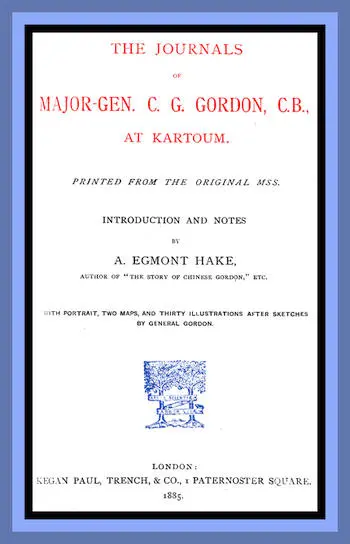
THE CLASSIC COLLECTION · 1885
"The Journals of Major-Gen. C. G. Gordon, C.B., at Kartoum" by Charles George Gordon is a historical account written in the late 19th century. This work details the journals of General Gordon during his time in Kartoum, shedding light on the challenging conditions in Sudan and his efforts to navigate the complex political and military landscape of the region. At the start of the book, the author presents Gordon's initial observations and experiences following his appointment as Governor-General of the Sudan. The opening chapters describe his reflections on the dire circumstances faced by the local population, the oppressive regime in place, and his commitment to assisting the Soudanese people while opposing the slave trade. Gordon expresses a blend of hope and concern as he documents the precarious situation around Kartoum, emphasizing both his sense of duty and the moral complexities of his mission amidst rising tensions and rebellion from groups like the Mahdi. The tone suggests a deep introspection as he grapples with the responsibilities thrust upon him and the challenges of implementing meaningful reform.
Introduction adapted from the source catalogue; source summaries may be automatically generated.
Free to read · English · 174,578 words · No account needed
MAKE TIME FOR A GOOD BOOK
On by default. Untick to stop anonymous reading totals. Each page counts after 10 seconds in view. How this works.
Anonymous counting is on unless you have switched it off.
Al-ed-den and Suleiman, arrival of pashas, 485.
Alexandria, the flight from, 60.
Ali-el-Khowas, 417.
Ali Mohammed Abou Saad Esshentrawi al Abadi, 508.
Ali Othman, 511.
Ambukol, reported advance of troops on, 66;
distance of steamers from, 110.
Ambukol to Metemma a better course, 257;
map by railway engineers, 257, 258;
station forts should be along line from, 257;
Gordon’s scheme for advance from, 257;
road, the road to follow, 261;
wells plentifully supplied on, 261;
no wells much on flank of, 261.
Ambukol to Nesgee, time to get from, 261.
Ammunition, resources of, 44;
amount expended, 72;
amount left, 73;
amount of, in Kartoum, 19th October, 206;
and soldiers with Mahdi when he started, 222;
amount fired at Arabs, 252;
Mahdi bringing up large quantities of, 296;
amount fired, 311, 317;
lost with Hicks, 323;
still in Husseinyeh, 326;
amount with Ferratch Ullah, 331;
daily expenditure of, by Ferratch Ullah, 348;
returns of, 393;
waste of, by Arabs, 393;
and guns, amount of, in Kartoum known to Mahdi, 525.
Ancient Books, no allusion in, to any Mahdi, 414.
Animals, belief in future existence of, 49.
Anti-Slavery Society and the Mahdi, 233, 337, 379.
Apostacy of Mussulmans and Christians, 15.
Arabic, Gordon ignorant of, 198.
Arabi Pasha’s private secretary, 77;
trial of, 125, 133.
Arab school children, and their schools, 7;
Gordon’s affection for, 16.
Arabs, reported scarcity of food with, 15;
ill-treatment of Greeks and other prisoners by, 16;
Greek came in from, 18;
distinction between and Rebels, 22;
attacked by steamer Towfikia, 30;
in camp near Giraffe, 41;
foraging party of, 41;
fight between Gordon’s men and, 47;
retreating towards White Nile, 47;
desertion from, 63;
expecting an attack, 71;
small parties of men create dismay with, 89;
attack before dawn, 89;
no quarter given by, 98;
firing on steamers, 104;
have no conscience, 105;
attack on village on White Nile by, 121;
badly off for water, 125;
means of forcing to retreat, 126;
to be well defeated, 126;
amount of ammunition of, 129;
average daily number of deserters from, 134;
defeat of, 136;
presence of Gordon exasperating to, 152;
going towards Giraffe, 153;
have captured gun of Katarif, 166;
prevent desertions to Gordon, 171;
meditate coming to old Dem, 174;
perplexed, 186;
policy in not answering fire of, 187;
fighting force of, 187;
Sakkeyer, meditate raid, 192;
policy in letting people go to, 198;
have not occupied Halfeyeh, 201;
few only at Faki Mustapha, 201;
Gordon does not like killing, 203;
capture of two boats of Stewart’s expedition by, 205;
officials, hedging with the, 208;
death among, from dysentery, 221;
number of, with Mahdi when he started, 222;
and mirrors, 222;
telegraph cut at Bourré by, 222;
either eating, praying, sleeping, or sick, 223;
have divided their camp, 224;
take rifles from regulars, 224;
ferry across White Nile by, 225;
best place of attacking, 230;
none in arms between Wad-el-Medinet and Sennaar, 231;
should not be helped when wounded, 232;
belief of, 232;
leaders of, prime movers, 232;
meditate
attack on Omdurman, 244;
passing Blue Nile at Giraffe, 244;
ordered by Mahdi to congregate at Kartoum, 246;
reconnoitring party of, in ruins of Omdurman, 246;
reported removal of captured money by, 247;
at Shoboloha, 247;
positions of, 249;
amount of rounds of ammunition fired at, 252;
capture of three, by the Baggaras, 255;
force of, towards north, 258;
driven back to Giraffe, 258;
itinerary of, 261;
cannot assemble on banks from Ambukol to Metemma, 261;
have given no peace for one hundred and thirty-three days, 261;
camel transport depends on temper of, 262;
doubt holiness of Mahdi, 264;
continue to desert Mahdi, 268;
firing on, forbidden, 270;
presence of steamers among, 279;
number of, killed by Abbas, 282;
party of, at Sennaar, 282;
Stewart’s feeling as to the, 286;
have found out weak point, 301;
unconcerned as to advance of expedition, 303;
want to fight direct, 306;
lost heavily at Bourré, 306;
reconnoitring party feared, 311;
at Goba, 313;
confidence of, 313;
do not assist one another, 317;
in ditch at Omdurman, 320;
firing on lines at Bourré, 321;
coming across to Goba, 321;
declare to enter town, 322;
firing at Moggrim fort, 324;
ferry of, across White Nile, 324;
may run away, but not probable, 326;
futility of firing of, 327;
capture of man and letters by, 328;
bad firing of, 330;
at Giraffe and El foun, 334;
keep black troops on short rations, 334;
fire from Bourré, White Nile, and Omdurman, 336;
settled down in old by dem, 341;
Kartoum hemmed in by, 343;
made a pyramid of skulls from Hicks’s army, 344;
repulsed three times by expedition, 347;
distance of from city, 351;
collected at Halfeyeh, 354;
scarcity of, at Omdurman, 355;
retreat of, 356, 357;
and capture of Husseinyeh, 357;
at Tuti, 357;
fire on Ismailia, by, 358;
and Shendy, 359;
want of ammunition by, 362;
strength of on north side, 364;
and the bombardment of Palace, 366;
“Personality” of battery of, 366, 370;
and battery of Goba, 368;
fire on Palace, 369;
mishap to gun of, 370;
at Goba, 370;
another battle with, 375;
one of the, throwing dust in the air, 376;
shelling Palace, 378;
battles with, 381;
will be dispersed by troops, 382;
at Goba “silent”, 387;
innocuous, 388;
on bank of Blue Nile, 388;
short of ammunition, 391;
European directing guns of, 392;
their waste of ammunition, 393;
fire on Palace slackened, 395;
daring and recklessness of, 445;
appeal to loyalty of, 468;
disaffection among Kababish, 480.
Your reading position is saved on this browser. Take it to another device with a library code. Reading pages adapt to text, rather than matching a printed edition.
BEHIND THE BOOK
This eBook is for the use of anyone anywhere in the United States and most other parts of the world at no cost and with almost no restrictions whatsoever. You may copy it, give it away or re-use it under the terms of the Project Gutenberg License included with this eBook or online at www.gutenberg.org. If you are not located in the United States, you will have to check the laws of the country where you are located before using this eBook. Read the source licence.
The original source file, including credits and licence, is retained by this library. Request an original-format copy at no charge. Please include the book title and Project Gutenberg identifier #49224.
KEEP YOUR CURIOSITY GOING
Cécile Tormay

Moritz Busch
John L. Ransom
Frances Wright
Cécile Tormay

Mabel Potter Daggett