THE CLASSIC COLLECTION✦A Terrible TomboyCLASSIC FREE BOOKS
A Terrible Tomboy
Angela Brazil
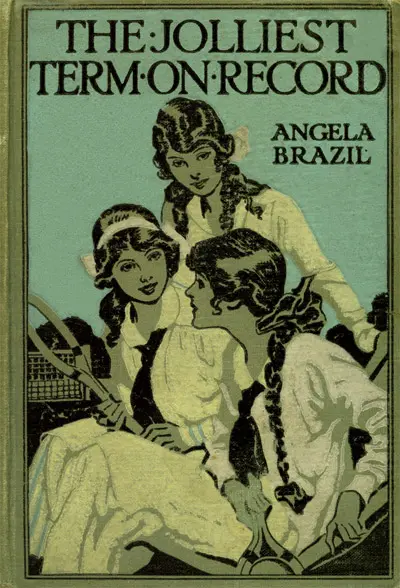
THE CLASSIC COLLECTION · 1915
"The Jolliest Term on Record: A Story of School Life" by Angela Brazil is a novel likely written during the early 20th century. This charming tale revolves around the adventures of two schoolgirls, Katrine and Gwethyn Marsden, as they transition from life at home to a boarding school called Aireyholme. The story explores themes of friendship, artistic aspirations, and the ups and downs of school life, particularly as the sisters encounter fellow students and teachers in their new environment. The opening of the story introduces Katrine and Gwethyn in their attic studio at home, where they discuss the peculiar occurrences leading up to their unexpected departure to a boarding school. Their mother reveals that they will be attending Aireyholme for a term while she and their father travel to Australia. The sisters are initially apprehensive about returning to school life, particularly for Katrine who has just left her previous school, but they are intrigued by the prospect of new experiences, especially in an artistic setting. As they embark on their journey, the narrative hints at both the challenges and adventures that await them in their new school, setting the stage for their exploration of a world filled with friendships, rivalries, and artistic endeavors.
Introduction adapted from the source catalogue; source summaries may be automatically generated.
Free to read · English · 70,727 words · No account needed
MAKE TIME FOR A GOOD BOOK
On by default. Untick to stop anonymous reading totals. Each page counts after 10 seconds in view. How this works.
Anonymous counting is on unless you have switched it off.
A choice and unique COLLECTION OF ANTIQUES AND CURIOS is now on view in the Studio, and forms an unparalleled opportunity of making acquaintance with the domestic arts and industries of the Middle Ages. Many objects of historic interest. Inspection Invited. Admission Free. Catalogues One Penny.
Proceeds given to the Belgian Relief Fund.
Everybody at once marched upstairs; even Dorrie and Viola, who were inclined to hold aloof, fell victims to Eve's instinct of curiosity, and followed the rest, excusing their weakness on the ground that as monitresses they felt obliged to be present at all school happenings, and were thus only fulfilling their duty.
Giggling a little, the girls entered the studio. The large table in the centre was spread with a variety of objects, neatly numbered as in a museum. By the door stood Katrine with a pile of hand-printed catalogues, and the Belgian Relief Fund Box from the dining-room chimney-piece. As the exhibition seemed unintelligible without a catalogue, the pennies rattled briskly into her box. The exhibits were as diverse as they were extraordinary, and according to the descriptions were both rare and historic.
No. 1. (Upper leather of a mouldy old boot.) Portion of the
footgear of Simon de Montfort, worn before the Battle of
Evesham, 1265.
No. 2. (A broken crock of china.) Valuable piece of soft paste Worcester from the Huntingdon Collection.
No. 3. (A rusty hairpin.) Pin worn in the head-dress of Queen Elizabeth at the Kenilworth Pageant.
No. 4. (A crooked nail.) Nail from the gibbet of Piers Gaveston, executed at Blacklow Hill, Warwick, 1312.
No. 5. (A dilapidated horseshoe.) Shoe worn by the horse of Charles I at the Battle of Nottingham, 1642.
No. 6. Glove button of Marie Antoinette.
No. 7. Needle used in embroidery by Mary Queen of Scots.
No. 8. Safety-pin employed in the toilet of Edward VI when an
infant.
No. 9. Portion of feeding-bottle of Henry VIII.
No. 10. Do. fragment of rattle.
No. 11. (A worm-eaten piece of wood.) Relic of vessel of the
Spanish Armada.
No. 12. (Rusty cocoa tin.) Remains of cup in which the Barons drank success to Magna Charta, 1215.
No. 13. (A small pebble.) Stone worn as a penance in the shoe of Henry II, on a pilgrimage to the shrine of St. Thomas a Becket.
No. 14. (A portion of wickerwork.) Fragment of guillotine basket
used in French Revolution.
No. 15. (A rusty key.) Original key of dungeon in Berkeley Castle where Edward II was murdered.
No. 16. (A shabby quill.) Pen used to sign Magna Charta, 1215.
The girls laughed immoderately to see the various objects which they had presented in mockery to Katrine, described as such priceless relics.
"You haven't put in the soda-water bottle I gave you!" said Coralie.
Your reading position is saved on this browser. Take it to another device with a library code. Reading pages adapt to text, rather than matching a printed edition.
Angela Brazil
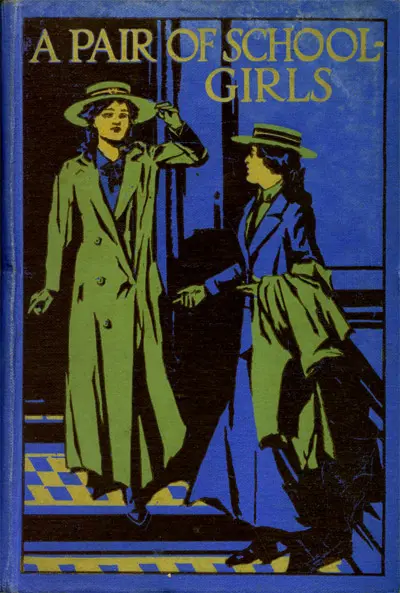
Angela Brazil
Angela Brazil
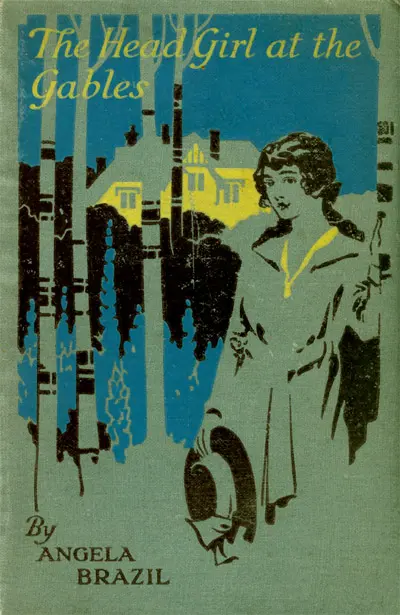
Angela Brazil
BEHIND THE BOOK
This eBook is for the use of anyone anywhere in the United States and most other parts of the world at no cost and with almost no restrictions whatsoever. You may copy it, give it away or re-use it under the terms of the Project Gutenberg License included with this eBook or online at www.gutenberg.org. If you are not located in the United States, you will have to check the laws of the country where you are located before using this eBook. Read the source licence.
The original source file, including credits and licence, is retained by this library. Request an original-format copy at no charge. Please include the book title and Project Gutenberg identifier #33910.
KEEP YOUR CURIOSITY GOING
Coulson Kernahan

Maurice Baring
Frances Wright
Cécile Tormay

Frederic Jesup Stimson

W. H. P. (William Henry Pope) Jarvis