
Dead letters
Maurice Baring
THE CLASSIC COLLECTION · 1922
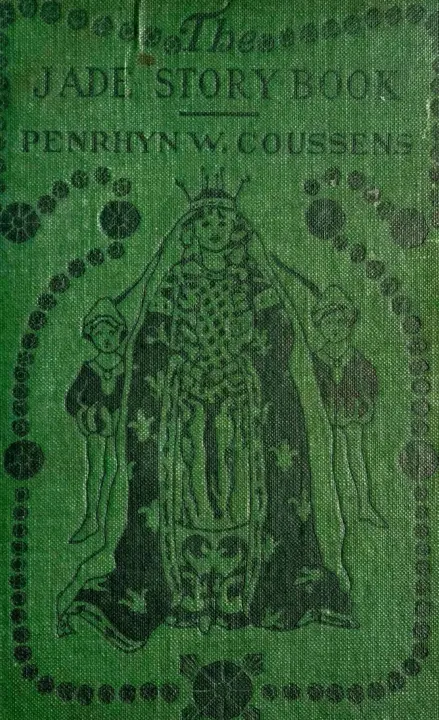
"The Jade Story Book; Stories from the Orient" by Penrhyn Wingfield Coussens is a compilation of folklore tales from various Far Eastern countries written in the early 20th century. The stories encompass rich cultural narratives and moral lessons, drawing from traditions of India, China, Japan, and Persia. Each tale weaves together themes of kindness, bravery, and the oftentimes whimsical nature of fate, urging readers to find value in virtue and compassion. At the start of this collection, readers are introduced to the concept that fables and fairy tales serve a vital role in childhood development, stimulating imagination while delivering moral lessons. One story, "How the Birds Saved the Emperor’s Life," unfolds in a magnificent Chinese palace where the Emperor learns of a beautiful Nightingale whose song captivates all. The pursuit to hear this enchanting bird drives the plot, leading to a series of events that highlight the contrasts between superficial beauty and genuine talent, ultimately suggesting that true treasures lie beyond appearances. Throughout the opening portion, themes of loyalty, the importance of nature, and the consequences of one's actions are brought to life, inviting readers into a world rich with cultural wisdom.
Introduction adapted from the source catalogue; source summaries may be automatically generated.
Free to read · English · 67,711 words · No account needed
MAKE TIME FOR A GOOD BOOK
On by default. Untick to stop anonymous reading totals. Each page counts after 10 seconds in view. How this works.
Anonymous counting is on unless you have switched it off.
In a forest called Champak-Grove[1] lived two friends, a Deer and a Crow. The Deer was roaming among the trees one day, when he was observed by a Jackal.
[Footnote 1: The Champak is a bushy tree bearing a profusion of blossoms which resemble stars. It gives forth a delightful perfume.]
“Ho! Ho!” said the Jackal to himself, “If I can only win the confidence of this Deer, it may be that he will make a very fine meal for me.” So he approached the Deer, and wished him a very good morning.
“Who are you?” said the Deer.
“I’m Small-wit, the Jackal,” replied the other. “I live here all alone in the wood, and it is very lonely without anyone to talk to. It makes me very happy to know you, and I hope you will look upon me as your friend.”
“Very well,” said the Deer, so off they went together.
It was beginning to grow dark when the Crow, whose name was Sharp-sense, saw the two coming home together. He asked the Deer who his companion was.
“It is a Jackal who wishes to know us,” answered the Deer.
“You must be careful with whom you become friendly,” said Sharp-sense.
“You know——
‘To folks by no one known house-room deny:— The Vulture housed the Cat, and thence did die.’”
“How was that?” asked the Deer and the Jackal.
“I will tell you,” replied the Crow.
“On the banks of the River Ganges is a cliff called Vulture-Crag, upon which was a large fig-tree. It was hollow, and inside it dwelt an old Vulture who had lost both eyes and talons, and who was kept alive with food given him by the friendly birds that roosted in the tree.
“One day, when the parent birds were away, a Cat came, thinking to make a meal of the young birds, of which there were several. The nestlings were so much afraid of the Cat that they made noise enough to arouse the Vulture.
“‘Who is there?’ croaked he.
“The Cat, seeing the Vulture, thought his end was surely come. He knew he couldn’t get away, so had to use his wits. Drawing nearer, he said:
“‘Honored sir, I wish you a very good morning.’
“‘Who are you?’ asked the Vulture.
“‘I am a Cat.’
“‘Go away at once, Cat, or I will kill you,’ said the Vulture.
“The Cat then begged the Vulture to listen to what he had to say, and afterward decide whether he should live or die.
“To this the Vulture consented, and so the Cat began:
Your reading position is saved on this browser. Take it to another device with a library code. Reading pages adapt to text, rather than matching a printed edition.
BEHIND THE BOOK
This eBook is for the use of anyone anywhere in the United States and most other parts of the world at no cost and with almost no restrictions whatsoever. You may copy it, give it away or re-use it under the terms of the Project Gutenberg License included with this eBook or online at www.gutenberg.org. If you are not located in the United States, you will have to check the laws of the country where you are located before using this eBook. Read the source licence.
The original source file, including credits and licence, is retained by this library. Request an original-format copy at no charge. Please include the book title and Project Gutenberg identifier #65965.
KEEP YOUR CURIOSITY GOING
Maurice Baring
Francis Greenleaf Allinson & Anne C. E. (Anne Crosby Emery) Allinson

Abby Morton Diaz
Helen Hunt Jackson
Mary Frances Blaisdell
Stuart Dodgson Collingwood