THE CLASSIC COLLECTION✦My diaries, being a personal narrative of events 1888-1914, Part 2 (1900-1914)CLASSIC FREE BOOKS
My diaries, being a personal narrative of events 1888-1914, Part 2 (1900-1914)
Wilfrid Scawen Blunt
THE CLASSIC COLLECTION · 1899
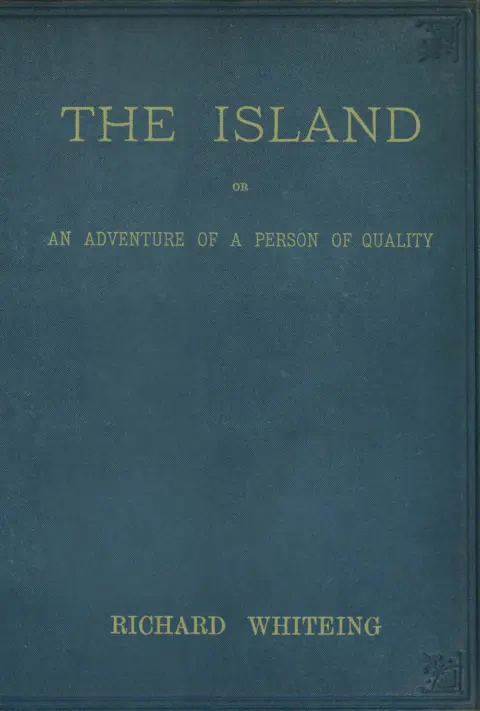
"The Island: Or, An Adventure of a Person of Quality" by Richard Whiteing is a novel written in the late 19th century. The story begins with an unnamed protagonist who finds himself awash in existential discontent and escapes London for a journey across Europe, ultimately leading to his landing on a deserted Pacific island. There, he encounters a woman named Victoria, and together they navigate the complexities of civilization and their relationship. The opening of the novel introduces us to the narrator, who experiences a crisis of identity amid the bustling life of London. Feeling out of focus and disconnected from the world around him, he decides to leave, traveling first to Paris before eventually finding himself shipwrecked on an uncharted island. As he grapples with his isolation and the existential weight of civilization's burdens, he meets Victoria, a striking native woman, and begins to explore the new dynamics of life, culture, and connection in this secluded paradise. This beginning sets the stage for a deeper exploration of human nature, societal constructs, and the yearning for meaning beyond the confines of societal expectations.
Introduction adapted from the source catalogue; source summaries may be automatically generated.
Free to read · English · 55,053 words · No account needed
MAKE TIME FOR A GOOD BOOK
On by default. Untick to stop anonymous reading totals. Each page counts after 10 seconds in view. How this works.
Anonymous counting is on unless you have switched it off.
‘Victoria, give me a chance! Suppose nobody helps him. When, by heroic labour, he has cleared his forelegs, his wings are still coated with the sugary mire; and, as he plants the forelegs down, to attend to the rest of him, the forelegs are besmeared again. Let him resolve to leave them behind, in his desperation, and he will but lose his balance, and foul the wings once more. Poor fly! Poor Swart! Poor, Poor Stupids! whose history through the ages is my humble theme. The only difference is that the Swarts are sunk in slime instead of jam, and that they have the power of breeding there, and leaving their heritage of fruitless struggle to countless generations. Always the slime is peopled with this race, and never shall they get out, till God send a brother to scrape them. The tragi-comedy of the situation is found when one, by miracle of discovery of a brother’s body for foothold, wriggles himself free, and then stands on the brink, to comfort the others with Penny Readings from the author of “Self Help.”
For full seven centuries, as I could trace it now, had the Swarts been waiting for the deliverer with a potsherd. Their history was a history of illusions in the belief that he had come at last. Once, clearly, they thought it was Kett, for there was a Swart in his rebellion in 1549. I hear him at their foolish Litany of human rights: “Look at them and look at us! have we not all the same form, are we not all born in the same way?” Eternal protest! Nature’s everlasting whisper to the innermost heart of man--never sufficiently answered by a knock on his head from the outside! The Earl of Warwick and his mercenaries were prompt enough with this response, yet the Swarts were still unconvinced. There was a Swyrte--I can but think it was the same family, and I am confirmed in that opinion by one of our kings-at-arms--in Wat Tyler’s affair, in the fourteenth century. The conjecture is that he was one of the “landless men,” whom the lawyers of the time were trying to bring back into serfage, after their extremely informal manumission by the Black Death. Nearly sixty thousand persons, it may be remembered, perished of that pest in Norwich alone, and this had probably convinced the Swyrtes that it was time to be stirring. A sort of insane joy in the ravage wrought by the disorder, as in a clearance for right and freedom, by the Devil as redeemer, is apparent in some of the sayings of the time; and the surviving Swyrte in the train of Tyler may have felt, in his extremity, that he was open to a fair offer from that other side. The sentiment is perhaps hereditary, for I remember to have noticed a strange elation in the Swart of the Victorian era, when the late visitation of Asiatic cholera was threatened, or as, I fear, he took it, promised, to our shores. His manner exhibited the tremulousness of a great uncertain hope, and his reading of the telegrams from Marseilles and Paris in his Sunday paper took a rhythmic cadence, as though they were portions of a saga. The circumstance is perhaps, incidentally, suggestive of his Norse descent, but we must not go too far. Local Kentish records tend to show that the earlier Swyrte just mentioned had risen to a certain eminence in the movement, the highest perhaps the family ever attained, for a man of that name undoubtedly acted on one occasion, as deputy tub-bearer to the “mad priest of Kent,” John Ball. Ball, as we know, was preaching, five centuries ago, just what they are preaching at Clerkenwell Green to-day. “Good people, things will never go well in England so long as goods be not in common, and so long as there be villains and gentlemen. But what right are they whom we call lords greater folk than we? Why do they hold us in serfage? If we all came of the same father and mother, of Adam and Eve, how can they say or prove that they are better than we, if it be not that they make us gain for them by our toil what they spend in their pride? They are clothed in velvet, and warm in their furs and their ermines, while we are covered with rags. They have wine and spices and fair bread; and we eat oat cake and straw, and water to drink. They have leisure and fine houses; we have pain and labour, the rain and the wind in the fields. And yet it is of us, and of our toil, that these men hold their state.” We may easily imagine the effect of such words on one of this stupid race.
Your reading position is saved on this browser. Take it to another device with a library code. Reading pages adapt to text, rather than matching a printed edition.
BEHIND THE BOOK
This eBook is for the use of anyone anywhere in the United States and most other parts of the world at no cost and with almost no restrictions whatsoever. You may copy it, give it away or re-use it under the terms of the Project Gutenberg License included with this eBook or online at www.gutenberg.org. If you are not located in the United States, you will have to check the laws of the country where you are located before using this eBook. Read the source licence.
The original source file, including credits and licence, is retained by this library. Request an original-format copy at no charge. Please include the book title and Project Gutenberg identifier #73620.
KEEP YOUR CURIOSITY GOING
Wilfrid Scawen Blunt
Wilfrid Scawen Blunt

E. W. (Edgar Watson) Howe
Coulson Kernahan

Maurice Baring
Frances Wright