
Letters of Marque
Rudyard Kipling

THE CLASSIC COLLECTION · 1923
"The Irish Guards in the Great War, Volume 2: The Second Battalion" edited by Rudyard Kipling is a historical account written in the early 20th century. This volume chronicles the experiences of the 2nd Battalion of the Irish Guards during World War I. The book likely delves deep into the formation, operations, and daily life of soldiers during the war, offering insights into their struggles and camaraderie while facing the harsh realities of combat. At the start of the book, the focus is on the establishment of the 2nd Battalion of the Irish Guards in 1915, highlighting the conditions of Warley Barracks and the mix of personnel who joined. The chapter recounts the emotional and physical challenges faced by the soldiers as they prepared for deployment to France, emphasizing their awareness of the war's grim reality. The narrative elaborates on their initial training, inspections, and the atmosphere surrounding their eventual transfer to the front lines, capturing the formation of the battalion's own identity and spirit amid the uncertainty of war.
Introduction adapted from the source catalogue; source summaries may be automatically generated.
Free to read · English · 106,148 words · No account needed
MAKE TIME FOR A GOOD BOOK
On by default. Untick to stop anonymous reading totals. Each page counts after 10 seconds in view. How this works.
Anonymous counting is on unless you have switched it off.
Here, for instance, is what befell when No. 1 Company went up to relieve a grenadier company on the night of the 19th November. They started at 3 P. M. in continuous mud under steady shelling. Only three out of their four platoon guides turned up. The other had collapsed. Ten men were hit on the way up; a number of others fell out from sheer exhaustion or got stuck in the mud. The first man who set foot in the front-line trench blocked the rest for a quarter of an hour, while four of his comrades were hauling him out. This was five hours after they had begun. The two Lewis-guns and some stragglers, if men hip-deep in mud and water can straggle, were still unaccounted for. Lance-Sergeant Nolan brought them all in by hand at three in the morning under shell-fire. Then they were heavily shelled (there was hardly any rifle-fire), and three men were wounded. Luckily shells do not burst well in soft dirt. It was Private Curran’s business to shift two of them who were stretcher-cases to Battalion Headquarters one mile and a half distant. This took two relays of eight men each, always under shell-fire, and Curran’s round trip was completed in nine hours. When they were relieved by the soft-spoken Australians, on the evening of the 21st, they spent the whole of the night, from 8 P. M. to 6 A. M., getting back to camp, where it is not surprising that they arrived “utterly exhausted.” Owing to an orderly losing his way, one isolated trench or hole held by Sergeant Murphy, Lance-Sergeant Nolan and seven men, was not relieved, and they stayed on for another twenty-four hours. No. 2 Company, a few hundred yards away, were fairly dead to the world by the time they had worked their way to their line, which possessed, nominally, a trench and some posts. The trench was a gutter; their posts had no protection at all from shells, and when they arrived they found that no sand-bags had been sent up, so they had nothing to work with. They also spent their time pulling men out of the mire. Supervision of any sort was impossible. It took the officer three hours to get from the left to the right of his short line. The posts could not be reached by daylight at all, and during bombardments of the trench “it often seemed as though what little there was must disappear, and (the Battalion, as we know, was mostly new hands) the coolness of the young N.C.O.’s was invaluable in keeping up the spirits of the men.” There was one time when a sergeant (Lucas) was buried by a shell, and a brother sergeant (Glennon) “though he knew that it meant almost certain death” went to his aid, and was instantly killed, for the enemy, naturally, had the range of their own old trenches to the inch. To be heroic at a walk is trying enough, as they know who have plowtered behind the Dead March of a dragging barrage, but to struggle, clogged from the waist down, into the white-hot circle of accurately placed destruction, sure that if you are even knocked over by a blast you will be slowly choked by mud, is something more than heroism. Equally, to lie out disabled on an horror of shifting mud is beyond the sting of Death. One of our corporals on patrol heard groaning somewhere outside the line. It proved to be a grenadier, who had lain there twenty-four hours “suffering from frost-bite and unable to move.” They saved him. Their stretcher-bearers were worn out, and what sand-bags at last arrived were inadequate for any serious defence. “We were fighting purely against mud and shells, as the German infantry gave us no trouble.” When No. 2 was relieved at the same time as No. 1 Company, they dribbled into camp by small parties from two till ten in the morning, and three of the men never turned up at all. The Somme mud told no tales till years later when the exhumation parties worked over it. The Australians, of whom it is reported that the mud dragged every national expletive out of them by the boots, relieved the Division as a whole on the 22nd November, and, pending the new arrangements for taking over more of the French line, the Guards were transferred first to a camp between Carnoy and Montauban, which for those parts was fairly comfortable. At all events, the huts though stoveless were water-tight, and could be “frowsted up” to something like warmth. For ten days they worked, two days out of three, on the Carnoy-Montauban road in company with a labour battalion surnamed “The Broody Hens,” owing to their habit of scuttling at the very last moment from under the wheels of the multitudinous lorries. “On off days we made paths through the mud for ourselves.” But these were dry, and by comparison clean.
Your reading position is saved on this browser. Take it to another device with a library code. Reading pages adapt to text, rather than matching a printed edition.
Rudyard Kipling

Rudyard Kipling
Rudyard Kipling
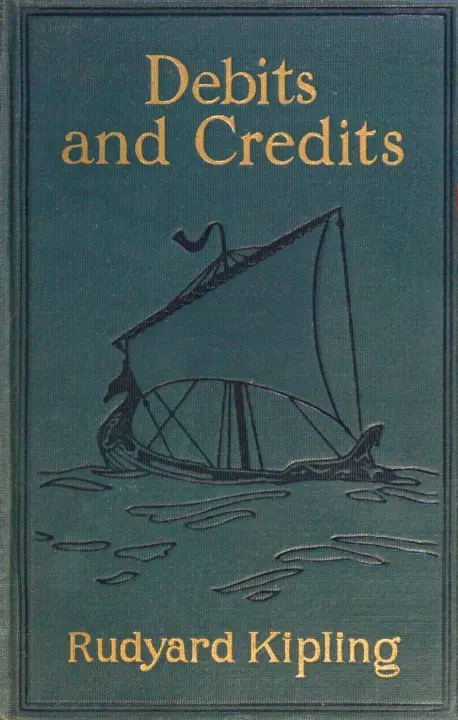
Rudyard Kipling
BEHIND THE BOOK
This eBook is for the use of anyone anywhere in the United States and most other parts of the world at no cost and with almost no restrictions whatsoever. You may copy it, give it away or re-use it under the terms of the Project Gutenberg License included with this eBook or online at www.gutenberg.org. If you are not located in the United States, you will have to check the laws of the country where you are located before using this eBook. Read the source licence.
The original source file, including credits and licence, is retained by this library. Request an original-format copy at no charge. Please include the book title and Project Gutenberg identifier #72881.
KEEP YOUR CURIOSITY GOING
Cécile Tormay

Moritz Busch
John L. Ransom
Frances Wright
Cécile Tormay

Mabel Potter Daggett