
Letters of Marque
Rudyard Kipling

THE CLASSIC COLLECTION · 1923
"The Irish Guards in the Great War, Volume 2: The Second Battalion" edited by Rudyard Kipling is a historical account written in the early 20th century. This volume chronicles the experiences of the 2nd Battalion of the Irish Guards during World War I. The book likely delves deep into the formation, operations, and daily life of soldiers during the war, offering insights into their struggles and camaraderie while facing the harsh realities of combat. At the start of the book, the focus is on the establishment of the 2nd Battalion of the Irish Guards in 1915, highlighting the conditions of Warley Barracks and the mix of personnel who joined. The chapter recounts the emotional and physical challenges faced by the soldiers as they prepared for deployment to France, emphasizing their awareness of the war's grim reality. The narrative elaborates on their initial training, inspections, and the atmosphere surrounding their eventual transfer to the front lines, capturing the formation of the battalion's own identity and spirit amid the uncertainty of war.
Introduction adapted from the source catalogue; source summaries may be automatically generated.
Free to read · English · 106,148 words · No account needed
MAKE TIME FOR A GOOD BOOK
On by default. Untick to stop anonymous reading totals. Each page counts after 10 seconds in view. How this works.
Anonymous counting is on unless you have switched it off.
Evidently, one and a half-hour’s bombardment, against a country-side packed with machine-guns, was not enough to placate it. The Battalion had been swept from all quarters, and shelled at the same time, at the end of two hard days and sleepless nights, as a first experience of war, and had lost seven of their officers in forty minutes. They were re-formed somewhat to the rear along the Loos-Hulluch road. (“Jerry did himself well at Loos upon us innocents. We went into it, knowing no more than our own dead what was coming, and Jerry fair lifted us out of it with machine-guns. That was all there was to it that day.”) The watchers on the Vermelles water-tower saw no more than a slow forward wave obscured by Chalk-Pit Wood; the spreading of a few scattered figures, always, it seemed, moving leisurely; and then a return, with no apparent haste in it, behind the wood once more. They had a fair idea, though, of what had happened, and guessed what was to follow. The re-formed line would go up again exactly to where it had come from. While this was being arranged, and when a couple of companies of the 1st Coldstream had turned up in a hollow on the edge of the Loos-Hulluch road, to support the Battalion, a runner came back with a message from Captain Alexander saying that he and some men were still in their scratch-trenches on the far side of Chalk-Pit Wood, and he would be greatly obliged if they would kindly send some more men up, and with speed. The actual language was somewhat crisper, and was supplemented, so the tale runs, by remarks from the runner addressed to the community at large. The demand was met at once, and the rest of the line was despatched to the near side of the Wood in support. The two companies of the Coldstream came up on the left of the Irish Guards, and seized and settled down in the Chalk-Pit itself. They all had a night’s energetic digging ahead of them, with but their own entrenching tools to help, and support-trenches had to be made behind the Wood in case the enemy should be moved to counter-attack. To meet that chance, as there was a gap between the supporting Coldstream Companies and the First Guards Brigade on the left, the C.O. of the 2nd Battalion collected some hundred and fifty men of various regiments, during the dusk, and stuffed them into an old German communication-trench as a defence. No counter-attack developed, but it was a joyless night that they spent among the uptorn trees and lumps of unworkable chalk. Their show had failed with all the others along the line, and “the greatest battle in the history of the world” was frankly stuck. The most they could do was to hang on and wait developments. They were shelled throughout the next day, heavily but inaccurately, when 2nd Lieutenant Sassoon was wounded by a rifle bullet. In the evening they watched the 1st Coldstream make an unsuccessful attack on Puits 14 bis, for the place was a well-planned machine-gun nest—the first of many that they were fated to lose their strength against through the years to come. That night closed in rain, and they were left to the mercy of Providence. No one could get to them, and they could get at nobody; but they could and did dig deeper into the chalk, to keep warm, and to ensure against the morrow (September 29) when the enemy guns found their range and pitched the stuff fairly into the trenches “burying many men and blowing a few to pieces.” Yet, according to the count, which surely seems inaccurate, they only lost twenty dead in the course of the long day. The 3rd Guards Brigade on their right, sent in word that the Germans were massing for attack in the Bois Hugo in front of their line. “All ranks were warned,” which, in such a situation, meant no more than that the experienced among them, of whom there were a few, waited for the cessation of shell-fire, and the inexperienced, of whom there were many, waited for what would come next. (“And the first time that he is under that sort of fire, a man stops his thinking. He’s all full of wonder, sweat, and great curses.”) No attack, however, came, and the Gunners claimed that their fire on Bois Hugo had broken it up. Then the Brigade on their left cheered them with instructions that Chalk-Pit Wood must be “held at all costs,” and that they would not be relieved for another two days; also, that “certain modifications of the Brigade line would take place.” It turned out later that these arrangements did not affect the battalions. They were taken out of the line “wet, dirty, and exhausted” on the night of the 30th September when, after a heavy day’s shelling, the Norfolks relieved them, and they got into billets behind Sailly-Labourse. They had been under continuous strain since the 25th of the month, and from the 27th to the 30th in a punishing action which had cost them, as far as could be made out, 324 casualties, including 101 missing. Of these last, the Diary records that “the majority of them were found to have been admitted to some field ambulance, wounded.” The number of known dead is set down officially as not more than 25, which must be below the mark. Of their officers, 2nd Lieutenant Pakenham-Law had died of wounds; 2nd Lieutenants Clifford and Kipling were missing, Captain and Adjutant the Hon. T. E. Vesey, Captain Wynter, Lieutenant Stevens, and 2nd Lieutenants Sassoon and Grayson were wounded, the last being blown up by a shell. It was a fair average for the day of a debut, and taught them somewhat for their future guidance. Their commanding officer told them so at Adjutant’s Parade, after they had been rested and cleaned on the 2nd October at Verquigneul; but it does not seem to have occurred to any one to suggest that direct infantry attacks, after ninety-minute bombardments, on works begotten out of a generation of thought and prevision, scientifically built up by immense labour and applied science, and developed against all contingencies through nine months, are not likely to find a fortunate issue. So, while the Press was explaining to a puzzled public what a far-reaching success had been achieved, the “greatest battle in the history of the world” simmered down to picking up the pieces on both sides of the line, and a return to autumnal trench-work, until more and heavier guns could be designed and manufactured in England. Meantime, men died.
Your reading position is saved on this browser. Take it to another device with a library code. Reading pages adapt to text, rather than matching a printed edition.
Rudyard Kipling

Rudyard Kipling
Rudyard Kipling
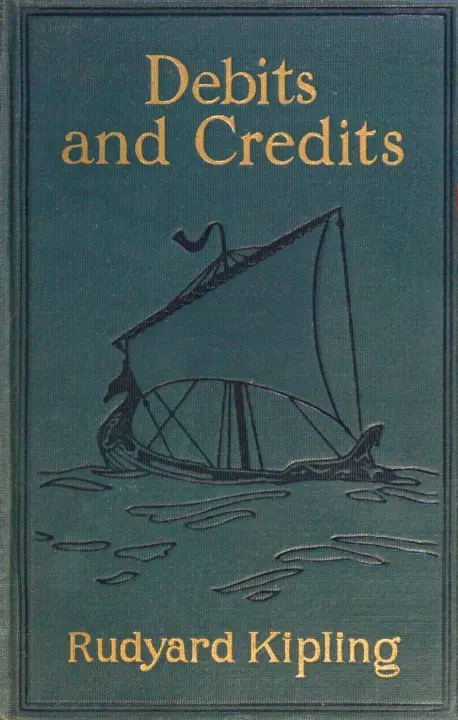
Rudyard Kipling
BEHIND THE BOOK
This eBook is for the use of anyone anywhere in the United States and most other parts of the world at no cost and with almost no restrictions whatsoever. You may copy it, give it away or re-use it under the terms of the Project Gutenberg License included with this eBook or online at www.gutenberg.org. If you are not located in the United States, you will have to check the laws of the country where you are located before using this eBook. Read the source licence.
The original source file, including credits and licence, is retained by this library. Request an original-format copy at no charge. Please include the book title and Project Gutenberg identifier #72881.
KEEP YOUR CURIOSITY GOING
Cécile Tormay

Moritz Busch
John L. Ransom
Frances Wright
Cécile Tormay

Mabel Potter Daggett