
Letters of Marque
Rudyard Kipling

THE CLASSIC COLLECTION · 1923
"The Irish Guards in the Great War, Volume 2: The Second Battalion" edited by Rudyard Kipling is a historical account written in the early 20th century. This volume chronicles the experiences of the 2nd Battalion of the Irish Guards during World War I. The book likely delves deep into the formation, operations, and daily life of soldiers during the war, offering insights into their struggles and camaraderie while facing the harsh realities of combat. At the start of the book, the focus is on the establishment of the 2nd Battalion of the Irish Guards in 1915, highlighting the conditions of Warley Barracks and the mix of personnel who joined. The chapter recounts the emotional and physical challenges faced by the soldiers as they prepared for deployment to France, emphasizing their awareness of the war's grim reality. The narrative elaborates on their initial training, inspections, and the atmosphere surrounding their eventual transfer to the front lines, capturing the formation of the battalion's own identity and spirit amid the uncertainty of war.
Introduction adapted from the source catalogue; source summaries may be automatically generated.
Free to read · English · 106,148 words · No account needed
MAKE TIME FOR A GOOD BOOK
On by default. Untick to stop anonymous reading totals. Each page counts after 10 seconds in view. How this works.
Anonymous counting is on unless you have switched it off.
It turned out a quiet tour of duty; the two lines were so close together that much shelling was inexpedient, and snipers gave no trouble. So all hands were free to attend their own comforts, notably the care and discharge of drains. The R.E. who, contrary to popular belief, sometimes have bowels, had added wooden floors to many of the little huts behind the redoubts. Company Headquarters were luxurious, with real windows, and even window-curtains; the slimy trenches were neatly boarded over and posted, and men went about their business almost dry-shod. It was, as we know, the custom of those parts that, before entering the line, troops should dump their ankle-boots at a farm-house just behind Red House, and go on in the long trench boots. For no earthly reason that the Irish could arrive at, the Hun took it into his methodical head one night to shell their huge boot-dump where, as a matter of course, some regimental shoemakers were catching up with repairs. The shoemakers bolted like ferreted rabbits, and all the world, except those whose boots were buried, laughed at them. So long as a man comes through it alive, his agonies and contortions in the act of dodging death are fair game.
On the nights of the 4th and 5th January they began to engineer the detail of a local raid which marked progress in the art. Patrols went out from each company in the front line to hunt for weak places. The patrol from the right company worked to within fifteen yards of the enemy, got into boggy ground, noisy with loose wire, listened an hour to the Germans working and talking, and came back. The right centre company patrol slopped up a ditch for a full furlong, then ran into a cross-ditch fifteen feet wide, with a trip-wire (the enemy disliked being taken unawares), and also returned like the dove of old. Similarly the left-centre patrol, which found more ditch and trip-wires leading them to a singularly stout section of trench where two Germans looked over the edge of the parapet, and the general landscape was hostile. The left company had the luck. It was an officer’s patrol commanded again by 2nd Lieutenant Brew. Their crawl led them along a guiding line of willows, and to within six feet of a salient guarded by a three-foot wire belt. But a few yards farther down, they came across a gap our guns had made—not clean-cut, but easy enough, in their opinion, to “negotiate.” As far as men on their bellies could make out, the line seemed held by sentries at wide intervals who, after the manner of single sentries, fired often at nothing and sent up lights for the pleasure of seeing their support-line answer them. (“As we was everlastingly telling the new hands, the fewer there are of ye annywhere, the less noise should ye be after making annyhow. But ’tis always the small, lonely, miserable little man by himself that gives forth noises like large platoons.”) Then they were relieved by the 1st Coldstream, and their Acting C.O. (Captain Eric Greer) was instructed to produce a scheme for a really good raid from the left of their line on the weak place discovered. The Coldstream would attend to it during their tour, if the Irish furnished the information. Greer worked it out lovingly to the last detail. Three riflemen and three bombers were to lead off on the right, and as many on the left followed by a “killing and demolition party,” armed with bludgeons, of an officer and eight other ranks. A support party of one N.C.O. and five other ranks, with rifles and bayonets, and a connecting party of two signallers with telephones and four stretcher-bearers brought up the rear of what the ribald afterwards called “our mournful procession.” It was further laid down that a wire-cutting party (and the men hated wire-cutting) would “improve the gap in the enemy’s wire” for the space of one hour. The raiders were to work quietly along the line of the providential willows till they found the gap; then would split into two gangs left and right, and attend to the personnel in the trench “as quickly and silently as possible, never using bombs when they can bayonet a man.” The rest were to enter afterwards, and destroy and remove all they could find. “If possible and convenient, they will take a prisoner who will be immediately passed back to our trench by the supporting-party. Faces to be blacked for the sake of ‘frightfulness,’ mutual recognition, and invisibility,” and electric torches carried. The officer in charge was to be a German linguist, for the reason that a prisoner, hot and shaken at the moment of capture, and before being “passed back” was likely to exude more information than when cold and safe in our own lines.
Your reading position is saved on this browser. Take it to another device with a library code. Reading pages adapt to text, rather than matching a printed edition.
Rudyard Kipling

Rudyard Kipling
Rudyard Kipling
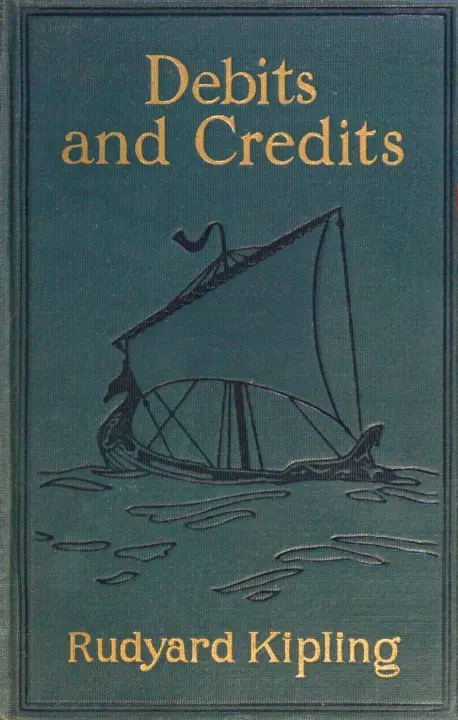
Rudyard Kipling
BEHIND THE BOOK
This eBook is for the use of anyone anywhere in the United States and most other parts of the world at no cost and with almost no restrictions whatsoever. You may copy it, give it away or re-use it under the terms of the Project Gutenberg License included with this eBook or online at www.gutenberg.org. If you are not located in the United States, you will have to check the laws of the country where you are located before using this eBook. Read the source licence.
The original source file, including credits and licence, is retained by this library. Request an original-format copy at no charge. Please include the book title and Project Gutenberg identifier #72881.
KEEP YOUR CURIOSITY GOING
Cécile Tormay

Moritz Busch
John L. Ransom
Frances Wright
Cécile Tormay

Mabel Potter Daggett