
Letters of Marque
Rudyard Kipling

THE CLASSIC COLLECTION · 1923
"The Irish Guards in the Great War, Volume 2: The Second Battalion" edited by Rudyard Kipling is a historical account written in the early 20th century. This volume chronicles the experiences of the 2nd Battalion of the Irish Guards during World War I. The book likely delves deep into the formation, operations, and daily life of soldiers during the war, offering insights into their struggles and camaraderie while facing the harsh realities of combat. At the start of the book, the focus is on the establishment of the 2nd Battalion of the Irish Guards in 1915, highlighting the conditions of Warley Barracks and the mix of personnel who joined. The chapter recounts the emotional and physical challenges faced by the soldiers as they prepared for deployment to France, emphasizing their awareness of the war's grim reality. The narrative elaborates on their initial training, inspections, and the atmosphere surrounding their eventual transfer to the front lines, capturing the formation of the battalion's own identity and spirit amid the uncertainty of war.
Introduction adapted from the source catalogue; source summaries may be automatically generated.
Free to read · English · 106,148 words · No account needed
MAKE TIME FOR A GOOD BOOK
On by default. Untick to stop anonymous reading totals. Each page counts after 10 seconds in view. How this works.
Anonymous counting is on unless you have switched it off.
The Battalion spent the night of the 26th working its way up to the front line, through Flesquières where bombs were issued, two per man; then to La Justice by Graincourt; and thence, cross-country, by companies through the dark to the Bapaume-Cambrai road, where they found the guides for their relief of the Scots Guards. Just as they reached the south edge of Bourlon Wood, the enemy put down a barrage which cost forty casualties. Next it was necessary for the C.O. (Alexander) to explain the details of the coming attack to his company commanders, who re-explained it to their N.C.O.’s, while the companies dressed in attack-order, bombs were detonated and shovels issued. (“There was not any need to tell us we were for it. We knew that, and we knew we was to be quick. But that was all we did know—except we was to go dancin’ into that great Wood in the wet, beyond the duck-boards. The ground, ye’ll understand, had been used by them that had gone before us—used and messed about; and at the back, outside Bourlon, all Jerry’s guns was rangin’ on it. A dirty an’ a noisy business was Bourlon.”)
By five in the morning, after a most wearing night, the Battalion was in position, the 2/5th West Riding of the 1st Brigade on its left and the 1st Coldstream on its right; and the Wood in front alive with concealed machine-guns and spattered with shells. They led off at 6.20 behind their own barrage, in two waves; No. 1 Company on the right and No. 2 Company on the left, supported by No. 3 Company and No. 4. Everything was ready for them, and machine-guns opened on well-chosen and converging ranges. Almost at the outset they met a line of enemy posts held in strength, where many of the occupants had chosen to shelter themselves at the bottom of the trenches under oil-sheets, a protection hampering them equally in their efforts to fight or to surrender. Here there was some quick killing and a despatch of prisoners to the rear; but the Wood offered many chances of escape, and as our guards were necessarily few, for every rifle was needed, a number broke away and returned. Meantime, the Battalion took half a dozen machine-guns and lost more men at each blind step. In some respects Bourlon was like Villers-Cotterêts on a large scale, with the added handicap of severe and well-placed shelling. A man once down in the coppice, or bogged in a wood-pool, was as good as lost, and the in-and-out work through the trees and stumpage broke up the formations. Nor, when the affair was well launched, was there much help from “the officer with the compass” who was supposed to direct the outer flank of each company. The ground on the right of the Battalion’s attack, which the Coldstream were handling, was thick with undestroyed houses and buildings of all sorts that gave perfect shelter to the machine-guns; but it is questionable whether Bourlon Wood itself, in its lack of points to concentrate upon, and in the confusion of forest rides all exactly like each other, was not, after all, the worst. Early in the advance, No. 2 Company lost touch on the left, while the rest of the Battalion, which was still somehow keeping together, managed to get forward through the Wood as far as its north-east corner, where they made touch with the 1st Coldstream. Not long after this, they tried to dig in among the wet tree-roots, just beyond the Wood’s north edge. It seemed to them that the enemy had fallen back to the railway line which skirted it, as well as to the north of La Fontaine village. Officially, the objective was reached, but our attacking strength had been used up, and there were no reserves. A barrage of big stuff, supplemented by field-guns, was steadily threshing out the centre and north of the Wood, and, somewhere to the rear of the Battalion a nest of machine-guns broke out viciously and unexpectedly. Then the whole fabric of the fight appeared to crumble, as, through one or other of the many gaps between the Battalions, the enemy thrust in, and the 2nd Irish guards, hanging on to their thin front line, realized him suddenly at their backs. What remained of them split up into little fighting groups; sometimes taking prisoners, sometimes themselves being taken, and again breaking away from their captors, dodging, turning, and ducking in dripping coppices and over the slippery soil, while the shells impartially smote both parties. Such as had kept their sense of direction headed back by twos and threes to their original starting-point; but at noon Battalion Headquarters had lost all touch of the Battalion, and the patrols that got forward to investigate reported there was no sign of it. It looked like complete and unqualified disaster. But men say that the very blindness of the ground hid this fact to a certain extent both from us and the enemy, and the multiplied clamours in the Wood supplied an additional blindage. As one man said: “If Jerry had only shut off his dam’ guns and listened he’d ha’ heard we was knocked out; but he kept on hammer—hammering an’ rushin’ his parties back and forth the Wood, and so, ye see, them that could of us, slipped back quiet in the height of the noise.” Another observer compared it to the chopping of many foxes in cover—not pleasant, but diversified by some hideously comic incidents. All agreed that it was defeat for the Guards—the first complete one they had sustained; but the admitted fact was that they had been turned on at a few hours’ notice to achieve the impossible, did not spoil their tempers. The records say that the 2nd Guards Brigade with the rest of the Division “fell back to its original line.” Unofficially: “We did—but I don’t know how we did it. There wasn’t any Battalion worth mentioning when the Welsh Guards relieved us in the dark, but stray men kept on casting up all night long.” The losses were in proportion to the failure. Of officers, two were killed—Cary-Elwes, just as they reached their objective, by a bullet through the head, and A. F. Synge shot down at the beginning of the attack, both of them men without fear and with knowledge. Three were missing, which is to say, dead—2nd Lieutenants N. D. Bayly of No. 2 Company, W. G. Rea of No. 3, and N. F. Durant of No. 4 who was also believed to have been wounded. Four were wounded—Captain the Hon. H. A. V. Harmsworth, No. 1; Captain Reford, No. 3, bullet through the shoulder; and Lieutenant S. S. Wordley, of the same company, in the head. Also 2nd Lieut. F. C. Lynch-Blosse of No. 2 blown up, but able to get back. The C.O. (Colonel the Hon. H. R. Alexander), the Second in Command (Captain the Hon. W. S. Alexander), Captain Nugent, Adjutant, 2nd Lieutenant W. D. Faulkner, Assistant Adjutant Captain Sassoon and Lieutenant O’Connor, these last two being company officers in reserve who were kept with Battalion Headquarters, were unhurt. Twenty-five men were known to be dead on comrades’ evidence; one hundred and forty-six were missing, of whom a number would naturally be dead; and one hundred and forty-two were wounded and brought back. Total, three hundred and twenty-two.
Your reading position is saved on this browser. Take it to another device with a library code. Reading pages adapt to text, rather than matching a printed edition.
Rudyard Kipling

Rudyard Kipling
Rudyard Kipling
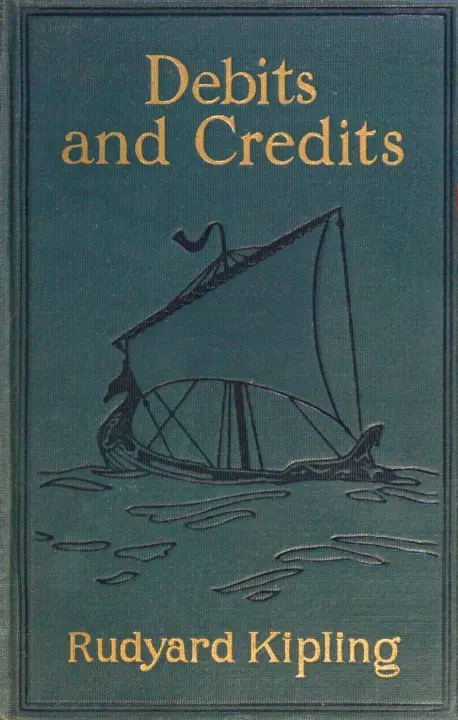
Rudyard Kipling
BEHIND THE BOOK
This eBook is for the use of anyone anywhere in the United States and most other parts of the world at no cost and with almost no restrictions whatsoever. You may copy it, give it away or re-use it under the terms of the Project Gutenberg License included with this eBook or online at www.gutenberg.org. If you are not located in the United States, you will have to check the laws of the country where you are located before using this eBook. Read the source licence.
The original source file, including credits and licence, is retained by this library. Request an original-format copy at no charge. Please include the book title and Project Gutenberg identifier #72881.
KEEP YOUR CURIOSITY GOING
Cécile Tormay

Moritz Busch
John L. Ransom
Frances Wright
Cécile Tormay

Mabel Potter Daggett