THE CLASSIC COLLECTION✦An outlaw’s diary: the CommuneCLASSIC FREE BOOKS
An outlaw’s diary: the Commune
Cécile Tormay
THE CLASSIC COLLECTION · 1876
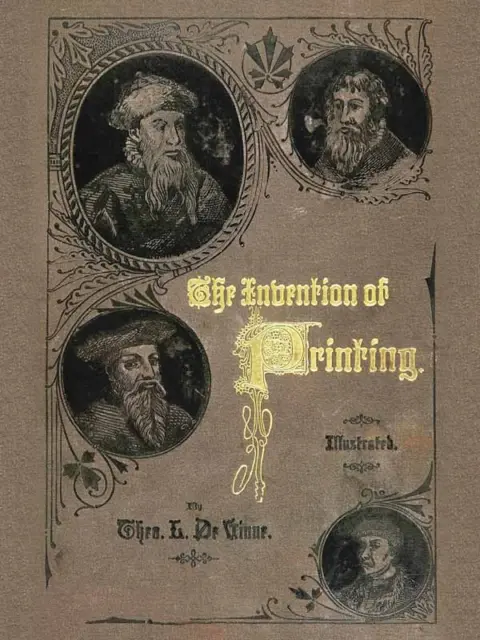
"The Invention of Printing" by Theodore Low De Vinne is a historical account written in the late 19th century. The book explores the origins and development of printing technology, focusing on key figures such as John Gutenberg and the controversies surrounding rival inventors in different regions, particularly Germany and the Netherlands. By detailing early prints, playing cards, block-books, and the mechanics of printing, it seeks to shed light on a significant moment in history that revolutionized the dissemination of knowledge. At the start of the book, De Vinne introduces the subject of printing as not only an essential mechanical art but also a topic shrouded in mystery and contention. He discusses the complexity surrounding the contrast between legends and actual historical records concerning early printing and the figures involved. The author acknowledges the vast number of existing books on the subject, yet critiques their often obscure language and tendency to overlook mechanical aspects of early printing. He emphasizes the need for a clearer, more concise description of early printing methods and the mechanics behind them, setting up the framework for a deeper exploration in the subsequent chapters.
Introduction adapted from the source catalogue; source summaries may be automatically generated.
Free to read · English · 193,810 words · No account needed
MAKE TIME FOR A GOOD BOOK
On by default. Untick to stop anonymous reading totals. Each page counts after 10 seconds in view. How this works.
Anonymous counting is on unless you have switched it off.
Types of wood, experimental, 479, 489
— — — De la Borde’s theory of, 295
— — — limitations of, 53
— — — Specklin’s description of, 489
— as made by Conrad Winters, 520
— Chinese, early forms of, 112
— — modern — —, 117
— early, cast and not cut, 298, 476
— early faces of, 515
— early speculations about, 36
— engraved, impracticable, 53, 295
— Gothic, popularity of, 516
— how made, 521
— of Jenson, 502
— made by one method only, 53
— made in sand moulds, 301
— must be accurate, 52
— not made with system, 518
— of brass, notices of, 65
— of glass, 487
— of Gutenberg, 443
— of lead, as made by Blades, 300
— — — — — — Coster, 339
— of porcelain, 112
— of Schœffer, 470
— quantity of usually cast, 521
— smallest sizes in 15th century, 518
— unknown printer, 284
— variations of form explained, 298
Typography, advantages of, 23, 26
— cheapness of method, 23
— Chinese method of, 113
— claimants of invention, 27
— depends on other aids, 47
— erroneous ideas about, 49
— is a science, 375
— not fruit of engraving, 395
— period of its invention, 27
— why it was delayed, 39
Typothetæ, arms of, 488
Uneven spacing in early printing, 451
University of Paris, 160
Unknown printer of Netherlands, 282
— — period of, 325
Unknown printer, workmanship of, 324
Utrecht, early printing of, 498
— Speculum traced to, 311
Valdarfer Christopher, 505
Van der Linde’s Haarlem Legend, 11
— — — exposure of fraud, 374
Van Eyck Hubert, 41
Veldener John, 280, 281, 498
Vellum, how made, 538
— early scarcity of, 164
— not suitable for printing, 41, 538
Venice, early printing in, 501
— famous for printing, 503
— playing cards of, 89
— relations of with China, 120
— the school of typography, 503
Verard of Paris, 506
Vindiciæ Typographicæ, 353
Vocabularium ex quo, 441
Von Bischoviszheim, testimony of, 387
Von Seckingen, testimony of, 387
Von Zabern Barbel, testimony of, 383
Weidenbach, printing at, 495
William of Saliceto, Treatise of, 287
Wimpheling, testimony of, 393
Winaricky’s book on Gutenberg, 378
Wine-flagons of Coster, 340
Witnesses on trial at Strasburg, 388
Wittig Ivo, tablet of, 447
Witty Speeches of Great Men, 286
Wonders of Rome, the block-book, 243
Wood-cuts, early, merit of, 68
— difficult to print with types, 278
— dissimilarities of, 206, 239
— early, designed by artists, 227
— later, inferiority of, 536
— liability to warp, 535
— mutilations of, 207, 219, 280
— neglected by early printers, 535
— not printed with types, 271
Wood types, impracticability of, 295
— — Enschedé’s remarks on, 297
— — experiments with, 295
Wood used by early engravers, 203
Xylography, limitations of, 26, 263
— Chinese method of, 114
— first method of, 317
— not applicable to books, 263
— not Gutenberg’s art, 396
— not practised at Haarlem, 320
Zainer Gunther, 497
Zappe Paul, the ambassador, 407
Zarot Anthony, 504
Zell Ulric, about the Donatus, 315, 256
— — as a printer, 494
[p555]
PAGE 24. In the second line of foot-note, change two-thirds to
four-ninths.
Your reading position is saved on this browser. Take it to another device with a library code. Reading pages adapt to text, rather than matching a printed edition.
BEHIND THE BOOK
This eBook is for the use of anyone anywhere in the United States and most other parts of the world at no cost and with almost no restrictions whatsoever. You may copy it, give it away or re-use it under the terms of the Project Gutenberg License included with this eBook or online at www.gutenberg.org. If you are not located in the United States, you will have to check the laws of the country where you are located before using this eBook. Read the source licence.
The original source file, including credits and licence, is retained by this library. Request an original-format copy at no charge. Please include the book title and Project Gutenberg identifier #51034.
KEEP YOUR CURIOSITY GOING
Cécile Tormay

Moritz Busch
John L. Ransom
Frances Wright
Cécile Tormay

Mabel Potter Daggett