THE CLASSIC COLLECTION✦An outlaw’s diary: the CommuneCLASSIC FREE BOOKS
An outlaw’s diary: the Commune
Cécile Tormay
THE CLASSIC COLLECTION · 1876
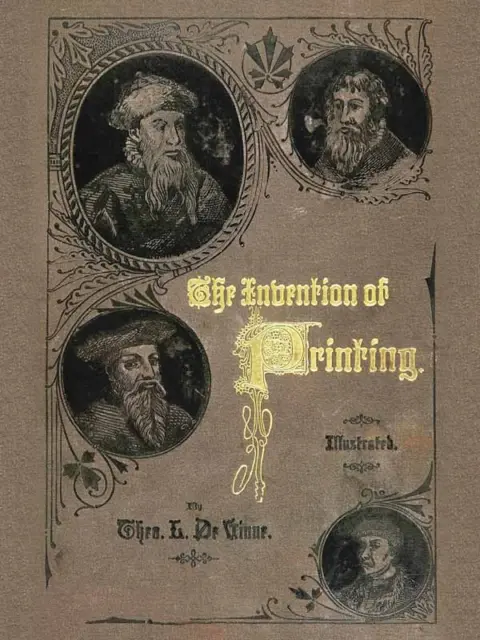
"The Invention of Printing" by Theodore Low De Vinne is a historical account written in the late 19th century. The book explores the origins and development of printing technology, focusing on key figures such as John Gutenberg and the controversies surrounding rival inventors in different regions, particularly Germany and the Netherlands. By detailing early prints, playing cards, block-books, and the mechanics of printing, it seeks to shed light on a significant moment in history that revolutionized the dissemination of knowledge. At the start of the book, De Vinne introduces the subject of printing as not only an essential mechanical art but also a topic shrouded in mystery and contention. He discusses the complexity surrounding the contrast between legends and actual historical records concerning early printing and the figures involved. The author acknowledges the vast number of existing books on the subject, yet critiques their often obscure language and tendency to overlook mechanical aspects of early printing. He emphasizes the need for a clearer, more concise description of early printing methods and the mechanics behind them, setting up the framework for a deeper exploration in the subsequent chapters.
Introduction adapted from the source catalogue; source summaries may be automatically generated.
Free to read · English · 193,810 words · No account needed
MAKE TIME FOR A GOOD BOOK
On by default. Untick to stop anonymous reading totals. Each page counts after 10 seconds in view. How this works.
Anonymous counting is on unless you have switched it off.
Trithemius, from information furnished by Peter Schœffer, said, in a book written before 1490, “About this time (1450), the admirable and then unheard-of art of composing and printing books, by means of types, was conceived and invented at Mentz, by a citizen of Mentz, named John Gutenberg.” [p446]
Matthias Palmer, in 1474, said that John Gutenberg, a knight of Mentz, had invented the art of printing books.
Ulric Zell’s testimony, given in 1499, is equally explicit.[286]
Polydore Virgil, in his treatise on Inventions, says, in the first edition, that printing was invented by one Peter [probably Peter Schœffer], but in the second edition of 1517, he corrected the error, and attributed the invention to Gutenberg.
Wimpheling, in 1499, wrote and published at Heidelberg some verses praising Gutenberg, in which he said, “Blessed Gensfleisch! through you Germany is famous everywhere. Assisted by Omniscience, you John, first of all, printed with letters in metal. Religion, the wisdom of Greece, and the language of the Latins, are forever indebted to you.” Two professors at Heidelberg, at an earlier date (1494), had written panegyrics on Gutenberg as the inventor of typography, in which he is honored above all the great men of antiquity.[287]
Two friends of Gutenberg who, no doubt, knew all about his invention, put up tablets to his memory, in which his merit as an inventor is distinctly acknowledged. The inscriptions on these tablets have not received the attention which they merit. The tablet first placed was put up not long after his death by his relative, Adam Gelthus, near his tomb in the church of St. Francis. This is a translation of the inscription:
To John Genszfleisch, inventor of the art of printing, and deserver of the highest honors from every nation and tongue, Adam Gelthus places this tablet, in perpetual commemoration of his name. His remains peacefully repose in the church of St. Francis of Mentz.[288] [p447]
Gelthus properly describes Gutenberg’s invention as the art of printing. In a practical view, there was no other.
Equally instructive is the pithy inscription on the second tablet, which was put up by Ivo Wittig,[289] in the court of the house of the Gensfleisch family, where Gutenberg is supposed to have died,[290] and which was then used as a law school.
To John Gutenberg, of Mentz, who, first of all, invented printing letters in brass [matrices and moulds], and by this art has deserved honor from the whole world, Ivo Wittig places this stone in commemoration, 1508.[291]
Your reading position is saved on this browser. Take it to another device with a library code. Reading pages adapt to text, rather than matching a printed edition.
BEHIND THE BOOK
This eBook is for the use of anyone anywhere in the United States and most other parts of the world at no cost and with almost no restrictions whatsoever. You may copy it, give it away or re-use it under the terms of the Project Gutenberg License included with this eBook or online at www.gutenberg.org. If you are not located in the United States, you will have to check the laws of the country where you are located before using this eBook. Read the source licence.
The original source file, including credits and licence, is retained by this library. Request an original-format copy at no charge. Please include the book title and Project Gutenberg identifier #51034.
KEEP YOUR CURIOSITY GOING
Cécile Tormay

Moritz Busch
John L. Ransom
Frances Wright
Cécile Tormay

Mabel Potter Daggett