THE CLASSIC COLLECTION✦An outlaw’s diary: the CommuneCLASSIC FREE BOOKS
An outlaw’s diary: the Commune
Cécile Tormay
THE CLASSIC COLLECTION · 1876
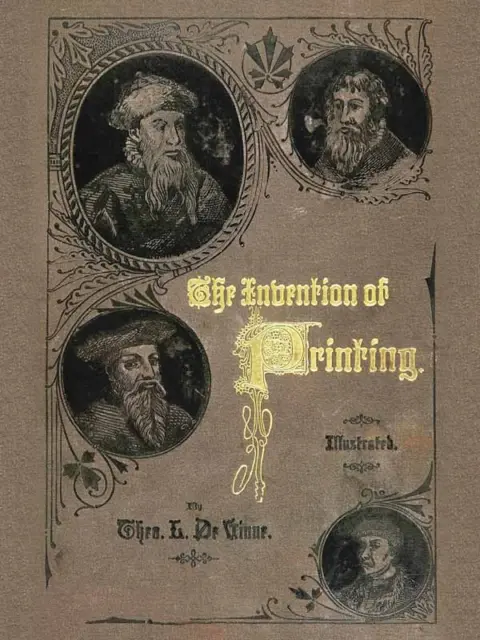
"The Invention of Printing" by Theodore Low De Vinne is a historical account written in the late 19th century. The book explores the origins and development of printing technology, focusing on key figures such as John Gutenberg and the controversies surrounding rival inventors in different regions, particularly Germany and the Netherlands. By detailing early prints, playing cards, block-books, and the mechanics of printing, it seeks to shed light on a significant moment in history that revolutionized the dissemination of knowledge. At the start of the book, De Vinne introduces the subject of printing as not only an essential mechanical art but also a topic shrouded in mystery and contention. He discusses the complexity surrounding the contrast between legends and actual historical records concerning early printing and the figures involved. The author acknowledges the vast number of existing books on the subject, yet critiques their often obscure language and tendency to overlook mechanical aspects of early printing. He emphasizes the need for a clearer, more concise description of early printing methods and the mechanics behind them, setting up the framework for a deeper exploration in the subsequent chapters.
Introduction adapted from the source catalogue; source summaries may be automatically generated.
Free to read · English · 193,810 words · No account needed
MAKE TIME FOR A GOOD BOOK
On by default. Untick to stop anonymous reading totals. Each page counts after 10 seconds in view. How this works.
Anonymous counting is on unless you have switched it off.
INSTRUMENT of a certain day, when Fust produced an account and confirmed it by an oath. In the name of God. Amen. Be it known to all who shall see this public document or hear it read, that, in the year of our Lord 1455, on Thursday, the 6th of November, between eleven and twelve at noon, at Mentz, in the large dining-hall (refectorium) of the convent of bare-footed friars, appeared before me, notary, and the witnesses to be mentioned hereafter, the honorable and prudent man Jacob Fust, citizen of Mentz, and has, in behalf of Johan Fust his brother, also present, shewn, said and exposed, that to the said Johan Fust on the one side and Johan Gutenberg on the other, should be administered the oath, according to judgment passed on both the parties, and for which this day and this hour had been fixed and the hall of the convent assigned. In order that the friars of the said convent, who were still assembled in the hall, should not be disturbed, the said Jacob Fust did ask through his messenger, whether Johan Gutenberg, or any one for him, were present in the convent, in order to finish the matter. At this message came into the said refectorium the reverend Heinrich Gunther, pastor of St. Christopher’s at Mentz, Heinrich Keffer, and Bertolf von Hanau, a servant of Johan Gutenberg, and when they had been asked by Johan Fust whether they had been authorized by Johan Gutenberg, they answered that they had been sent by Junker Johan Gutenberg to hear and see what should happen in this case. Thereupon Johan Fust begged leave to conform to the stipulations of the verdict, after he had waited for Johan Gutenberg till twelve o’clock, and was still waiting for him. He reads the sentence passed on the first article of his claim, from word to word, with its pretension and response, which runs as follows: First, that he, according to the written agreement, should lend Johan Gutenberg about 800 florins in gold, with which he was to finish the work, and whether it would cost more or less was no matter to Fust; and that Johan Gutenberg was to pay six per cent. interest for this money. He had indeed lent him these 800 guilders on a bond, but Gutenberg was not satisfied, but complained that he had not yet received the 800 guilders. For that reason, Fust, being desirous of doing him some service, lent him 800 guilders more than he was bound by his contract to do, for which 800 guilders Fust had to pay forty guilders as interest. And, although Gutenberg had bound himself by contract to pay six per cent. interest on the first 800 guilders, yet he had not done so for a single year, but Fust had to pay this interest himself to the amount of 250 guilders. For, at present, Gutenberg having never paid interest, and Fust having been obliged to borrow this interest from Christians and Jews, for which he had paid about thirty-six florins, his payments, together with the capital, [p427] amount to about 2,020 guilders, of which he demands reimbursement. Thereupon, Johan Gutenberg answered that Johan Fust had agreed to lend him 800 guilders, with which money he was to arrange and make his tools, and that these tools should remain as security for Fust. But Fust had moreover agreed to give him every year 300 guilders for expenses, and to advance also wages, house-rent, VELLUM, PAPER, INK, etc. If, afterward, they did not agree, Gutenberg should then pay the 800 guilders back, and the tools should be free from mortgage; it should be understood, that with the 800 guilders he had to make the machine, which was to be a pledge. He hopes not [that any one shall pretend] that he was obliged to spend these 800 guilders on the work of the books [i. e., on vellum, paper, etc.] And, although it is said in the contract that Gutenberg was to pay six per cent. interest, Fust had told him that he had no intention of accepting this interest from him. Moreover, he had not received the 800 guilders in full and at once according to agreement, as Fust had pretended in the first article of his claim; and as for the second 800 guilders, he is ready to give an account of them, but declines to give him interest or usury for them, and hopes that he is not bound by law to pay them. We pass, therefore, sentence according to pretension and response: When Johan Gutenberg has submitted an account of all receipts and disbursements spent on the work to their common profit [i. e., printing], this work shall be added to the 800 guilders; if he has spent more than the 800 guilders, which did not belong to their common profit, he should pay it back; if Fust is able to prove, on oath or by witnesses, that he has borrowed the money on interest, and did not lend it out of his own resources, then Gutenberg is bound by contract to pay it.
Your reading position is saved on this browser. Take it to another device with a library code. Reading pages adapt to text, rather than matching a printed edition.
BEHIND THE BOOK
This eBook is for the use of anyone anywhere in the United States and most other parts of the world at no cost and with almost no restrictions whatsoever. You may copy it, give it away or re-use it under the terms of the Project Gutenberg License included with this eBook or online at www.gutenberg.org. If you are not located in the United States, you will have to check the laws of the country where you are located before using this eBook. Read the source licence.
The original source file, including credits and licence, is retained by this library. Request an original-format copy at no charge. Please include the book title and Project Gutenberg identifier #51034.
KEEP YOUR CURIOSITY GOING
Cécile Tormay

Moritz Busch
John L. Ransom
Frances Wright
Cécile Tormay

Mabel Potter Daggett