THE CLASSIC COLLECTION✦An outlaw’s diary: the CommuneCLASSIC FREE BOOKS
An outlaw’s diary: the Commune
Cécile Tormay
THE CLASSIC COLLECTION · 1876
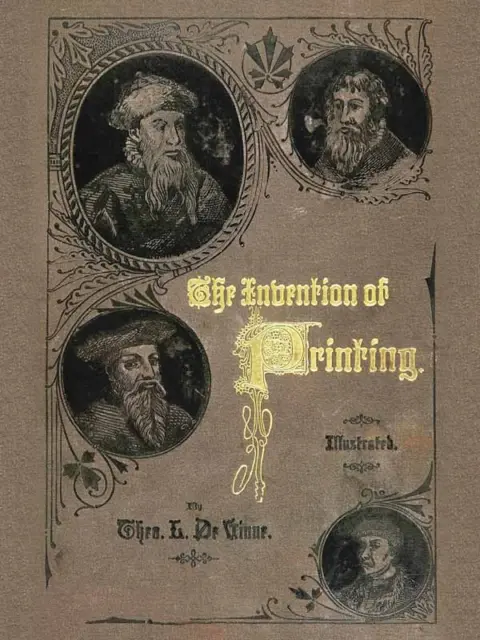
"The Invention of Printing" by Theodore Low De Vinne is a historical account written in the late 19th century. The book explores the origins and development of printing technology, focusing on key figures such as John Gutenberg and the controversies surrounding rival inventors in different regions, particularly Germany and the Netherlands. By detailing early prints, playing cards, block-books, and the mechanics of printing, it seeks to shed light on a significant moment in history that revolutionized the dissemination of knowledge. At the start of the book, De Vinne introduces the subject of printing as not only an essential mechanical art but also a topic shrouded in mystery and contention. He discusses the complexity surrounding the contrast between legends and actual historical records concerning early printing and the figures involved. The author acknowledges the vast number of existing books on the subject, yet critiques their often obscure language and tendency to overlook mechanical aspects of early printing. He emphasizes the need for a clearer, more concise description of early printing methods and the mechanics behind them, setting up the framework for a deeper exploration in the subsequent chapters.
Introduction adapted from the source catalogue; source summaries may be automatically generated.
Free to read · English · 193,810 words · No account needed
MAKE TIME FOR A GOOD BOOK
On by default. Untick to stop anonymous reading totals. Each page counts after 10 seconds in view. How this works.
Anonymous counting is on unless you have switched it off.
The typography of this Letter of 31 lines is much better than that of the Donatus, but it has many blemishes. The text is deformed with abbreviations; the lines are not evenly spaced out; the capital letters of the text are rudely drawn and carelessly cut. The white space below the sixteenth line, and the space and the crookedness in the three lines at the foot, are evidences that the types were not securely fastened in the chase. These faults provoke notice, but it must be admitted that the types were fairly fitted and stand in decent line. They were obviously cast in moulds of metal; it would be impracticable to make types so small in moulds of sand.
Translation.
To all the faithful followers of Christ who may read this letter, Paul Zappe, counselor, ambassador, and administrator-general of his gracious majesty, the king of Cyprus, sends greeting:
Whereas the Most Holy Father in Christ, our Lord, Nicholas V, by divine grace, pope, mercifully compassionating the afflictions of the kingdom of Cyprus from those most treacherous enemies of the Cross of Christ, the Turks and Saracens, in an earnest exhortation, by the sprinkling of the blood of our Lord Jesus Christ, freely granted to all those faithful followers of Christ, wheresoever established, who, within three years from the first day of May, in the year of our Lord 1452, should piously contribute, according to their ability, more or less, as it should seem good to their own consciences, to the procurators, or their deputies, for the defense of the Catholic religion and the aforementioned kingdom,—that confessors, secular and regular, chosen by themselves, having heard their confessions for excesses, crimes, and faults, however great, even for those hitherto reserved exclusively for the apostolic see to remit, should be licensed to pronounce due absolution upon them, and enjoin salutary penance; and, also, that they might absolve those persons, if they should humbly beseech it, who, perchance might be suffering excommunication, suspension, and other sentences, censures, and ecclesiastical punishments, instituted by canon law, or promulgated by man,—salutary penance being required, or other satisfaction which might be enjoined by canon law, varying according to the nature of the offence; and, also, that they might be empowered by apostolic authority to grant to those who were truly penitent, and confessed their guilt, or if perchance, on account of the loss of speech, they could not confess, those who gave outward demonstrations of contrition—the fullest indulgence of all their sins, and a full remission, as well during life as in the hour of death—reparation being made by them if they should survive, or by their heirs if they should then die: And the penance required after the granting of the indulgence is this—that they should fast throughout a whole year on every Friday, or some other day of the week, the lawful hindrances to performance being prescribed by the regular usage of the Church, a vow or any other thing not standing in the way of it; and as for those prevented from so doing in the stated year, or any part of it, they should fast in the following year, or in any year they can; and if they should not be able conveniently to fulfill the required fast in any of the years, or any part of them, the confessor, for that purpose shall be at liberty to commute it for other acts of charity, which they should be equally bound to do: And all this, so that they presume not, which God forbid, to sin from the assurance of remission of this kind, for otherwise, that which is called concession, whereby they are admitted to full remission in the hour of death, and remission, which, as it is promised, leads them to sin with assurance, would be of no weight and validity: And whereas the devout Judocus Ott von Apspach, in order to obtain the promised indulgence, according to his ability hath piously contributed to the above-named laudable purpose, he is entitled to enjoy the benefit of indulgence, of this nature. In witness of the truth of the above concession, the seal ordained for this purpose is affixed. Given at Mentz in the year of our Lord 1454, on the last day of December.
Your reading position is saved on this browser. Take it to another device with a library code. Reading pages adapt to text, rather than matching a printed edition.
BEHIND THE BOOK
This eBook is for the use of anyone anywhere in the United States and most other parts of the world at no cost and with almost no restrictions whatsoever. You may copy it, give it away or re-use it under the terms of the Project Gutenberg License included with this eBook or online at www.gutenberg.org. If you are not located in the United States, you will have to check the laws of the country where you are located before using this eBook. Read the source licence.
The original source file, including credits and licence, is retained by this library. Request an original-format copy at no charge. Please include the book title and Project Gutenberg identifier #51034.
KEEP YOUR CURIOSITY GOING
Cécile Tormay

Moritz Busch
John L. Ransom
Frances Wright
Cécile Tormay

Mabel Potter Daggett