THE CLASSIC COLLECTION✦An outlaw’s diary: the CommuneCLASSIC FREE BOOKS
An outlaw’s diary: the Commune
Cécile Tormay
THE CLASSIC COLLECTION · 1876
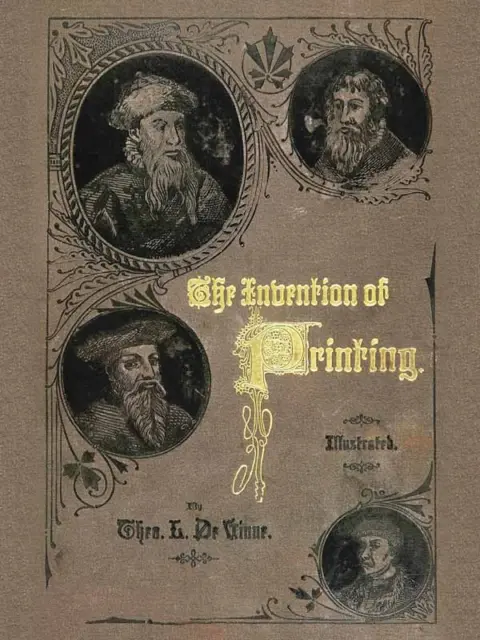
"The Invention of Printing" by Theodore Low De Vinne is a historical account written in the late 19th century. The book explores the origins and development of printing technology, focusing on key figures such as John Gutenberg and the controversies surrounding rival inventors in different regions, particularly Germany and the Netherlands. By detailing early prints, playing cards, block-books, and the mechanics of printing, it seeks to shed light on a significant moment in history that revolutionized the dissemination of knowledge. At the start of the book, De Vinne introduces the subject of printing as not only an essential mechanical art but also a topic shrouded in mystery and contention. He discusses the complexity surrounding the contrast between legends and actual historical records concerning early printing and the figures involved. The author acknowledges the vast number of existing books on the subject, yet critiques their often obscure language and tendency to overlook mechanical aspects of early printing. He emphasizes the need for a clearer, more concise description of early printing methods and the mechanics behind them, setting up the framework for a deeper exploration in the subsequent chapters.
Introduction adapted from the source catalogue; source summaries may be automatically generated.
Free to read · English · 193,810 words · No account needed
MAKE TIME FOR A GOOD BOOK
On by default. Untick to stop anonymous reading totals. Each page counts after 10 seconds in view. How this works.
Anonymous counting is on unless you have switched it off.
In answer, John Gutenberg had replied that the complaint of George Dritzehen seemed to him very unjust, inasmuch as he could sufficiently establish through many notes and writings (the nature of which George and his brother Claus could have learned after the death of Andrew Dritzehen), under what rules the association was formed. In truth, Andrew Dritzehen came to him many years ago, and had asked him to communicate and to teach to the said Andrew many secrets: it was for this reason, and to comply with his request, that he had taught him how to polish stones, from which art Andrew Dritzehen had derived a good profit. Afterward, after a long interval of time, he [Gutenberg] had made agreement with Hans Riffe, mayor of Litchtenau, to work up a secret for the fair at Aix-la-Chapelle, and they were associated together after this fashion: Gutenberg was to have two shares of the business, and Hans Riffe one share. This agreement came to the knowledge of Andrew Dritzehen, who begged Gutenberg to communicate and teach him this secret also, for which Andrew Dritzehen promised to be his debtor, on Gutenberg’s own terms. In the meantime, the elder Anthony Heilmann had made the same request in favor of his brother Andrew Heilmann; whereupon he [Gutenberg] had considered these two applications, and he had promised, at their solicitation, to make known to them the secret, and also to give and grant to them the half of the profits, in this wise: that they two should have one share, Hans Riffe one share and he [Gutenberg] one share; but that, as a consideration, the two should give to him [Gutenberg] 160 guilders for the trouble that he would have in teaching them, and for the communication of the secret, and that they should, afterward, each give him 80 guilders additional. At the time when they were determining their agreement it was [p382] understood that the fair would be held that same year, but when they were all ready, and prepared to work out the secret [i. e. to manufacture the merchandise intended for the fair] the fair was postponed to the following year. Thereupon, they [Anthony and Andrew] had made request that Gutenberg would hide nothing from them which he knew or would discover of secrets and inventions, and they at once proposed to him to name his terms; and it was then agreed that they should add to the sum first named 250 guilders, making in all 410 guilders; and that they should at once pay 100 guilders in cash—of which sum, at that time, Andrew Heilmann paid 50, and Andrew Dritzehen paid 40—so that Andrew Dritzehen remained a debtor to the amount of 10 guilders. It was also understood that the two partners should pay the 75 guilders due and unpaid, at three different dates which were stipulated; but before the expiration of these dates Andrew Dritzehen had died, still in debt to Gutenberg. At the time when the agreement was made, it had been decided that the accomplishment of their secret [the duration of copartnership] should occupy five entire years: in the event of the death of any one of the four partners, during this five years, all the implements pertaining to the secret, and all the merchandise that had been manufactured, should be vested in the remaining partners, and that the heirs of the partner who had died should receive, at the end of five years, 100 guilders. Consequently, and because the contract, which is expressed in these very terms, and which contract was found at the house of Andrew Dritzehen, fully set forth all these stipulations, and those that preceded it, as he John Gutenberg hopes to prove by good witnesses, he demands that George Dritzehen and his brother Claus should deduct the 85 guilders which were still due to him from their late brother, from the 100 guilders, and then he would consent to return to them the 15 guilders, although he was still fairly entitled, according to the terms of the contract, to several years, before this money should be payable. As to the declaration made by George Dritzehen that the late Andrew Dritzehen, his brother, had taken much money by the pledge of his goods and of his inheritance from his father, he did not think it worth consideration, for he [Gutenberg] had not received from the goods or inheritance anything more than he had before first stated, except a half-omen of wine, a basket of pears, and a half-fuder of wine, which Andrew Dritzehen and Andrew Heilmann had given to him; that, moreover, the two men had consumed the equivalent of this and more besides at his house, for which they had never been asked to pay anything. Moreover, when he, George Dritzehen, demanded to be admitted in the partnership as an heir, he knew very well that this claim was no better founded than any other; [p383] and that Andrew Dritzehen had never been security for him, neither for lead, nor for any other matter, except on one occasion before Fritz von Seckingen; but he had, after his death, satisfied this obligation; and it is for the purpose of establishing the truth of these assertions that he demands that the depositions should be heard.
Your reading position is saved on this browser. Take it to another device with a library code. Reading pages adapt to text, rather than matching a printed edition.
BEHIND THE BOOK
This eBook is for the use of anyone anywhere in the United States and most other parts of the world at no cost and with almost no restrictions whatsoever. You may copy it, give it away or re-use it under the terms of the Project Gutenberg License included with this eBook or online at www.gutenberg.org. If you are not located in the United States, you will have to check the laws of the country where you are located before using this eBook. Read the source licence.
The original source file, including credits and licence, is retained by this library. Request an original-format copy at no charge. Please include the book title and Project Gutenberg identifier #51034.
KEEP YOUR CURIOSITY GOING
Cécile Tormay

Moritz Busch
John L. Ransom
Frances Wright
Cécile Tormay

Mabel Potter Daggett