THE CLASSIC COLLECTION✦An outlaw’s diary: the CommuneCLASSIC FREE BOOKS
An outlaw’s diary: the Commune
Cécile Tormay
THE CLASSIC COLLECTION · 1876
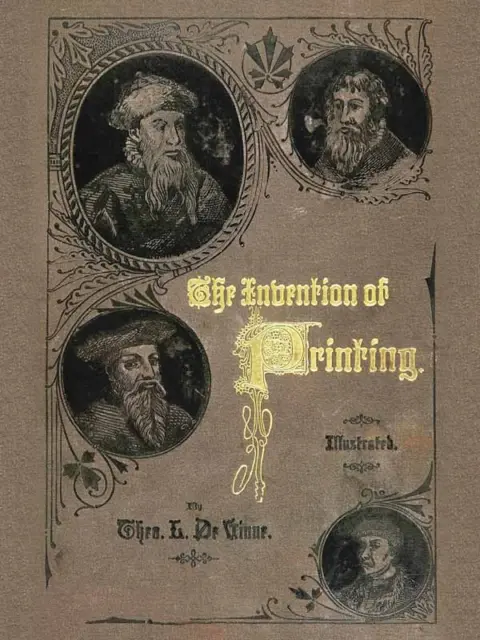
"The Invention of Printing" by Theodore Low De Vinne is a historical account written in the late 19th century. The book explores the origins and development of printing technology, focusing on key figures such as John Gutenberg and the controversies surrounding rival inventors in different regions, particularly Germany and the Netherlands. By detailing early prints, playing cards, block-books, and the mechanics of printing, it seeks to shed light on a significant moment in history that revolutionized the dissemination of knowledge. At the start of the book, De Vinne introduces the subject of printing as not only an essential mechanical art but also a topic shrouded in mystery and contention. He discusses the complexity surrounding the contrast between legends and actual historical records concerning early printing and the figures involved. The author acknowledges the vast number of existing books on the subject, yet critiques their often obscure language and tendency to overlook mechanical aspects of early printing. He emphasizes the need for a clearer, more concise description of early printing methods and the mechanics behind them, setting up the framework for a deeper exploration in the subsequent chapters.
Introduction adapted from the source catalogue; source summaries may be automatically generated.
Free to read · English · 193,810 words · No account needed
MAKE TIME FOR A GOOD BOOK
On by default. Untick to stop anonymous reading totals. Each page counts after 10 seconds in view. How this works.
Anonymous counting is on unless you have switched it off.
The text and translation appended are the version of Dr. Horne, author of the Introduction to the Study of Bibliography, who has corrected the contractions of the original Latin. It is copied from the Typographia of Hansard.
Each page contains four busts—two at the top, and two lower down; together with three historical subjects. The two upper busts represent certain prophets, or other eminent persons, whose names are [p201] added beneath them. Of the three historical subjects, the chief type, or principal piece, is taken from the New Testament, and occupies the centre of the page, between the two antitypes, or subordinate subjects, which are allusive to it. The two busts, placed in the middle of the upper part of the page, represent David and Isaiah between two texts of the Bible, with brief explanations. The former of these, on the left of the Prophets, is from the Song of Solomon, Chapter iv, 7:
‹f›Legitur in Cantico Canticorum, quarto capite, quod sponsus alloquitur sponsam, et eam sumendo dixit: Tota pulchra es, amica mea, et macula non est in te. Veni, amica mea, veni, coronabere. Sponsus verus iste est Christus, qui in assumendo eam sponsam, quæ est anima sine macula omnis peccati, et introducit eam in requiem æternam; et coronat cum corona immortalitatis.‹/f›
In the fourth chapter of the Song of Solomon it is read, That the bridegroom addresses the bride, and receiving her, says, Thou art all fair, my love, and in thee is no spot. Come, my love; come, thou shalt be crowned. The real bridegroom is Christ, who, in receiving the bride, which is the soul without spot of sin, also conducts her to eternal rest, and crowns her with the crown of immortality.
The second passage, on the right of David and Isaiah, is partly taken from the Book of Revelation, and runs thus:
‹f›Legitur in Apocalypsi xxiº capite, quod angelus Dei apprehendit Jhoannem Evangelistam cum esset in Spiritu, et volens sibi ostendere archana Dei, dixit ad eum, Veni, et ostendam tibi sponsam, uxorem agni. Angelus loquitur ad omnem generationem ut veniant ad auscultandum in sponsum, agnum innocentem Christum animas innocentes coronantem.‹/f›
In the twenty-first chapter of the Revelation it is read, That the Angel of God took John the Evangelist when he was in the Spirit, and willing to show him the mysteries of God, said to him, Come, and I will show thee the bride, the wife of the Lamb. The Angel speaks to every generation, that they come and hearken to the bridegroom, the pure Lamb Christ, crowning innocent souls.
Under the bust of David, which is indicated by his name, is a scroll proceeding from his hand, inscribed:
Your reading position is saved on this browser. Take it to another device with a library code. Reading pages adapt to text, rather than matching a printed edition.
BEHIND THE BOOK
This eBook is for the use of anyone anywhere in the United States and most other parts of the world at no cost and with almost no restrictions whatsoever. You may copy it, give it away or re-use it under the terms of the Project Gutenberg License included with this eBook or online at www.gutenberg.org. If you are not located in the United States, you will have to check the laws of the country where you are located before using this eBook. Read the source licence.
The original source file, including credits and licence, is retained by this library. Request an original-format copy at no charge. Please include the book title and Project Gutenberg identifier #51034.
KEEP YOUR CURIOSITY GOING
Cécile Tormay

Moritz Busch
John L. Ransom
Frances Wright
Cécile Tormay

Mabel Potter Daggett