The Bird
Jules Michelet
THE CLASSIC COLLECTION · 1875
"The Insect" by Jules Michelet is a scientific publication written in the mid-19th century. The work delves into the fascinating world of insects, exploring their roles within the broader context of nature, drawing poetic connections between the insect world and human existence. It celebrates the intricate lives and interactions of these small creatures, while also reflecting upon the larger tapestry of life. At the start of the book, the author introduces the vastness and complexity of the insect world, emphasizing its profound impact on the ecosystem and the interconnectedness of all forms of life. Through vivid imagery and philosophical musings, Michelet expresses his fascination and reverence for these often-overlooked beings, suggesting that they hold both beauty and mystery. He illustrates his passionate observations, recounting personal experiences that reveal a deep empathy for the insect realm, setting the stage for an in-depth exploration of their lives in the chapters to follow.
Introduction adapted from the source catalogue; source summaries may be automatically generated.
Free to read · English · 81,169 words · No account needed
MAKE TIME FOR A GOOD BOOK
On by default. Untick to stop anonymous reading totals. Each page counts after 10 seconds in view. How this works.
Anonymous counting is on unless you have switched it off.
The miners erect galleries between a couple of leaves, and roam about in them, constructing places of exit and ingress in their subterranean abodes.
The labour is great. But among all the species an admirable justice prevails. Whoso works hard while a child, does little when an adult; and vice versâ. The bee, which in the larva state is richly fed by its parents, and always carried about and cradled, is destined hereafter to an exceedingly laborious life.
On the contrary, another insect which, as a grub, has toiled, and woven, and spun, will having nothing to do in its later life but whisper love-phrases to the rose. I am speaking of Sir Butterfly.
For the great majority, hard work is for infancy, for the larva or the grub; work twofold and excessive. On the one hand, the constant, urgent, and pressing search after the food craved for by an immense internal need; the necessity of recruiting and renewing its energies, of restoring the inherited organs, and developing new ones.
The existence of these poor motherless creatures is divided between two severe conditions: toil, and growth through disease.
For their moultings, or sloughings, are, in effect, a disease.
The painful moment having arrived for the little creature to change its clothing, a clothing which clings to its flesh, it is seized with illness, abandons its leaf, and creeps languidly to some solitary asylum. If you saw it in such a soft, inert, and withered condition, so different from its natural state, you would say it was on the point of death. And many do, indeed, succumb at this laborious crisis.
Passive, and suspended to a branch, it waits until nature shall complete its work,--until its epidermis be detached from the second skin beneath, recalling it to all the energies of life.
It is then that you see the garb, which was formerly so brilliant, dry up and harden like a thenceforth useless thing, carried hither and thither by the wind.
But before it will yield and separate, the invalid, despite of its weakness, must twist in every direction, and writhe, and swell, and contract, and employ all the efforts of a being in its strongest moments.
At length it has conquered; the old sheath is rent; and I see the insect free, but bathed in sweat.
Your reading position is saved on this browser. Take it to another device with a library code. Reading pages adapt to text, rather than matching a printed edition.
Jules Michelet
Jules Michelet
Jules Michelet
BEHIND THE BOOK
This eBook is for the use of anyone anywhere in the United States and most other parts of the world at no cost and with almost no restrictions whatsoever. You may copy it, give it away or re-use it under the terms of the Project Gutenberg License included with this eBook or online at www.gutenberg.org. If you are not located in the United States, you will have to check the laws of the country where you are located before using this eBook. Read the source licence.
The original source file, including credits and licence, is retained by this library. Request an original-format copy at no charge. Please include the book title and Project Gutenberg identifier #44287.
KEEP YOUR CURIOSITY GOING
John Muir
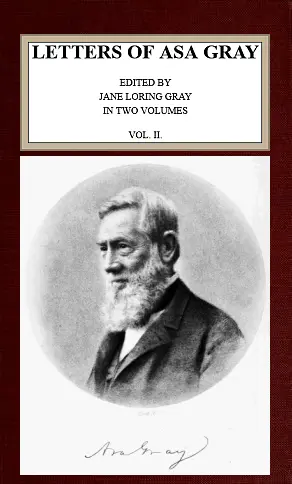
Asa Gray
Asa Gray
Florence Nightingale
Elizabeth Robins Pennell
Denison Olmsted