THE CLASSIC COLLECTION✦The art of fictionCLASSIC FREE BOOKS
The art of fiction
Walter Besant
THE CLASSIC COLLECTION · 1888
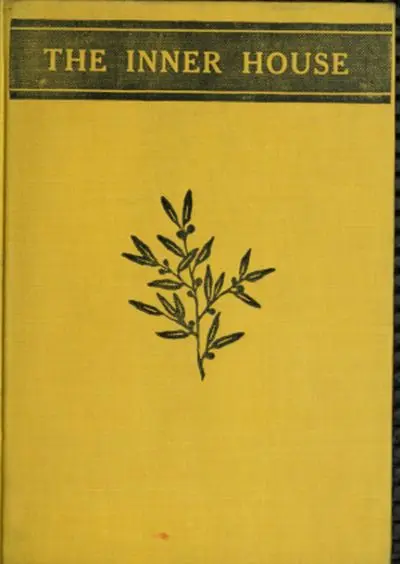
"The Inner House" by Walter Besant is a novel written in the late 19th century. The story opens in a world shaped by scientific advancements that allow humanity to escape the inevitability of aging and death. Within this context, the main character, a professor named Dr. Schwarzbaum, prepares to reveal a groundbreaking discovery: a means for humans to prolong their vitality indefinitely. The narrative explores themes of science, societal structure, and the human experience as characters confront the implications of a life without natural limits. At the start of the novel, we are introduced to an eager audience at the Royal Institution, anxiously awaiting the professor's revelation about a new discovery that could drastically alter existence. The atmosphere is charged with speculation about how this discovery might change human society, whether that be through instantaneous transportation, artificial food, or an explosive new weapon. The professor ultimately unveils an astonishing ability to prolong life indefinitely, sparking a range of emotional responses among the audience—from awe to existential dread. As the scene unfolds, it sets the stage for a deeper exploration of this new world, primarily focusing on how such a gift of extended life can impact relationships, societal structures, and individual desires.
Introduction adapted from the source catalogue; source summaries may be automatically generated.
Free to read · English · 59,221 words · No account needed
MAKE TIME FOR A GOOD BOOK
On by default. Untick to stop anonymous reading totals. Each page counts after 10 seconds in view. How this works.
Anonymous counting is on unless you have switched it off.
For six months there had appeared, from time to time, mysterious telegrams in the papers, all connected with this industrious Professor's laboratory. Nothing definite, nothing certain: it was whispered that a new discovery, soon about to be announced, would entirely change the relations of man to man; of nation to nation. Those who professed to be in the secret suggested that it might alter all governments and abolish all laws. Why they said that I know not, because certainly nobody was admitted to the laboratory, and the Professor had no confidant. This big-headed man, with the enormous bald forehead and the big glasses on his fat nose--it was long and broad as well as fat--kept his own counsel. Yet, in some way, people were perfectly certain that something wonderful was coming. So, when Roger Bacon made his gunpowder, the monks might have whispered to each other, only from the smell which came through the key-hole, that now the Devil would at last be met upon his own ground. The telegrams were continued with exasperating pertinacity, until over the whole civilized world the eyes of all who loved science were turned upon that modest laboratory in the little University of Ganzweltweisst am Rhein. What was coming from it? One does not go so far as to say that all interest in contemporary business, politics, art, and letters ceased; but it is quite certain that every morning and every evening, when everybody opened his paper, his first thought was to look for news from Ganzweltweisst am Rhein.
But the days passed by, and no news came. This was especially hard on the leader-writers, who were one and all waiting, each man longing to have a cut in with the subject before anybody else got it. But it was good for the people who write letters to the papers, because they had so many opportunities of suggestion and surmise. And so the leader-writers got something to talk about after all. For some suggested that Prof. Schwarzbaum had found out a way to make food artificially, by chemically compounding nitrogens, phosphates, and so forth. And these philosophers built a magnificent Palace of Imagination, in which dwelt a glorified mankind no longer occupied in endless toil for the sake of providing meat and drink for themselves and their families, but all engaged in the pursuit of knowledge, and in Art of all kinds, such as Fiction, Poetry, Painting, Music, Acting, and so forth, getting out of Life such a wealth of emotion, pleasure, and culture as the world had never before imagined. Others there were who thought that the great Discovery might be a method of instantaneous transmission of matter from place to place; so that, as by the electric wire one can send a message, so by some kind of electric method one could send a human body from any one part of the world to any other in a moment. This suggestion offered a fine field for the imagination; and there was a novel written on this subject which had a great success, until the Discovery itself was announced. Others, again, thought that the new Discovery meant some great and wonderful development of the Destructive Art; so that the whole of an army might be blown into countless fragments by the touch of a button, the discharge of a spring, the fall of a hammer. This took the fancy hugely, and it was pleasant to read the imaginary developments of history as influenced by this Discovery. But it seemed certain that the learned Professor would keep it for the use of his own country. So that there was no longer any room to doubt that, if this was the nature of the Discovery, the whole of the habitable world must inevitably fall under the Teutonic yoke, and an Empire of Armed Peace would set in, the like of which had never before been witnessed upon the globe. On the whole, the prospect was received everywhere, except in France and Russia, with resignation. Even the United States remembered that they had already many millions of Germans among them; and that the new Empire, though it would give certainly all the places to these Germans, would also save them a great many Elections, and therefore a good deal of trouble, and would relieve the national conscience--long grievously oppressed in this particular--of truckling to the Irish Vote. Dynamiters and anarchists, however, were despondent, and Socialists regarded each other with an ever-deepening gloom. This particular Theory of the great Discovery met, in fact, with universal credence over the whole civilized globe.
Your reading position is saved on this browser. Take it to another device with a library code. Reading pages adapt to text, rather than matching a printed edition.
Walter Besant
Walter Besant

Walter Besant

Walter Besant
BEHIND THE BOOK
This eBook is for the use of anyone anywhere in the United States and most other parts of the world at no cost and with almost no restrictions whatsoever. You may copy it, give it away or re-use it under the terms of the Project Gutenberg License included with this eBook or online at www.gutenberg.org. If you are not located in the United States, you will have to check the laws of the country where you are located before using this eBook. Read the source licence.
The original source file, including credits and licence, is retained by this library. Request an original-format copy at no charge. Please include the book title and Project Gutenberg identifier #52169.
KEEP YOUR CURIOSITY GOING
Coulson Kernahan

Maurice Baring
Frances Wright
Cécile Tormay
Francis Greenleaf Allinson & Anne C. E. (Anne Crosby Emery) Allinson

Frederic Jesup Stimson