THE CLASSIC COLLECTION✦An outlaw’s diary: the CommuneCLASSIC FREE BOOKS
An outlaw’s diary: the Commune
Cécile Tormay
THE CLASSIC COLLECTION · 1914
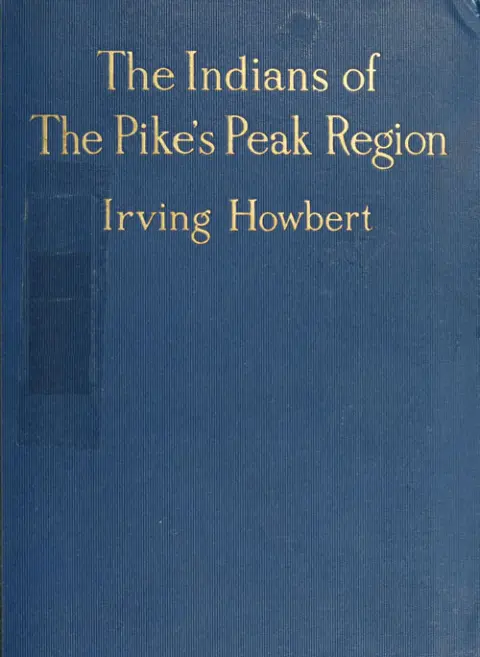
"The Indians of the Pike's Peak Region" by Irving Howbert is a historical account written in the early 20th century. This work delves into the lives and struggles of the various Indian tribes that occupied the Pike's Peak area during historic times, particularly focusing on the conflicts that arose during the mid-19th century. The narrative seeks to document the history, culture, and significant events related to these tribes, especially during the tumultuous years of the wars with the Cheyennes and Arapahoes. At the start of the book, Howbert introduces readers to the Indian tribes of the Pike’s Peak region, including the Utes, Comanches, Kiowas, Cheyennes, and Arapahoes. He shares his personal connections with the land and tribes, recounting his experiences crossing the plains as a youth and living through various conflicts. Howbert emphasizes the lack of documented history regarding the local tribes and their challenges during conflicts with white settlers, particularly focusing on the Battle of Sand Creek. He expresses his intention to provide a detailed account of these historical events to offer future generations a clearer understanding of the tumult faced by the indigenous peoples of the region.
Introduction adapted from the source catalogue; source summaries may be automatically generated.
Free to read · English · 54,708 words · No account needed
MAKE TIME FOR A GOOD BOOK
On by default. Untick to stop anonymous reading totals. Each page counts after 10 seconds in view. How this works.
Anonymous counting is on unless you have switched it off.
"Did Colonel Chivington make any remarks to the troops, in
your hearing?"
"He did not."
"Did you approach the camp of the Indians in line of battle with your men mounted, or dismounted?"
"Kept my men in columns of fours till I arrived at the village, when I formed them in line of battle, and to the left of a battalion of the first, commanded by Lieutenant Wilson, my men mounted."
"At what distance was your command from the village when you
commenced fire upon it?"
"I did not allow my men to fire when I formed my first line; the battalion on my right was firing. I wheeled my men into column of fours and marched to the rear of the battalion on my right, to the right of that battalion, to obtain a better position. I marched up Sand Creek some distance, following the Indians who were retreating up the creek. When opposite the main body of Indians, wheeled my men into line, dismounted, and opened fire."
"Did you know what band of Indians it was at the time of the
attack?"
"I heard while at Fort Lyon that Left Hand, of the Arapahoes, and Black Kettle, of the Cheyennes, were at the village."
"Did you, at any time prior to the attack, hear Colonel Chivington say that he was going to attack Black Kettle's band?"
"I did not."
"How long did the fight last?"
"The fighting did not entirely cease until about three o'clock
in the afternoon."
"Did you camp with your regiment near the battle-ground?"
"We camped on ground occupied by the Indians before the battle."
"What was done with the Indians and other property?"
"The lodges were burned. The ponies, numbering, as I was told, five hundred and four, were placed in charge of the provost marshal. A few remained in the hands of the troops."
"What were the casualties of your regiment?"
"Ten killed, one missing, about forty wounded."
"In your opinion how many Indians were killed?"
"From my own observation I should say about three hundred."
"Were they men, or women and children?"
"Some of each."
"Did you witness any scalping or other mutilation of the dead
by your command?"
"I saw one or two men who were in the act of scalping, but I
am not positive."
"Were you present in council with some Indian chiefs in Denver, some time last summer or fall?"
"I was."
"Who were present—whites and Indians?"
"Governor Evans, Colonel Chivington, Captain S. M. Robbins, Major Wynkoop, Major Whiteley, Amos Steck, J. Bright Smith, Nelson Sargent, Captain John Wanless, Black Kettle, White Antelope, and five or six other Indians, and John Smith and Sam Ashcroft, interpreters."
Your reading position is saved on this browser. Take it to another device with a library code. Reading pages adapt to text, rather than matching a printed edition.
BEHIND THE BOOK
This eBook is for the use of anyone anywhere in the United States and most other parts of the world at no cost and with almost no restrictions whatsoever. You may copy it, give it away or re-use it under the terms of the Project Gutenberg License included with this eBook or online at www.gutenberg.org. If you are not located in the United States, you will have to check the laws of the country where you are located before using this eBook. Read the source licence.
The original source file, including credits and licence, is retained by this library. Request an original-format copy at no charge. Please include the book title and Project Gutenberg identifier #57252.
KEEP YOUR CURIOSITY GOING
Cécile Tormay

Moritz Busch
John L. Ransom
Frances Wright
Cécile Tormay

Mabel Potter Daggett