A Biography of Rev. Henry Ward Beecher
William Constantine Beecher & H. W., Mrs. Beecher & Samuel Scoville
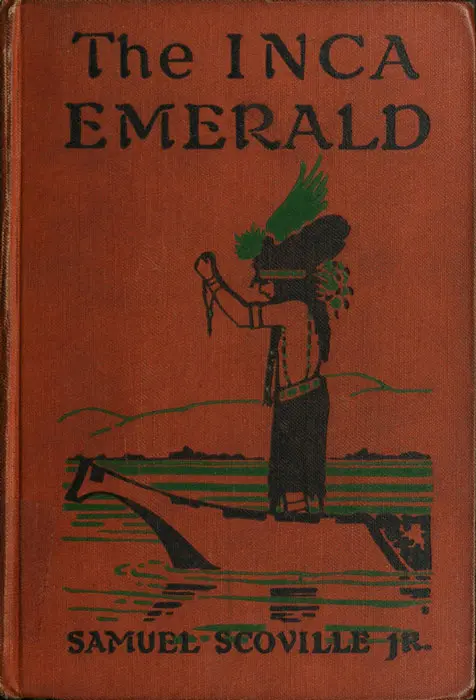
THE CLASSIC COLLECTION · 1922
"The Inca Emerald" by Samuel Scoville, Jr. is a novel written in the early 20th century. The story centers around Big Jim Donegan, a wealthy lumber magnate, and Professor Amandus Ditson, a scientist from the Smithsonian Museum, as they embark on an adventurous expedition in search of legendary emeralds associated with the lost city of Eldorado. This quest intertwines the dangers of the South American wilderness with the allure of ancient treasures, creating an exciting narrative filled with peril and discovery. The opening of the book introduces us to Big Jim Donegan, who is comfortably settled at his estate when he unexpectedly meets Professor Ditson. Their conversation reveals Jim's passion for gem collecting and Ditson’s knowledge of a manuscript that points to a sacred lake in Peru where emeralds were once thrown as offerings. Intrigued by the prospect of adventure and treasure, Donegan agrees to fund the expedition, enlisting the help of seasoned locals Jud Adams, Will Bright, and Joe Couteau, who have their own shared history of thrilling escapades. As the group prepares for the expedition, the tone of danger is established with hints of ominous superstitions regarding the journey ahead, setting the stage for a tale of adventure filled with perilous encounters along the Amazon River.
Introduction adapted from the source catalogue; source summaries may be automatically generated.
Free to read · English · 52,169 words · No account needed
MAKE TIME FOR A GOOD BOOK
On by default. Untick to stop anonymous reading totals. Each page counts after 10 seconds in view. How this works.
Anonymous counting is on unless you have switched it off.
For a time, the adventurers stared in silence at the brown line athwart the green, the sign and seal of an empire long passed away. Then Pinto grounded the montaria at the edge of the bank, and, after all of the party had disembarked with their scanty equipment, pulled the boat, with Hen's help, back of a screen of tangled vines, marked by a slender assai-palm, until it was completely hidden from sight.
"If we are successful," remarked Professor Ditson, "we'll never see that boat again. If we are driven back along this trail, it may save our lives."
There was a silence. For the first time the boys and Jud realized that their leader definitely expected perils other than those ever present from the wild creatures that guarded the beautiful, treacherous, mysterious forests of this southern continent.
"Are the Injuns down here dangerous?" inquired Jud, at last.
"The personal habits of some of them do not commend themselves even to the most broad-minded investigators," returned the professor, precisely.
"Such as--" questioned Jud, again.
"Well," replied the scientist, slowly, "for one thing, the wild tribes of this part of the Amazon basin invariably eat any captives they make. Then--"
"That's enough," broke in Jud. "After I've been eaten I don't care what they do next. What might be the names of these gentlemen?"
"The Mayas, I think, are the tribe we shall be most likely to meet," said Professor Ditson, reflectively. "They have no fixed homes, but wander through the forest, guiding themselves by the sun, and sleep in the tree-tops like monkeys wherever they happen to be when night comes. They hunt men, red, white, or black," he went on; "yet, if Indian traditions can be depended upon, we do not need to be afraid of them so long as we keep to the Trail."
"How's that?" inquired Will, intensely interested.
"Every tribe which refers to the Trail," the scientist informed them, "speaks of a custom called the 'Truce of the Trail,' under which travelers along that road are safe from attack."
"Does that there truce," interposed Jud, "take in white men, or is it
only for redskins?"
"That," returned the professor, "is not certain. Some say yes, some say
no."
"The question is," murmured Jud, "what do the Mayas say?"
"If we pass the Trail in safety," went on Professor Ditson, "we still may expect trouble from Dawson after we get into the Peruvian highlands. He has great influence with a band of Indian outlaws who call themselves the Miranhas, or Killers, and may persuade them to ambush us in order to secure the map."
Your reading position is saved on this browser. Take it to another device with a library code. Reading pages adapt to text, rather than matching a printed edition.
William Constantine Beecher & H. W., Mrs. Beecher & Samuel Scoville
Samuel Scoville
Samuel Scoville
BEHIND THE BOOK
This eBook is for the use of anyone anywhere in the United States and most other parts of the world at no cost and with almost no restrictions whatsoever. You may copy it, give it away or re-use it under the terms of the Project Gutenberg License included with this eBook or online at www.gutenberg.org. If you are not located in the United States, you will have to check the laws of the country where you are located before using this eBook. Read the source licence.
The original source file, including credits and licence, is retained by this library. Request an original-format copy at no charge. Please include the book title and Project Gutenberg identifier #42193.
KEEP YOUR CURIOSITY GOING
Coulson Kernahan

Maurice Baring
Frances Wright
Cécile Tormay

Frederic Jesup Stimson

W. H. P. (William Henry Pope) Jarvis