THE CLASSIC COLLECTION✦Peeps at People Being Certain Papers from the Writings of Anne Warrington WitherupCLASSIC FREE BOOKS
Peeps at People Being Certain Papers from the Writings of Anne Warrington Witherup
John Kendrick Bangs
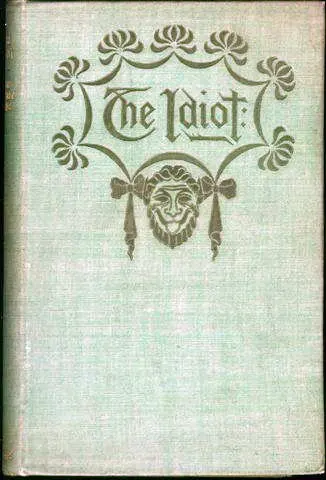
THE CLASSIC COLLECTION · 1895
"The Idiot" by John Kendrick Bangs is a satirical novel written in the late 19th century. The story centers around a character known as the Idiot, who engages in a series of humorous and absurd conversations with his fellow boarders at a home for single gentlemen run by Mrs. Pedagog. Through his eccentric arguments and light-hearted debates, the Idiot often sparks discussions on a variety of topics, offering a comedic critique of society and the people around him. At the start of the novel, we find ourselves in the dining room of Mrs. Pedagog's boarding house, where the Idiot provokes a lively discussion on the merits of living on a canal boat versus a stationary house. The dialogue reveals the personalities of the other boarders, including Mr. Pedagog, the School-Master, and the Bibliomaniac, who respond with irritation and incredulity to the Idiot's antics. As he humorously defends his thoughts and questions societal conventions, the narrative sets a tone of clever banter mixed with philosophical musings, showcasing the Idiot's unique perspective on life and the world, while simultaneously highlighting the folly of those around him.
Introduction adapted from the source catalogue; source summaries may be automatically generated.
Free to read · English · 22,319 words · No account needed
MAKE TIME FOR A GOOD BOOK
On by default. Untick to stop anonymous reading totals. Each page counts after 10 seconds in view. How this works.
Anonymous counting is on unless you have switched it off.
"Why not? It is as easy to imagine the finality as it is to go half-way there," returned the Idiot. "Finally he will tackle some elementary principle of nature, and he'll blow the world to smithereens."
There was silence at the table. This at least seemed to be a tenable theory. That man should have the temerity to take liberties with elementary principles was quite within reason, man being an animal of rare conceit, and that the result would bring about destruction was not at all at variance with probability.
"I believe it's happened once or twice already," said the Idiot.
"Do you really?" asked Mr. Pedagog, with a show of interest. "Upon what do you base this belief?"
"Well, take Africa," said the Idiot. "Take North America. What do we find? We find in the sands of the Sahara a great statue, which we call the Sphinx, and about which we know nothing, except that it is there and that it keeps its mouth shut. We find marvellous creations in engineering that to-day surpass anything that we can do. The Sphinx, when discovered, was covered by sand. Now I believe that at one time there were people much further advanced in science than ourselves, who made these wonderful things, who knew how to do things that we don't even dream of doing, and I believe that they, like this creature I have predicted, got fooling with the centre of gravity, and that the world slipped its moorings for a period of time, during which time it tumbled topsy-turvey into space, and that banks and banks of sand and water and ice thrown out of position simply swept on and over the whole surface of the globe continuously until the earth got into the grip of the rest of the universe once more and started along in a new orbit. We know that where we are high and dry to-day the ocean must once have rolled. We know that where the world is now all sunshine and flowers great glaciers stood. What caused all this change? Nothing else, in my judgment, than the monkeying of man with the forces of nature. The poles changed, and it wouldn't surprise me a bit that, if the north pole were ever found and could be thawed out, we should find embedded in that great sea of ice evidences of a former civilization, just as in the Saharan waste evidences of the same thing have been found. I know of a place out West that is literally strewn with oyster-shells, and yet no man living has the slightest idea how they came there. It may have been the Massachusetts Bay of a pre-historic time, for all we know. It may have been an antediluvian Coney Island, for all the world knows. Who shall say that this little upset of mine found here an oyster-bed, shook all the oysters out of their bed into space, and left their clothes high and dry in a locality which, but for those garments, would seem never to have known the oyster in his prime? Off in Westchester County, on the top of a high hill, lies a rock, and in the uppermost portion of that rock is a so-called pot-hole, made by nothing else than the dropping of water of a brook and the swirling of pebbles therein. It is now beyond the reach of anything in the shape of water save that which falls from the heavens. It is certain that this pot-hole was never made by a boy with a watering-pot, by a hired man with a hose, by a workman with a drill, or by any rain-storm that ever fell in Westchester County. There must at some time or another have been a stream there; and as streams do not flow uphill and bore pot-holes on mountain-tops, there must have been a valley there. Some great cataclysm took place. For that cataclysm nature must be held responsible mainly. But what prompted nature to raise hob with Westchester County millions of years ago, and to let it sleep like Rip Van Winkle ever since? Nature isn't a freak. She is depicted as a woman, but in spite of that she is not whimsical. She does not act upon impulses. There must have been some cause for her behavior in turning valleys into hills, in transforming huge cities into wastes of sand, and oyster-beds into shell quarries; and it is my belief that man was the contributing cause. He tapped the earth for natural gas; he bored in and he bored out, and he bored nature to death, and then nature rose up and smote him and his cities and his oyster-beds, and she'll do it again unless we go slow."
Your reading position is saved on this browser. Take it to another device with a library code. Reading pages adapt to text, rather than matching a printed edition.
John Kendrick Bangs
John Kendrick Bangs
John Kendrick Bangs
John Kendrick Bangs
BEHIND THE BOOK
This eBook is for the use of anyone anywhere in the United States and most other parts of the world at no cost and with almost no restrictions whatsoever. You may copy it, give it away or re-use it under the terms of the Project Gutenberg License included with this eBook or online at www.gutenberg.org. If you are not located in the United States, you will have to check the laws of the country where you are located before using this eBook. Read the source licence.
The original source file, including credits and licence, is retained by this library. Request an original-format copy at no charge. Please include the book title and Project Gutenberg identifier #18881.
KEEP YOUR CURIOSITY GOING
Coulson Kernahan

Maurice Baring
Frances Wright
Cécile Tormay

Frederic Jesup Stimson

W. H. P. (William Henry Pope) Jarvis