THE CLASSIC COLLECTION✦White Magic: A NovelCLASSIC FREE BOOKS
White Magic: A Novel
David Graham Phillips
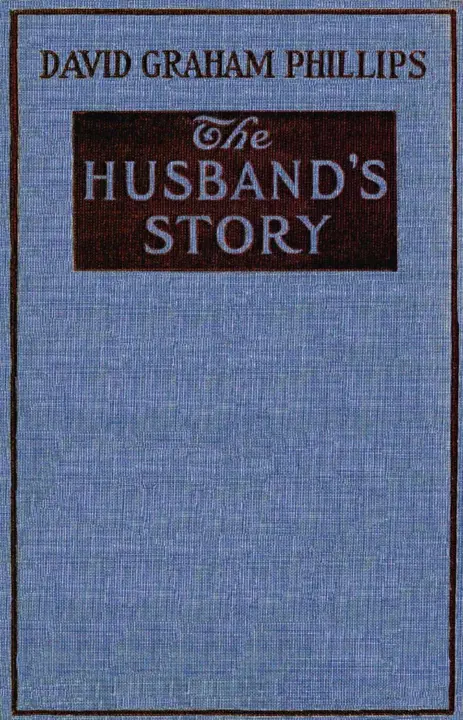
THE CLASSIC COLLECTION · 1910
"The Husband's Story: A Novel" by David Graham Phillips is a work of fiction written in the early 20th century. This novel explores the intricate dynamics of marriage, ambition, and social status through the experiences of the main character, Godfrey Loring, and his wife Edna Wheatlands. The narrative seems to revolve around their contrasting views on life, domestic responsibilities, and the influences of their backgrounds. The opening of the novel introduces us to Godfrey Loring, who reflects on his past and the circumstances surrounding his marriage to Edna Wheatlands. He describes their humble beginnings in Passaic, where they came from families that were not as glamorous as their aspirations led them to believe. Godfrey reveals the gradual shift in their lives as they move to a higher social circle, highlighting Edna's relentless pursuit of social standing. The initial moments set up a tension between Godfrey's practical nature and Edna's dreamy, often superficial desires for a life of luxury and status, foreshadowing the challenges the couple will face as they navigate their marriage amidst conflicting ideals.
Introduction adapted from the source catalogue; source summaries may be automatically generated.
Free to read · English · 128,265 words · No account needed
MAKE TIME FOR A GOOD BOOK
On by default. Untick to stop anonymous reading totals. Each page counts after 10 seconds in view. How this works.
Anonymous counting is on unless you have switched it off.
“Come and kiss me, Margot,” said I.
She obeyed, with a charming air of restrained eagerness that is regarded as ladylike. “My car is waiting,” said she. “I’m late.”
“Is that Therese”--her maid--“out in the hall waiting to go with you?”
“Yes. Miss Parnell”--her companion--“has a headache, poor creature!”
Margot had caught to perfection the refined, elegant, fashionable tone of speaking of the servile classes. Though I was in a critical mood that morning, I was not critical of my beloved little Margot, and her airs entertained me as much as ever. Said I:
“Sit down, little duchess”--the familiar name slipped out unconsciously--“and talk to me a few minutes.”
“But I’m shockingly late, papa,” pleaded she.
“No matter. I’ll telephone Miss Ryper, if you wish.” To the butler, who was serving me: “Sackville, go tell Therese that I’m detaining Miss Margot. And close the door behind you.”
Sackville retired. Margot seated herself with alacrity. She did not like her useless school any better than other children like more or less useful schools. “Are you taking me to the theater Saturday afternoon, as you promised?” said she. “And do get a box and let me ask two of the girls.”
“Certainly,” said I. “If I can’t go, Miss Parnell will chaperon you.”
“No, I want you, papa. It’s so nice to have a man.”
“How are you getting on at school? Not with the studies”--I laughed at the absurdity of calling her fiddle-faddle studies--“but with the girls?”
Her face clouded. “Has mamma told you?”
“Told me what?”
She hesitated.
“Go on, dear,” said I. “What’s the trouble?”
“Oh, it’s always the same thing,” she sighed, with a grown-up air that was both humorous and pathetic. “Some of the girls are down on me--about--about social position. You see, we don’t go socially with their families.”
“Why should we?” said I. “We don’t know them nor they us. Naturally, they don’t care anything about us, nor we about them.”
She hung her head. “But I want to go with them,” said she doggedly.
“Why?” said I.
“Because--because--it’s the proper thing to do. If you don’t go with them everybody looks down on you.” She lifted her head, and her flashing eyes reminded me of her mother. “It makes me just wild to be looked down on.”
“I should say so,” said I. “Those little girls at Miss Ryper’s must be an ill-bred lot. We must take you away from there and put you in a school with nice girls.”
Your reading position is saved on this browser. Take it to another device with a library code. Reading pages adapt to text, rather than matching a printed edition.
David Graham Phillips
David Graham Phillips
David Graham Phillips
David Graham Phillips
BEHIND THE BOOK
This eBook is for the use of anyone anywhere in the United States and most other parts of the world at no cost and with almost no restrictions whatsoever. You may copy it, give it away or re-use it under the terms of the Project Gutenberg License included with this eBook or online at www.gutenberg.org. If you are not located in the United States, you will have to check the laws of the country where you are located before using this eBook. Read the source licence.
The original source file, including credits and licence, is retained by this library. Request an original-format copy at no charge. Please include the book title and Project Gutenberg identifier #67406.
KEEP YOUR CURIOSITY GOING
Coulson Kernahan

Maurice Baring
Frances Wright
Cécile Tormay

Frederic Jesup Stimson

W. H. P. (William Henry Pope) Jarvis