THE CLASSIC COLLECTION✦Tales of the uneasyCLASSIC FREE BOOKS
Tales of the uneasy
Violet Hunt
THE CLASSIC COLLECTION · 1899
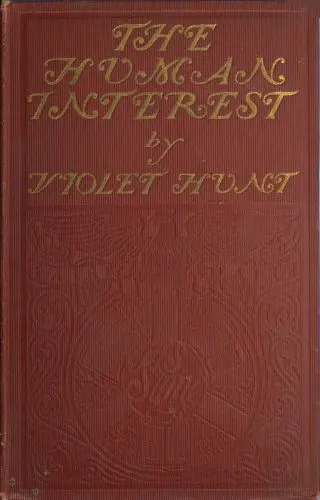
"The Human Interest: A Study in Incompatibilities" by Violet Hunt is a novel written in the late 19th century. The story centers around Egidia, a successful London authoress, who visits a provincial town and meets Mrs. Phœbe Elles, a woman trapped in a suffocating marriage to the dull Mortimer Elles. The narrative explores the incompatibilities in relationships and the longing for a more vibrant, fulfilling life through the lens of these two women and their contrasting experiences. At the start of the novel, the setting is established with Egidia's arrival in Newcastle, where she feels the oppressive gloom of the city. While visiting Mrs. Elles, Egidia is drawn into a conversation revealing Mrs. Elles’s dissatisfaction with her own life marred by her husband's indifference and the monotony of provincial existence. During their interaction, Mrs. Elles expresses her yearning for change and culture, while Egidia reflects on the complexities and isolation of literary life. The opening chapter sets the tone for a deeper exploration of the struggles between personal desires and societal expectations, particularly for women of the time.
Introduction adapted from the source catalogue; source summaries may be automatically generated.
Free to read · English · 69,067 words · No account needed
MAKE TIME FOR A GOOD BOOK
On by default. Untick to stop anonymous reading totals. Each page counts after 10 seconds in view. How this works.
Anonymous counting is on unless you have switched it off.
“Your voice must have been drowned by the rushing of the water. I knew that there was something wrong, though. I looked up from my drawing, and saw the water coming, and you a yard from the bank!”
At the sound of the word drawing she gave a little scream--she had quite
forgotten it!
“I know--I know--the drawing! What became of the drawing?”
“Well, you know, I had to have my hands free--” he began, almost
apologetically.
“Of course! For me! And now I remember seeing you fling it away on to the bank. Was it”--she spoke with bated breath, as one might speak of the fall of empires--“was it quite spoiled?”
“Pretty bad,” he answered, moodily.
“You can’t think how I wish you had not saved me at its expense! Why did you? Why did you?” she asked, with absolute sincerity.
Rivers seemed to repent of his lapse into temper, slight as it had been. He said, laughingly, “Well, I must tell you that I thought it over! It was a fearful wrench, of course, but I decided in your favour. Do you blame me?”
She resented his not taking her seriously, and replied, gravely, “Yes, I do. I was not worth the drawing to you, I am sure. You should have considered it first of all. Who was it--was it Cæsar--who swam across the Channel with his Commentaries in his mouth?”
“He did--something of the kind--but I never heard that he had a woman to look after as well.”
“And then--you carried me home?” she went on, in a tone of sentimental
reminiscence.
“Yes,” he replied, briskly. “One couldn’t have got a carriage down there, and I could hardly have packed you into Farmer Ward’s wheelbarrow!”
“Did anyone see you carry me across the fields?”
“Mrs. Popham did,” he said, laughing at the recollection. “She even offered to help me! A woman who could hardly lift a fly!”
“I must have looked awful!” Mrs. Elles pondered; she had often thought it over. “A wet woman is such an abject object!... And then you carried me up to bed?”
“Yes. Mrs. Watson was very anxious to get her son, Jock, to do it--but I thought of Jock and how he would have knocked your head against the banisters at every step, so I insisted on doing it myself.”
“And then?”
“And then the doctor came, and saw you, and saw me, and told me it was not much--and then I was easier in my mind.”
“Then you were anxious about me?”
“Very,” he said. “Poor thing, you suffered so; and you were so good
about it!”
“Was I? I am glad.”
Your reading position is saved on this browser. Take it to another device with a library code. Reading pages adapt to text, rather than matching a printed edition.
BEHIND THE BOOK
This eBook is for the use of anyone anywhere in the United States and most other parts of the world at no cost and with almost no restrictions whatsoever. You may copy it, give it away or re-use it under the terms of the Project Gutenberg License included with this eBook or online at www.gutenberg.org. If you are not located in the United States, you will have to check the laws of the country where you are located before using this eBook. Read the source licence.
The original source file, including credits and licence, is retained by this library. Request an original-format copy at no charge. Please include the book title and Project Gutenberg identifier #58526.
KEEP YOUR CURIOSITY GOING
Coulson Kernahan

Maurice Baring
Frances Wright
Cécile Tormay

Frederic Jesup Stimson

W. H. P. (William Henry Pope) Jarvis