THE CLASSIC COLLECTION✦Tales of the uneasyCLASSIC FREE BOOKS
Tales of the uneasy
Violet Hunt
THE CLASSIC COLLECTION · 1899
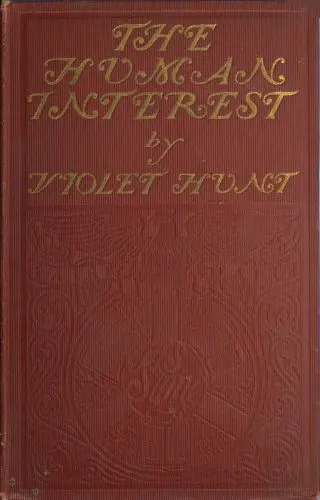
"The Human Interest: A Study in Incompatibilities" by Violet Hunt is a novel written in the late 19th century. The story centers around Egidia, a successful London authoress, who visits a provincial town and meets Mrs. Phœbe Elles, a woman trapped in a suffocating marriage to the dull Mortimer Elles. The narrative explores the incompatibilities in relationships and the longing for a more vibrant, fulfilling life through the lens of these two women and their contrasting experiences. At the start of the novel, the setting is established with Egidia's arrival in Newcastle, where she feels the oppressive gloom of the city. While visiting Mrs. Elles, Egidia is drawn into a conversation revealing Mrs. Elles’s dissatisfaction with her own life marred by her husband's indifference and the monotony of provincial existence. During their interaction, Mrs. Elles expresses her yearning for change and culture, while Egidia reflects on the complexities and isolation of literary life. The opening chapter sets the tone for a deeper exploration of the struggles between personal desires and societal expectations, particularly for women of the time.
Introduction adapted from the source catalogue; source summaries may be automatically generated.
Free to read · English · 69,067 words · No account needed
MAKE TIME FOR A GOOD BOOK
On by default. Untick to stop anonymous reading totals. Each page counts after 10 seconds in view. How this works.
Anonymous counting is on unless you have switched it off.
“Perhaps, then, it occurred to you that I might have got into mischief,” she went on lightly. “You didn’t know that I come here nearly every night?”
“Why not?”
“And yet this is the first time you have followed me!” she said, regretfully. “Yes, I come here, night after night, and I look down into this pool, and I imagine myself lying in it with my face turned up to the moon, drowned and dead, and at an end of all my troubles, and you hearing of it, and being a little--a very little--sorry for me!”
“But you are surely not thinking of committing suicide, are you?” he asked her, quite calmly, “for, really, no one would have the slightest excuse for falling in off this miniature beach?”
She made a gesture of impatience--then she laughed, in tragic impotence.
“One can drown oneself in a teacup, if one has a mind. But I think I will go up the bank, now, and put myself out of the reach of temptation.”
“Do you want to go indoors? If not, let us walk a little way to the Junction, if you don’t mind? I want to see the Greta meet the Tees under this strong moonlight. It must be magnificent. It is a shame to stay in the house when the moon is out like this. Browning speaks of her ‘unhandsome thrift of silver.’ There’s plenty of her now, isn’t there? Glorious! It is a night of nights!”
Mrs. Elles agreed with him--but from a different point of view.
“Are you frightened?” he asked her, as they left the river bank and began gropingly to follow a track between two darknesses of tangled brushwood.
“Not with you!” she said, manfully; and he did not offer his arm.
She walked along, a little in front of him, in the narrow path they had chosen, a short cut to the place where the two rivers meet. She was wearing her thin, clinging white gown, and, without the unromantic adjuncts of hat, parasol, or gloves, she looked as ghostly, as unreal, as far removed from the commonplace, as even she herself could have wished.
They reached the Junction, just outside the Park confines, where the brown moorland flood of the Greta, hasty, capricious, passionate, like herself, merged into the broad, calm flood of the Tees--flowing quietly, in its great volume and depth, over its granite-bouldered bed under Wycliffe. Rivers, for some reason or other, took off his hat, stood--his hair looking quite white in the moonshine--silent, his artist soul, presumably, stirred to the very depths by the mysterious harmonies of tone and magnificent lines of composition which the sight afforded him.
Your reading position is saved on this browser. Take it to another device with a library code. Reading pages adapt to text, rather than matching a printed edition.
BEHIND THE BOOK
This eBook is for the use of anyone anywhere in the United States and most other parts of the world at no cost and with almost no restrictions whatsoever. You may copy it, give it away or re-use it under the terms of the Project Gutenberg License included with this eBook or online at www.gutenberg.org. If you are not located in the United States, you will have to check the laws of the country where you are located before using this eBook. Read the source licence.
The original source file, including credits and licence, is retained by this library. Request an original-format copy at no charge. Please include the book title and Project Gutenberg identifier #58526.
KEEP YOUR CURIOSITY GOING
Coulson Kernahan

Maurice Baring
Frances Wright
Cécile Tormay

Frederic Jesup Stimson

W. H. P. (William Henry Pope) Jarvis