THE CLASSIC COLLECTION✦Tales of the uneasyCLASSIC FREE BOOKS
Tales of the uneasy
Violet Hunt
THE CLASSIC COLLECTION · 1899
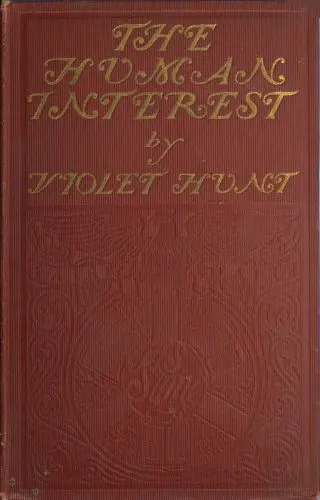
"The Human Interest: A Study in Incompatibilities" by Violet Hunt is a novel written in the late 19th century. The story centers around Egidia, a successful London authoress, who visits a provincial town and meets Mrs. Phœbe Elles, a woman trapped in a suffocating marriage to the dull Mortimer Elles. The narrative explores the incompatibilities in relationships and the longing for a more vibrant, fulfilling life through the lens of these two women and their contrasting experiences. At the start of the novel, the setting is established with Egidia's arrival in Newcastle, where she feels the oppressive gloom of the city. While visiting Mrs. Elles, Egidia is drawn into a conversation revealing Mrs. Elles’s dissatisfaction with her own life marred by her husband's indifference and the monotony of provincial existence. During their interaction, Mrs. Elles expresses her yearning for change and culture, while Egidia reflects on the complexities and isolation of literary life. The opening chapter sets the tone for a deeper exploration of the struggles between personal desires and societal expectations, particularly for women of the time.
Introduction adapted from the source catalogue; source summaries may be automatically generated.
Free to read · English · 69,067 words · No account needed
MAKE TIME FOR A GOOD BOOK
On by default. Untick to stop anonymous reading totals. Each page counts after 10 seconds in view. How this works.
Anonymous counting is on unless you have switched it off.
“Then,” Mrs. Elles went on, complacently, warming to her subject, “there came a final scene--such a sordid affair too, but it brought matters to a head. He sent away all her servants at an hour’s notice, on the very flimsiest of pretexts, and when she ventured, very naturally, to expostulate, he turned round on her and insulted her grossly. He told her that he had never loved her, but had only married her out of pity, because she had so obviously set her affections on him; and that now, when she had entirely lost her looks and her youth---- ”
“The man must have been an utter cad.”
“Yes, wasn’t he!” exclaimed, Mrs. Elles, delighted with his concurrence. “I was sure you would say so. And then he abused her and called her names--I am sure you could never bring yourself to use such words as he used to Phœbe, to your wife!” She snatched a fearful joy in the use of this phrase.
“No, I suppose not,” said Rivers, who, for some reason or other, did not seem inclined to treat this story very seriously. “No, I suppose not, unless she aggravated me beyond endurance. Then there is no knowing what I might not say.”
“Oh, yes, I quite understand, if she was a nagging woman--but poor Phœbe--I know her so well--is incapable of anything of the sort. She is too gentle ever to make a fuss--and too dignified, besides. She behaved simply like an angel all through--a perfect martyr--she hardly said a word, but---- ”
“But what?”
“She did the only thing that was left her to do. She left him.”
“I call that rather a strong measure!”
“Oh, but alone! She did not leave him to go to another man!”
Here the narrator of Phœbe Elles’ fortunes stopped and hesitated, a little overcome by a reflection that necessarily occurred to her. Presently she resumed. “Tell me, do you disapprove of poor Phœbe?”
“I can hardly form an opinion, can I, without knowing the rights and wrongs of the case. But as a general thing--Was he unfaithful to her?”
“No indeed, she only wishes he were!” Mrs. Elles broke out, in an uncontrollable burst of candour. “Now, I’ve shocked you,” she said, looking up into his face and bitterly repenting her flippant outspokenness.
She went on, nervously, “You think she ought to have stuck to her post--ought not to have thrown up her cards like that.”
She was translating the thoughts that she thought she could read on his face, and expostulating with them. “But still, you know, I had--a woman has surely a right to live her own life?”
Your reading position is saved on this browser. Take it to another device with a library code. Reading pages adapt to text, rather than matching a printed edition.
BEHIND THE BOOK
This eBook is for the use of anyone anywhere in the United States and most other parts of the world at no cost and with almost no restrictions whatsoever. You may copy it, give it away or re-use it under the terms of the Project Gutenberg License included with this eBook or online at www.gutenberg.org. If you are not located in the United States, you will have to check the laws of the country where you are located before using this eBook. Read the source licence.
The original source file, including credits and licence, is retained by this library. Request an original-format copy at no charge. Please include the book title and Project Gutenberg identifier #58526.
KEEP YOUR CURIOSITY GOING
Coulson Kernahan

Maurice Baring
Frances Wright
Cécile Tormay

Frederic Jesup Stimson

W. H. P. (William Henry Pope) Jarvis