THE CLASSIC COLLECTION✦Along the Hudson with Washington IrvingCLASSIC FREE BOOKS
Along the Hudson with Washington Irving
Wallace Bruce
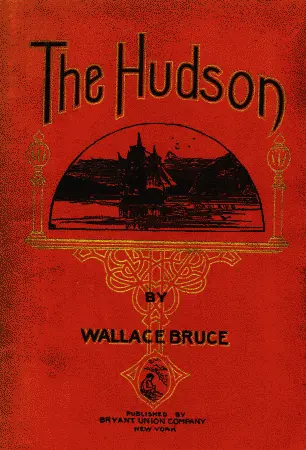
THE CLASSIC COLLECTION · 1907
"The Hudson" by Wallace Bruce is a historical account written in the early 20th century. This centennial edition delves into the rich history, romance, and inventions associated with the Hudson River over the course of three centuries. The text explores significant moments, figures, and the aesthetic grandeur of the river that connects New York City to Albany and serves as a vital artery of American culture and commerce. At the start of the book, the author sets the stage by highlighting the historical significance of the Hudson, intertwining the legacies of explorers like Hendrick Hudson and inventors like Robert Fulton. He reflects on the river's majestic beauty and its role as a metaphoric "open book" of history, inviting readers to appreciate its stories, from indigenous peoples and early settlers to its transformation into a bustling transport route. Bruce enriches his narrative with poetic observations, emphasizing the Hudson as a source of inspiration and pride, portraying a captivating blend of exploration, artistic heritage, and the evolving American identity.
Introduction adapted from the source catalogue; source summaries may be automatically generated.
Free to read · English · 76,013 words · No account needed
MAKE TIME FOR A GOOD BOOK
On by default. Untick to stop anonymous reading totals. Each page counts after 10 seconds in view. How this works.
Anonymous counting is on unless you have switched it off.
"After the evacuation of New York, in the fall of 1776, and the immediate loss of the seaboard, with Long Island and part of New Jersey, Fishkill was at once crowded with refugees, as they were then called, who sought, by banishing themselves from their homes on Long Island and New York, to escape imprisonment and find safety here. The interior army route to Boston passed through this place. Army stores, workshops, ammunition, etc., were established and deposited here." The Marquis De Chastellux, in his travels in North America, says: "This town, in which there are not more than fifty houses in the space of two miles, has been long the principal depot of the American army. It is there they have placed their magazines, their hospitals, their workshops, etc., but all of these form a town in themselves, composed of handsome large barracks, built in the woods at the foot of the mountains: for the American army, like the Romans in many respects, have hardly any other winter quarters than wooden towns, or barricaded camps, which may be compared to the 'hiemalia' of the Romans." These barracks were situated on the level plateau between the residence of Mr. Cotheal and the mountains. Portions of these grounds were no doubt then covered with timber. Guarding the approach from the south, stockades and fortifications were erected on commanding positions, and regularly manned by detachments from the camp.
Unto him and them all owing
Peace as stable as our hills,
Plenty like yon river flowing
To the sea from thousand rills.
Mary E. Monell.
"Upon one of these hills, rising out of this mountain pass-way, very distinct lines of earthworks are yet apparent. Near the residence of Mr. Sidney E. Van Wyck, by the large black-walnut trees, and east of the road near the base of the mountain, was the soldiers' burial ground. Many a poor patriot soldier's bones lie mouldering there; and if we did but know how many, we would be startled at the number, for this almost unknown and unnoticed burial ground holds not a few, but hundreds of those who gave their lives for the cause of American independence. Some fifteen years ago, an old lady who had lived near the village until after she had grown to womanhood, told the writer that after the battle of White Plains she went with her father through the streets of Fishkill, and in places between the Dutch and Episcopal churches, the dead were piled up like cord-wood. Those who died from wounds in battle or from sickness in hospital were buried there. Many of these were State militiamen, and it seems no more than just that the State should make an appropriation to erect a suitable monument over this spot. Rather than thus remain for another century, if a rough granite boulder were rolled down from the mountain side and inscribed: 'To the unknown and unnumbered dead of the American Revolution,' that rough unhewn stone would tell to the stranger and the passer-by, more to the praise and fame of our native town than any of us shall be able to add to it by works of our own; for it is doubtful whether any spot in the State has as many of the buried dead of the Revolution as this quiet burial yard in our old town!" Here also on June 2, 1883, was observed "The Fishkill Centennial," and few of our centennials have been celebrated amid objects of greater revolutionary interest. Near at hand, to quote from the official report of the proceedings, is "Denning's Point where Washington frequently, while waiting, tied his horses under those magnificent 'Washington oaks,' as he passed backward and forward from New Windsor and Newburgh to Fishkill. Near by is the Verplanck House, Baron Steuben's old headquarters. On Spy Hill and Continental Hill troops were quartered. At Matteawan Sackett lived, and there is the Teller House built by Madame Brett, where officers frequently resorted, and there Yates dwelt when he presided over the legislative body while it held its sessions in Fishkill, that had much to do with forming our first State Constitution. Baron Steuben was for a while in the old Scofield House at Glenham. In Fishkill are those renowned old churches where legislative sittings were held, which were also used as hospitals for the sick, and one of which is otherwise known as being the place where Enoch Crosby, the spy, was imprisoned, and from which he escaped. Near at hand the Wharton House (Van Wyck House), forever associated with him, and made famous by Cooper's 'Spy.' In the Brinckerhoff House above, Lafayette was dangerously ill with a fever, and there, at Swartwoutville, Washington was often a visitor. Whenever Washington was at Fishkill he made Colonel Brinckerhoff's his headquarters. He occupied the bedroom back of the parlor, which remains the same 'excepting a door that opens into the hall, which has been cut through.' It is an old-fashioned house built of stone, with the date 1738 on one of its gables." With the story of Fishkill we close the largest page relating to our revolutionary heroes, and leave behind us the Old Beacon Mountains which forever sentinel and proclaim their glory.
Your reading position is saved on this browser. Take it to another device with a library code. Reading pages adapt to text, rather than matching a printed edition.
BEHIND THE BOOK
This eBook is for the use of anyone anywhere in the United States and most other parts of the world at no cost and with almost no restrictions whatsoever. You may copy it, give it away or re-use it under the terms of the Project Gutenberg License included with this eBook or online at www.gutenberg.org. If you are not located in the United States, you will have to check the laws of the country where you are located before using this eBook. Read the source licence.
The original source file, including credits and licence, is retained by this library. Request an original-format copy at no charge. Please include the book title and Project Gutenberg identifier #17823.
KEEP YOUR CURIOSITY GOING
Wilfrid Scawen Blunt
Wilfrid Scawen Blunt

E. W. (Edgar Watson) Howe
Cécile Tormay

Moritz Busch
John L. Ransom