THE CLASSIC COLLECTION✦Along the Hudson with Washington IrvingCLASSIC FREE BOOKS
Along the Hudson with Washington Irving
Wallace Bruce
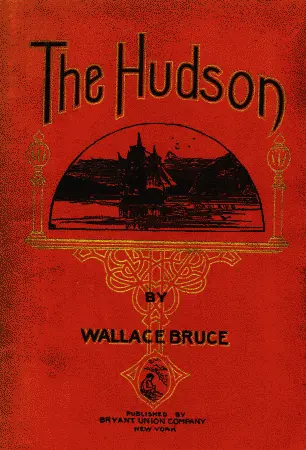
THE CLASSIC COLLECTION · 1907
"The Hudson" by Wallace Bruce is a historical account written in the early 20th century. This centennial edition delves into the rich history, romance, and inventions associated with the Hudson River over the course of three centuries. The text explores significant moments, figures, and the aesthetic grandeur of the river that connects New York City to Albany and serves as a vital artery of American culture and commerce. At the start of the book, the author sets the stage by highlighting the historical significance of the Hudson, intertwining the legacies of explorers like Hendrick Hudson and inventors like Robert Fulton. He reflects on the river's majestic beauty and its role as a metaphoric "open book" of history, inviting readers to appreciate its stories, from indigenous peoples and early settlers to its transformation into a bustling transport route. Bruce enriches his narrative with poetic observations, emphasizing the Hudson as a source of inspiration and pride, portraying a captivating blend of exploration, artistic heritage, and the evolving American identity.
Introduction adapted from the source catalogue; source summaries may be automatically generated.
Free to read · English · 76,013 words · No account needed
MAKE TIME FOR A GOOD BOOK
On by default. Untick to stop anonymous reading totals. Each page counts after 10 seconds in view. How this works.
Anonymous counting is on unless you have switched it off.
Clermont, built in 1807 160 tons
Car of Neptune, built in 1809 295 "
Hope, built in 1811 280 "
Perseverance, built in 1811 280 "
Paragon, built in 1811 331 "
Richmond, built in 1813 370 "
It makes one smile to read the newspaper notices of those days. The time was rather long, and the fare rather high--thirty-six hours to Albany, fare seven dollars.
From the Albany Gazette, September, 1807.
"The North River Steamboat will leave Paulus Hook Ferry on Friday the 4th of September, at 9 in the morning, and arrive at Albany at 9 in the afternoon on Saturday. Provisions, good berths, and accommodation are provided. The charge to each passenger is as follows:
To Newburg Dols. 3, Time 14 hours.
Poughkeepsie " 4, " 17 "
Esopus " 5, " 20 "
Hudson " 51/2, " 30 "
Albany " 7, " 36 "
For places apply to Wm. Vandervoort, No. 48 Courtland street, on the corner of Greenwich street, September 2d, 1807."
The wind blew over the land and the waves
With its salt sea-breath, and a spicy balm,
And it seemed to cool my throbbing brain,
And lend my spirit its gusty calm.
Richard Henry Stoddard.
Extract from the New York Evening Post, October 2, 1807.
Mr. Fulton's new-invented steamboat, which is fitted up in a neat style for passengers, and is intended to run from New York to Albany as a packet, left here this morning with ninety passengers, against a strong head wind. Notwithstanding which, it is judged that she moved through the waters at the rate of six miles an hour.
Extract from the Albany Gazette, October 5th, 1807.
Friday, October 2d, 1807, the steamboat (Clermont) left New York at ten o'clock a.m., against a stormy tide, very rough water, and a violent gale from the north. She made a headway beyond the most sanguine expectations, and without being rocked by the waves.
Arrived at Albany, October 4th, at 10 o'clock p.m., being detained by being obliged to come to anchor, owing to a gale and having one of her paddle wheels torn away by running foul of a sloop.
But see! the broadening river deeper flows,
Its tribute floods intent to reach the sea.
Park Benjamin.
The following was recently recopied in the Poughkeepsie Eagle, as an
old time reminiscence:
=To Poughkeepsie from New York in Seventeen Hours.=
--The first steamboat on the Hudson River passed Poughkeepsie August 17th, 1807, and in June, 1808, the owners of the boat caused the following advertisement to be published in prominent papers along the river:
The Steamboat will leave New York for Albany every Saturday afternoon exactly at 6 o'clock, and will pass:
West Point, about 4 o'clock Sunday morning.
Newburgh, 7 o'clock Sunday morning.
Poughkeepsie, 11 o'clock Sunday morning.
Esopus, 2 o'clock in the afternoon.
Red Hook, 4 o'clock in the afternoon.
Catskill, 7 o'clock in the afternoon.
Hudson, 8 o'clock in the evening.
Your reading position is saved on this browser. Take it to another device with a library code. Reading pages adapt to text, rather than matching a printed edition.
BEHIND THE BOOK
This eBook is for the use of anyone anywhere in the United States and most other parts of the world at no cost and with almost no restrictions whatsoever. You may copy it, give it away or re-use it under the terms of the Project Gutenberg License included with this eBook or online at www.gutenberg.org. If you are not located in the United States, you will have to check the laws of the country where you are located before using this eBook. Read the source licence.
The original source file, including credits and licence, is retained by this library. Request an original-format copy at no charge. Please include the book title and Project Gutenberg identifier #17823.
KEEP YOUR CURIOSITY GOING
Wilfrid Scawen Blunt
Wilfrid Scawen Blunt

E. W. (Edgar Watson) Howe
Cécile Tormay

Moritz Busch
John L. Ransom