THE CLASSIC COLLECTION✦Along the Hudson with Washington IrvingCLASSIC FREE BOOKS
Along the Hudson with Washington Irving
Wallace Bruce
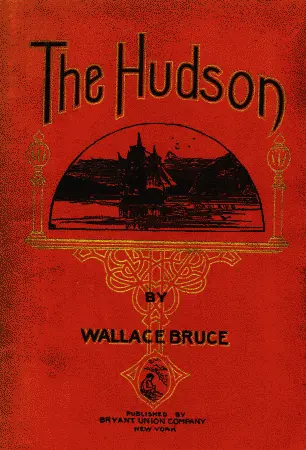
THE CLASSIC COLLECTION · 1907
"The Hudson" by Wallace Bruce is a historical account written in the early 20th century. This centennial edition delves into the rich history, romance, and inventions associated with the Hudson River over the course of three centuries. The text explores significant moments, figures, and the aesthetic grandeur of the river that connects New York City to Albany and serves as a vital artery of American culture and commerce. At the start of the book, the author sets the stage by highlighting the historical significance of the Hudson, intertwining the legacies of explorers like Hendrick Hudson and inventors like Robert Fulton. He reflects on the river's majestic beauty and its role as a metaphoric "open book" of history, inviting readers to appreciate its stories, from indigenous peoples and early settlers to its transformation into a bustling transport route. Bruce enriches his narrative with poetic observations, emphasizing the Hudson as a source of inspiration and pride, portraying a captivating blend of exploration, artistic heritage, and the evolving American identity.
Introduction adapted from the source catalogue; source summaries may be automatically generated.
Free to read · English · 76,013 words · No account needed
MAKE TIME FOR A GOOD BOOK
On by default. Untick to stop anonymous reading totals. Each page counts after 10 seconds in view. How this works.
Anonymous counting is on unless you have switched it off.
="Ice Industry,"= which reaches from below Staatsburgh to Castleton and Albany, well described by John Burroughs in his article on the Hudson: "No man sows, yet many men reap a harvest from the Hudson. Not the least important is the ice harvest, which is eagerly looked for, and counted upon by hundreds, yes, thousands of laboring men along its course. Ice or no ice sometimes means bread or no bread to scores of families, and it means added or diminished comforts to many more. It is a crop that takes two or three weeks of rugged winter weather to grow, and, if the water is very roily or brackish, even longer. It is seldom worked till it presents seven or eight inches of clear water ice. Men go out from time to time and examine it, as the farmer goes out and examines his grain or grass, to see when it will do to cut. If there comes a deep fall of snow the ice is 'pricked' so as to let the water up through and form snow ice. A band of fifteen or twenty men, about a yard apart, each armed with a chisel-bar, and marching in line, puncture the ice at each step, with a single sharp thrust. To and fro they go, leaving a belt behind them that presently becomes saturated with water. But ice, to be of first quality, must grow from beneath, not from above. It is a crop quite as uncertain as any other. A good yield every two or three years, as they say of wheat out west, is about all that can be counted upon. When there is an abundant harvest, after the ice houses are filled, they stack great quantities of it, as the farmer stacks his surplus hay. Such a fruitful winter was that of '74-5, when the ice formed twenty inches thick. The stacks are given only a temporary covering of boards, and are the first ice removed in the season. The cutting and gathering of the ice enlivens these broad, white, desolate fields amazingly. My house happens to stand where I look down upon the busy scene, as from a hill-top upon a river meadow in haying time, only here figures stand out much more sharply than they do from a summer meadow. There is the broad, straight, blue-black canal emerging into view, and running nearly across the river; this is the highway that lays open the farm. On either side lie the fields, or ice meadows, each marked out by cedar or hemlock boughs. The farther one is cut first, and when cleared, shows a large, long, black parallelogram in the midst of the plain of snow. Then the next one is cut, leaving a strip or tongue of ice between the two for the horses to move and turn upon. Sometimes nearly two hundred men and boys, with numerous horses, are at work at once, marking, plowing, planing, scraping, sawing, hauling, chiseling; some floating down the pond on great square islands towed by a horse, or their fellow workmen; others distributed along the canal, bending to their ice-hooks; others upon the bridges separating the blocks with their chisel bars; others feeding the elevators; while knots and straggling lines of idlers here and there look on in cold discontent, unable to get a job. The best crop of ice is an early crop. Late in the season or after January, the ice is apt to get 'sun-struck,' when it becomes 'shaky,' like a piece of poor timber. The sun, when he sets about destroying the ice, does not simply melt it from the surface--that were a slow process; but he sends his shafts into it and separates it into spikes and needles--in short, makes kindling-wood of it, so as to consume it the quicker. One of the prettiest sights about the ice harvesting is the elevator in operation. When all works well, there is an unbroken procession of the great crystal blocks slowly ascending this incline. They go up in couples, arm in arm, as it were, like friends up a stairway, glowing and changing in the sun, and recalling the precious stones that adorned the walls of the celestial city. When they reach the platform where they leave the elevator, they seem to step off like things of life and volition; they are still in pairs and separate only as they enter upon the 'runs.' But here they have an ordeal to pass through, for they are subjected to a rapid inspection and the black sheep are separated from the flock; every square with a trace of sediment or earth-stain in it, whose texture is not perfect and unclouded crystal, is rejected and sent hurling down into the abyss; a man with a sharp eye in his head and a sharp ice-hook in his hand picks out the impure and fragmentary ones as they come along and sends them quickly overboard. Those that pass the examination glide into the building along the gentle incline, and are switched off here and there upon branch runs, and distributed to all parts of the immense interior."
Your reading position is saved on this browser. Take it to another device with a library code. Reading pages adapt to text, rather than matching a printed edition.
BEHIND THE BOOK
This eBook is for the use of anyone anywhere in the United States and most other parts of the world at no cost and with almost no restrictions whatsoever. You may copy it, give it away or re-use it under the terms of the Project Gutenberg License included with this eBook or online at www.gutenberg.org. If you are not located in the United States, you will have to check the laws of the country where you are located before using this eBook. Read the source licence.
The original source file, including credits and licence, is retained by this library. Request an original-format copy at no charge. Please include the book title and Project Gutenberg identifier #17823.
KEEP YOUR CURIOSITY GOING
Wilfrid Scawen Blunt
Wilfrid Scawen Blunt

E. W. (Edgar Watson) Howe
Cécile Tormay

Moritz Busch
John L. Ransom