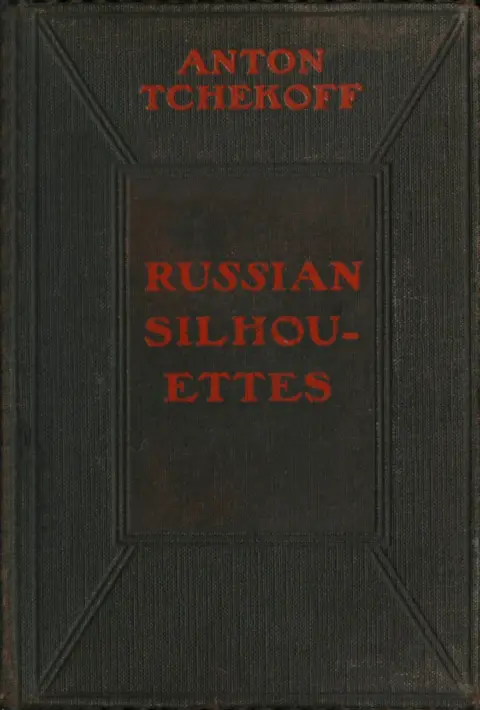
Russian Silhouettes: More Stories of Russian Life
Anton Pavlovich Chekhov
THE CLASSIC COLLECTION · 1917
"The House with the Mezzanine and Other Stories" by Anton Pavlovich Chekhov is a collection of short stories written in the late 19th century. The stories explore various aspects of human experience and emotion, often reflecting on social issues, personal relationships, and the complexities of life. The opening story introduces a painter and his interactions with a landowner and a family rooted in their local community, setting a tone that emphasizes both introspection and social commentary. At the start of the first story, the narrator describes his idle life on a country estate, where he has little to do but reflect on his surroundings and the people he encounters. He meets a charming family, the Volchaninovs, where he develops a complex relationship with Lydia, the elder daughter, who passionately believes in social reform, contrasting with the narrator’s apathy towards social engagement. As the narrator spends more time with the family, different dynamics unfold, revealing themes of love, disappointment, and the stark divergence between the ideals of action and the paralysis found in comfort and privilege. This opening portion hints at deeper explorations of class, personal ambition, and the tension between art and activism that may resonate throughout the collection.
Introduction adapted from the source catalogue; source summaries may be automatically generated.
Free to read · English · 63,068 words · No account needed
MAKE TIME FOR A GOOD BOOK
On by default. Untick to stop anonymous reading totals. Each page counts after 10 seconds in view. How this works.
Anonymous counting is on unless you have switched it off.
"Yies, yies, yies," said the doctor. "Excellent, excellent. Now we are well again. Jist saow. Jist saow."
The lieutenant listened and laughed gleefully. He remembered the Finn,
the lady with the white teeth, the train, and he wanted to eat and
smoke.
"Doctor," he said, "tell them to bring me a slice of rye bread and salt,
and some sardines...."
The doctor refused. Pavel did not obey his order and refused to go for bread. The lieutenant could not bear it and began to cry like a thwarted child.
"Ba-by," the doctor laughed. "Mamma! Hush-aby!"
Klimov also began to laugh, and when the doctor had gone, he fell sound asleep. He woke up with the same feeling of joy and happiness. His aunt was sitting by his bed.
"Oh, aunty!" He was very happy. "What has been the matter with me?"
"Typhus."
"I say! And now I am well, quite well! Where is Katy?"
"She is not at home. She has probably gone to see some one after her
examination."
The old woman bent over her stocking as she said this; her lips began to tremble; she turned her face away and suddenly began to sob. In her grief, she forgot the doctor's orders and cried:
"Oh! Katy! Katy! Our angel is gone from us! She is gone!"
She dropped her stocking and stooped down for it, and her cap fell off her head. Klimov stared at her grey hair, could not understand, was alarmed for Katy, and asked:
"But where is she, aunty?"
The old woman, who had already forgotten Klimov and remembered only her
grief, said:
"She caught typhus from you and ... and died. She was buried the day
before yesterday."
This sudden appalling piece of news came home to Klimov's mind, but dreadful and shocking though it was it could not subdue the animal joy which thrilled through the convalescent lieutenant. He cried, laughed, and soon began to complain that he was given nothing to eat.
Only a week later, when, supported by Pavel, he walked in a dressing-gown to the window, and saw the grey spring sky and heard the horrible rattle of some old rails being carried by on a lorry, then his heart ached with sorrow and he began to weep and pressed his forehead against the window-frame.
"How unhappy I am!" he murmured. "My God, how unhappy I am!"
And joy gave way to his habitual weariness and a sense of his
irreparable loss.
Your reading position is saved on this browser. Take it to another device with a library code. Reading pages adapt to text, rather than matching a printed edition.
Anton Pavlovich Chekhov
Anton Pavlovich Chekhov
BEHIND THE BOOK
This eBook is for the use of anyone anywhere in the United States and most other parts of the world at no cost and with almost no restrictions whatsoever. You may copy it, give it away or re-use it under the terms of the Project Gutenberg License included with this eBook or online at www.gutenberg.org. If you are not located in the United States, you will have to check the laws of the country where you are located before using this eBook. Read the source licence.
The original source file, including credits and licence, is retained by this library. Request an original-format copy at no charge. Please include the book title and Project Gutenberg identifier #27411.
KEEP YOUR CURIOSITY GOING

Charles G. (Charles Griffith) Ross
Hannah Webster Foster

Emily Lawless
Edwin Hamlin Carr

Charles De Lano Hine
Andrew Ure