
Poems and Lyrics of the Joy of Earth
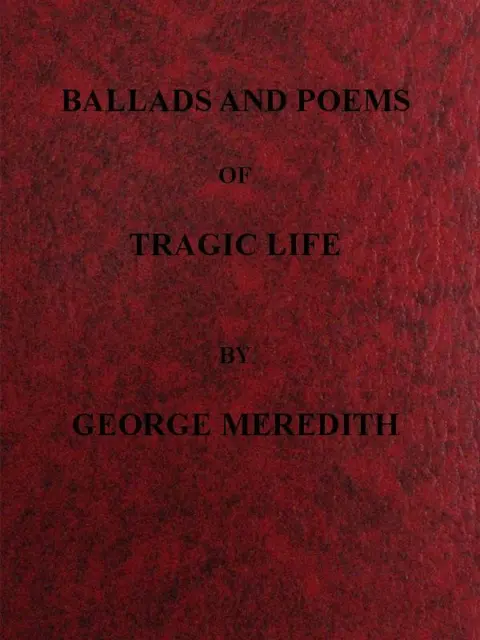
George Meredith
THE CLASSIC COLLECTION · 1877
"The House on the Beach: A Realistic Tale" by George Meredith is a novel written in the late 19th century. The story seems to focus on the quirky character of Mr. Tinman, a newly minted esquire struggling with his social status and the intricacies of local relationships in the coastal town of Crikswich, as well as his aspiration to rise in social hierarchy. His eccentricities and ambitions appear to serve as both comic relief and poignant commentary on class and social structures of the time. The opening of the book paints a vivid picture of Mr. Tinman's life and his ambitions after retiring from a successful shopkeeping career. It describes his daily rituals, including a humorous episode where he purchases herrings for dinner, while we learn about his complex relationships with his sister and the other townsfolk. The narrative hints at burgeoning conflicts concerning social status, personal pride, and romantic aspirations, setting the stage for interactions with other characters like Mr. Van Diemen Smith and the arrival of Annette Smith, who is poised to become an essential player in the developing social dynamics. Overall, the beginning establishes Mr. Tinman's ambitions and anxieties, suggesting that humor and human error will be central themes as the story unfolds.
Introduction adapted from the source catalogue; source summaries may be automatically generated.
Free to read · English · 32,201 words · No account needed
MAKE TIME FOR A GOOD BOOK
On by default. Untick to stop anonymous reading totals. Each page counts after 10 seconds in view. How this works.
Anonymous counting is on unless you have switched it off.
The pebble dropped into deep water speaks of its depth by the tardy arrival of bubbles on the surface, and, in like manner, the very simple question put by Mr. Van Diemen Smith pursued its course of penetration in the assembled mind in the carpenter's shop for a considerable period, with no sign to show that it had reached the bottom.
"Surely, papa, we can go to an inn? There must be some hotel," said his
daughter.
"There's good accommodation at the Cliff Hotel hard by," said Crickledon.
"But," said one of his friends, "if you don't want to go so far, sir, there's Master Crickledon's own house next door, and his wife lets lodgings, and there's not a better cook along this coast."
"Then why did n't the man mention it? Is he afraid of having me?" asked Mr. Smith, a little thunderingly. "I may n't be known much yet in England; but I'll tell you, you inquire the route to Mr. Van Diemen Smith over there in Australia."
"Yes, papa," interrupted his daughter, "only you must consider that it may not be convenient to take us in at this hour--so late."
"It's not that, miss, begging your pardon," said Crickledon. "I make a point of never recommending my own house. That's where it is. Otherwise you're welcome to try us."
"I was thinking of falling bounce on my old schoolmate, and putting Old English hospitality to the proof," Mr. Smith meditated. "But it's late. Yes, and that confounded glass! No, we'll bide with you, Mr. Carpenter. I'll send my card across to Mart Tinman to-morrow, and set him agog at his breakfast."
Mr. Van Diemen Smith waved his hand for Crickledon to lead the way.
Hereupon Ned Crummins looked up from the card he had been turning over and over, more and more like one arriving at a condemnatory judgment of a fish.
"I can't go and give my master a card instead of his glass," he remarked.
"Yes, that reminds me; and I should like to know what you meant by bringing that glass away from Mr. Tinman's house at night," said Mr. Smith. "If I'm to pay for it, I've a right to know. What's the meaning of moving it at night? Eh, let's hear. Night's not the time for moving big glasses like that. I'm not so sure I haven't got a case."
"If you'll step round to my master along o' me, sir," said Crummins,
"perhaps he'll explain."
Crummins was requested to state who his master was, and he replied, "Phippun and Company;" but Mr. Smith positively refused to go with him.
Your reading position is saved on this browser. Take it to another device with a library code. Reading pages adapt to text, rather than matching a printed edition.
George Meredith
George Meredith
George Meredith
George Meredith
BEHIND THE BOOK
This eBook is for the use of anyone anywhere in the United States and most other parts of the world at no cost and with almost no restrictions whatsoever. You may copy it, give it away or re-use it under the terms of the Project Gutenberg License included with this eBook or online at www.gutenberg.org. If you are not located in the United States, you will have to check the laws of the country where you are located before using this eBook. Read the source licence.
The original source file, including credits and licence, is retained by this library. Request an original-format copy at no charge. Please include the book title and Project Gutenberg identifier #4495.
KEEP YOUR CURIOSITY GOING
Coulson Kernahan

Maurice Baring
Frances Wright
Cécile Tormay

Frederic Jesup Stimson

W. H. P. (William Henry Pope) Jarvis